

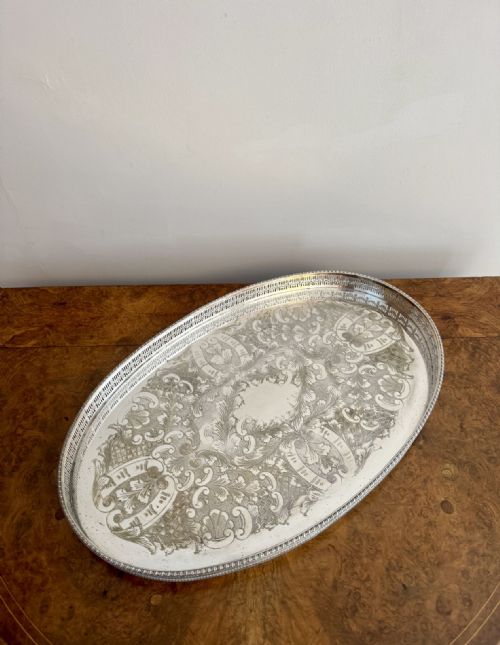

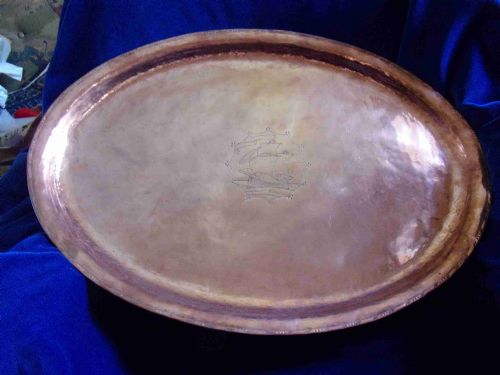

Vintage Engraved Platter
These vintage engraved platters combine utility and decoration, offering surface work that transforms a simple serving piece into a focal point.
Vintage Engraved Platter
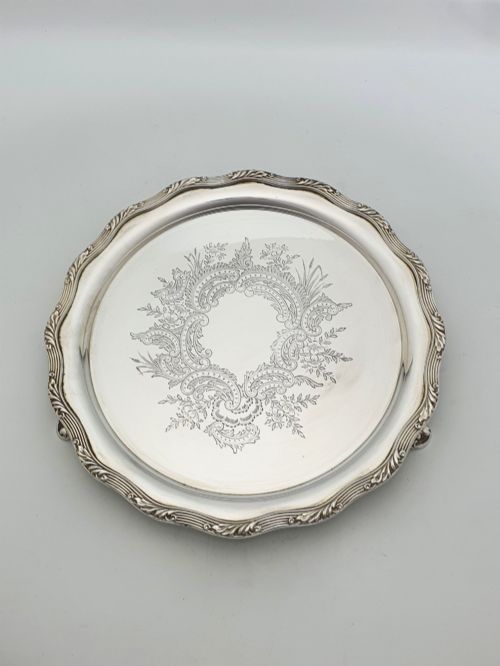
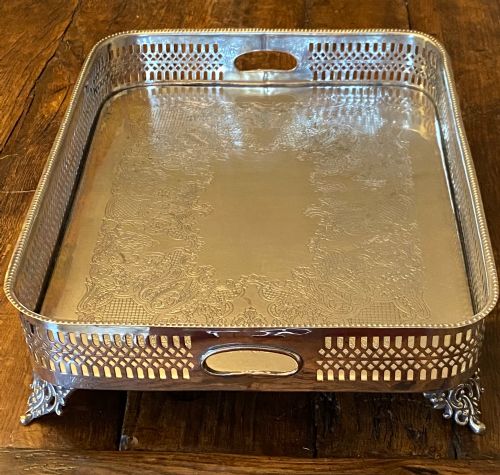
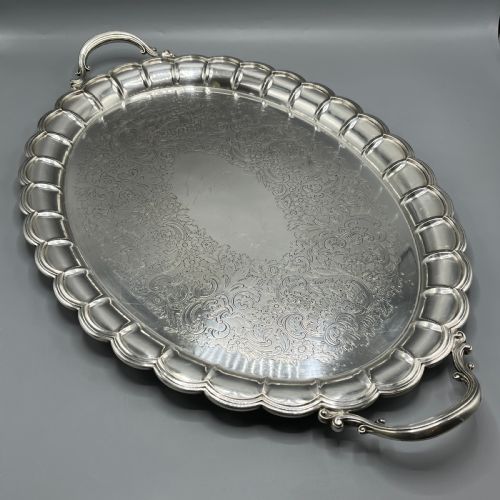
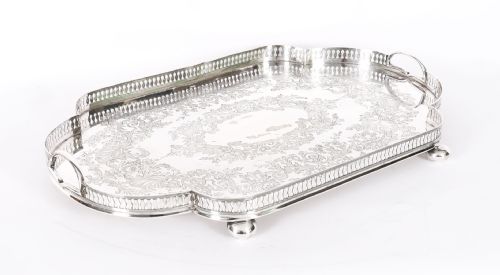
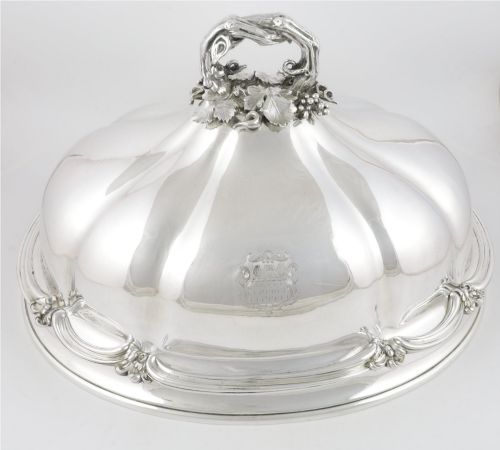
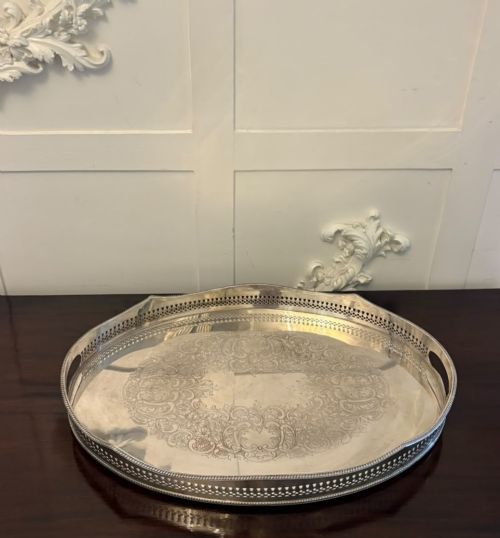
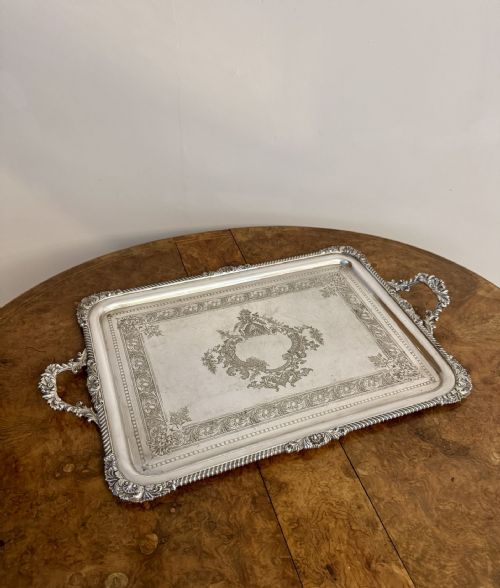
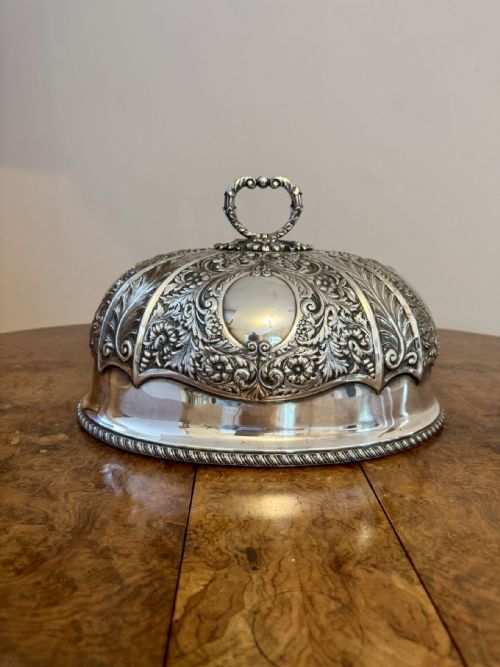
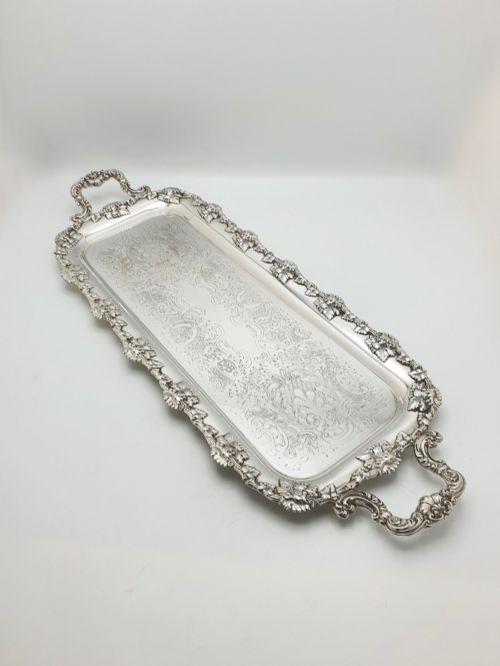
A vintage engraved platter encompasses a wide variety of serving vessels, tea trays, wall chargers, and meat domes originating from the nineteenth and early twentieth centuries. When searching for a vintage engraved platter, buyers encounter everything from formal Victorian silver-plated tea trays to robust Edwardian gallery pieces and heavy brass chargers. These objects served domestic functions in dining rooms and parlours, moving between the kitchen and the table for presentation and service.
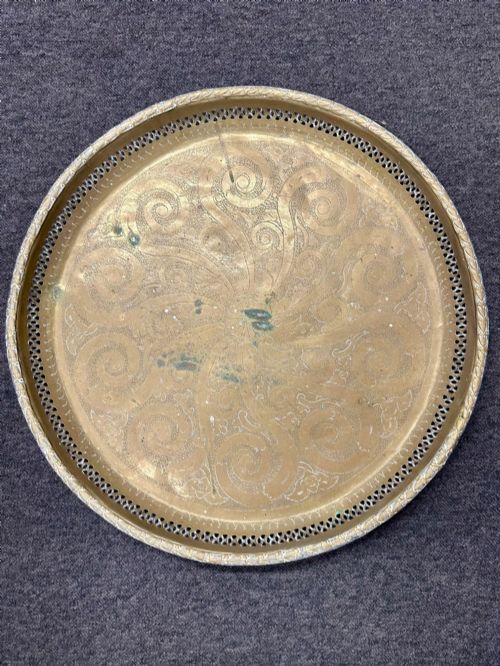
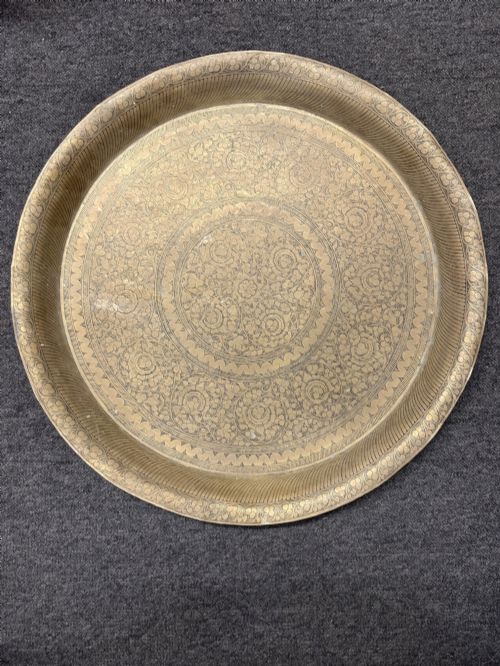
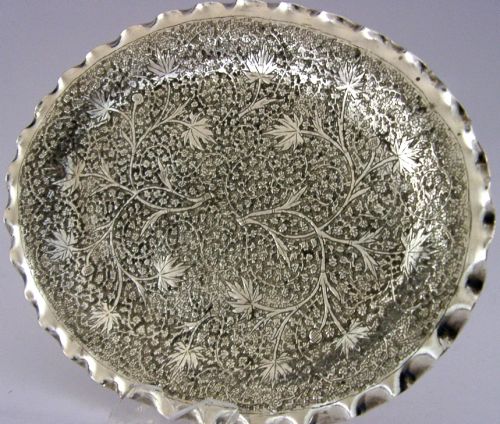
The selection ranges across distinct cultural traditions and stylistic movements, including Anglo-Indian brass work, Middle Eastern inlaid copper, Art Deco geometric designs, and traditional British Old Sheffield Plate. Victorian and Edwardian examples dominate the forms on this page, often showing intricate chased or engraved floral motifs, grapevine borders, or geometric patterns across circular and oval surfaces. Whether utilised as functional serving dishes or displayed upright on walls, these items demonstrate how utilitarian metalware received decorative attention.
How they were made
Makers utilised base metals such as copper, brass, and nickel silver as foundations, applying techniques like electroplating or fusing thin layers of silver onto base metal to create Old Sheffield Plate. Artisans then decorated the surfaces by hand using gravers and chisels to cut detailed floral, foliate, or Celtic patterns into the metal. Piercing and gallery work required precise sawing and soldering to attach raised borders and handles securely to the main body of the tray or dish.
Workshop production involved specialised roles, separating the smiths who formed the heavy copper or brass sheets from the metal-chasers who executed the surface engraving. Silver-plated items required careful preparation of the underlying base metal before electroplating or fusion took place to ensure the coating adhered evenly. Finishing processes included burnishing and patination to highlight the engraved lines and provide contrast against the polished or darkened background.
Vintage Engraved Platter Retail Price Guide 2026
Typical asking prices for vintage engraved platter among the pieces listed under this phrase on Sellingantiques today, from the lower quarter to the upper quarter. They describe what is for sale here now, not the wider market.
Several platters spent time attending world fairs and holding church collections before finding their way onto modern dining tables.
What varies in quality
Quality rests upon the depth and clarity of the hand engraving, where crisp, confident lines indicate skilled workmanship rather than hasty machine stamping. The weight and gauge of the base metal determine the rigidity of the platter, preventing warping under the weight of heavy silver or food items. Superior examples retain their original plating without extensive wear through to the base metal, showing deliberate restraint in the decorative borders and handles.
Proportion and structural integrity separate standard domestic pieces from exhibition-grade work, particularly in the alignment of galleries and the balance of applied handles. Makers who invested time in detailed chasing across the entire surface rather than relying on a central monogram or sparse corner motifs produced items of lasting visual weight. The distinction also lies in the material composition, with solid silver or thick Old Sheffield Plate representing a different manufacturing tier than lightweight electroplated alternatives.
James Deakin·Mappin & Webb·Henry Wilkinson·Padley Parkin·J Dixon & Sons·Roberts & Dore·Hugh Wallis·Tiffany & Co
The Vintage Engraved Platter Glossary
- Old Sheffield Plate
- A composite material made by fusing a thin sheet of silver to a thicker copper ingot before rolling them together into sheets for manufacturing. This technique predates modern electroplating and remains visible through subtle copper seams on edges.
- EPNS
- An abbreviation for Electroplated Nickel Silver, denoting a base alloy of copper, nickel, and zinc coated with a thin layer of pure silver through an electrolytic process. It became the dominant method for producing affordable silver-look tableware from the mid-nineteenth century onward.
- Gallery Tray
- A serving tray featuring a pierced or solid upright metal border attached to the perimeter to prevent items from sliding off during transit. These surrounds often incorporate intricate cut-out patterns and integrated handles.
- Chasing
- A metalworking technique where the artisan pushes and displaces metal from the front using hammers and punches rather than cutting it away. This method creates raised surface designs and textures without piercing the metal sheet.
- Salver
- A flat plate or tray traditionally used for presenting letters, glasses, or visiting cards, usually supported on small feet. In domestic settings, these pieces functioned as portable display surfaces rather than kitchen serveware.
Vintage Engraved Platter: Frequently Asked Questions
How do I clean a vintage engraved platter?
Clean silver-plated or solid silver platters using a mild, non-abrasive silver polish and a soft cloth to avoid wearing down the thin plating within the engraved grooves. Avoid harsh chemical dips, which strip away the aged patination that highlights the depth of the hand-chased designs.
For copper, brass, or mixed metal pieces, dust gently with a dry brush and use specialised metal cleaner only if necessary to preserve the historical surface colour. Excessive cleaning removes the dark oxidisation that defines the intricate details of Anglo-Indian and Middle Eastern work.
Can I use these platters for food service?
Most vintage engraved platters function safely for serving dry foods, fruits, or pre-plated items during meals or gatherings. Silver and silver-plated surfaces are generally food-safe, provided the underlying base metal is not exposed through heavy wear.
Pieces with extensive patination, verdigris, or heavy copper exposure are better suited for display rather than direct contact with acidic foods. Consider lining decorative trays with cloth or doilies if utilising them for regular hospitality use.
How do I date an antique silver plated tray?
Examine the style of the engraving, the shape of the handles, and any maker marks stamped on the reverse or rim of the piece. Victorian pieces often feature heavy floral chasing and ornate borders, whereas Edwardian items lean toward lighter neoclassical or gallery designs.
Manufacturer hallmarks, registry numbers, and abbreviations like EPNS provide specific clues to the manufacturing decade. Comparing the weight and construction methods, such as Old Sheffield Plate versus mid-Victorian electroplating, narrows down the production era.
How should I display a wall charger?
Mount heavy brass, copper, or silver-plated chargers securely using specialised wall hangers designed to support the specific weight of the metal object without scratching the rim. Ensure the mounting hardware grasps the platter firmly across balanced points to prevent accidental slips.
Position the charger in a well-lit area where natural light catches the engraved surface patterns and chased details. Grouping platters of varying diameters and metals creates a textured gallery display on dining room or hallway walls.