







Vintage English Aneroid Barometer
A vintage english aneroid barometer reads atmospheric pressure without messy mercury, housed in handsome timber cases built to last generations.
Vintage English Aneroid Barometer
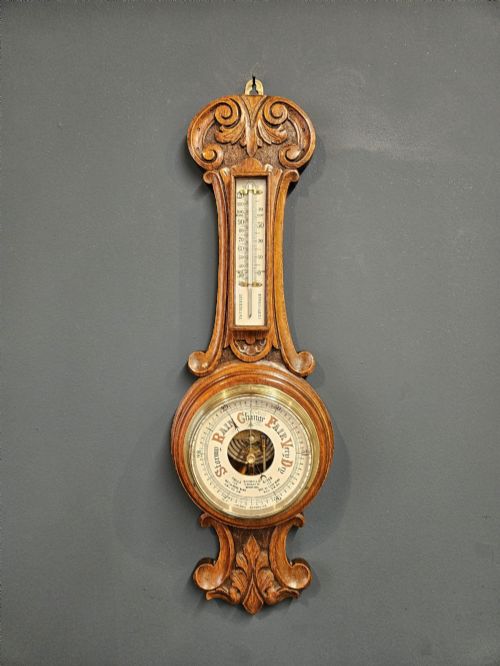
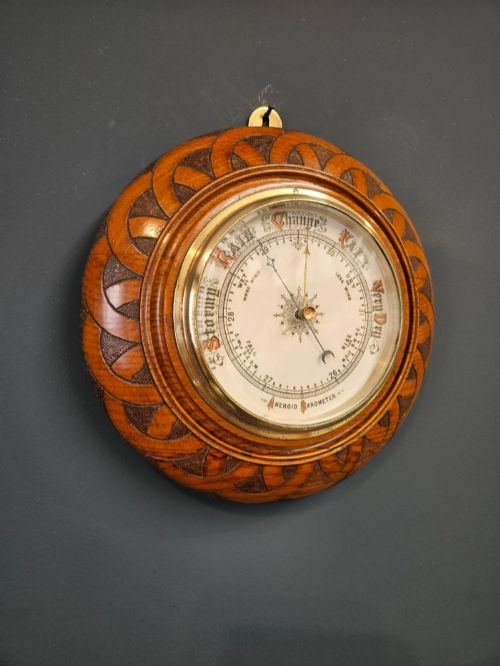
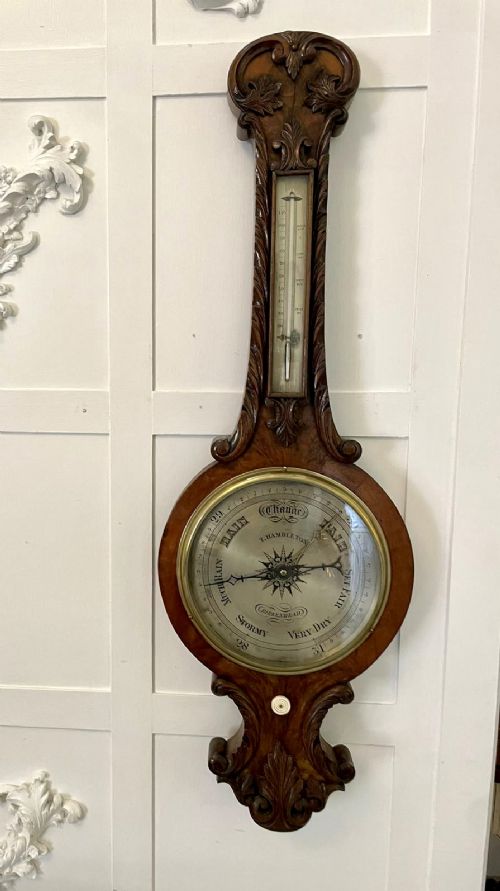
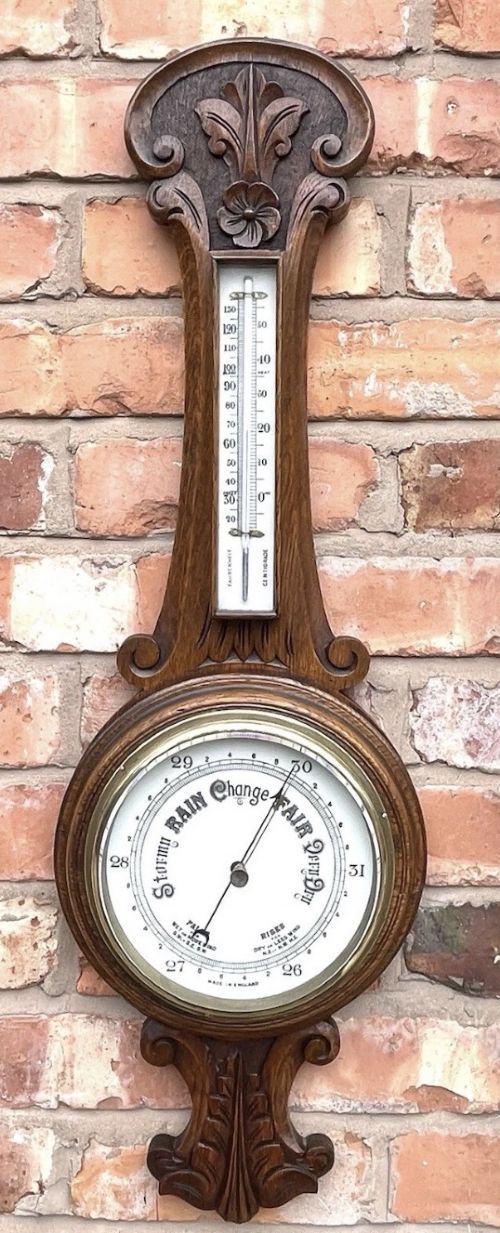
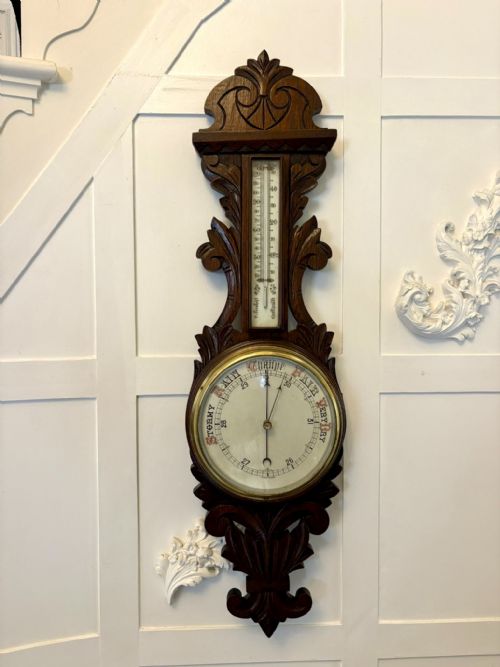
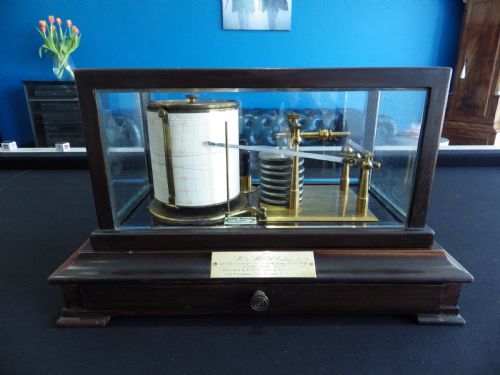
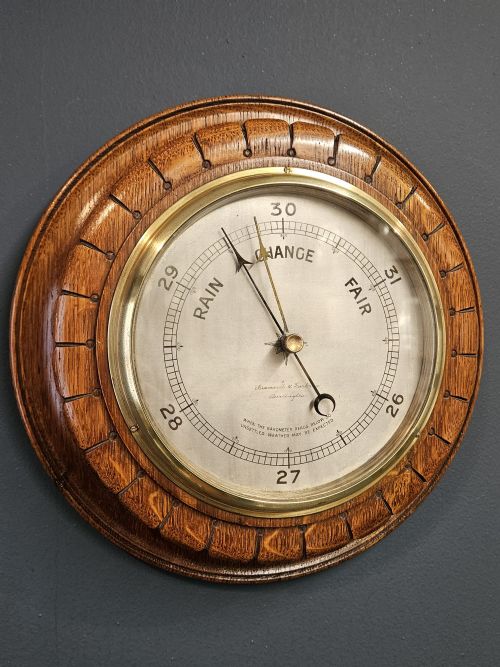
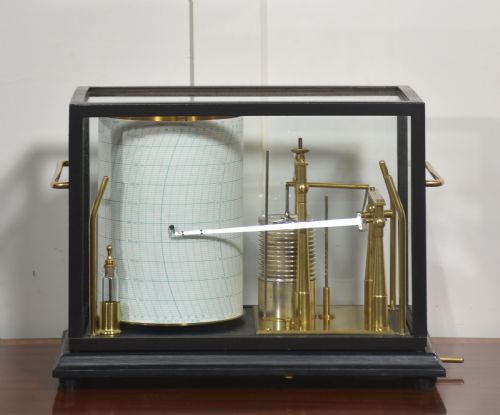
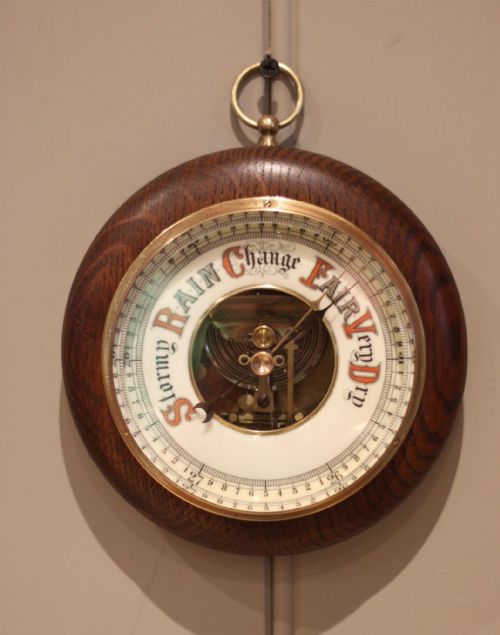
A vintage english aneroid barometer is a mechanical weather instrument that measures changes in air pressure via an internal corrugated metal vacuum capsule. Most pieces appearing here take the form of wall-mounted banjo barometers or desktop chart-recording barographs housed within timber frames.
The selection spans the Victorian, Edwardian, and interwar periods, with robust oak and mahogany cases dominating the early output. Scientific makers such as Short & Mason and Negretti & Zambra frequently signed these dials during the late nineteenth and early twentieth centuries.
Makers housed these precision movements in turned oak, carved mahogany, burr walnut, and occasionally chinoiserie-decorated panels. Buyers encounter both straightforward circular domestic models and complex instruments featuring fitted thermometers or chart drawers.
How They Were Made
Cabinetmakers fashioned the protective enclosures using solid or veneered hardwoods like oak, mahogany, and walnut, often applying turned mouldings, carved relief work, or bevelled glass viewing panels. The resulting timber housings protected the delicate interior linkages from dust and accidental knocks while adding domestic elegance.
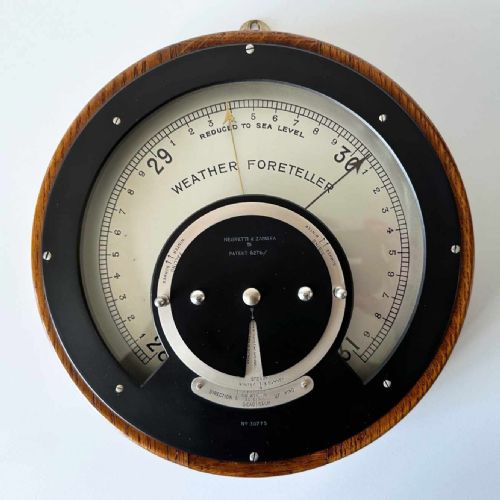
Instrument makers engraved and silvered the brass or metal dials, pairing them with delicate steel indicators and thermometer tubes filled with coloured spirit or mercury. Specialised firms patented altitude adjustment mechanisms and weather-foretelling scales to improve domestic forecasting accuracy.
Vintage English Aneroid Barometer Retail Price Guide 2026
Typical asking prices for vintage english aneroid barometer among the pieces listed under this phrase on Sellingantiques today, from the lower quarter to the upper quarter. They describe what is for sale here now, not the wider market.
Some nineteenth-century weather foretellers included charming railway and seaside resort interest notes directly on their paper recording charts.
What Varies in Quality
Quality rests upon the reputation of the instrument maker and the crispness of the dial engraving, alongside the architectural ambition of the timber case. Instruments signed by notable makers command greater respect than anonymous workshop pieces.
Finer examples feature heavily carved or burr-figured timber cases, bevelled glass bezels, and secondary recording cylinders like clockwork barographs. The integrity of the silvered dial surface and the complexity of supplementary thermometers further distinguish superior specimens.
Short & Mason·Negretti & Zambra·W Watson & Sons·Bramwell & Harbron·Blake & Son
The Vintage English Aneroid Barometer Glossary
- Aneroid barometer
- A meteorological instrument measuring atmospheric pressure through the expansion and contraction of a sealed metal capsule without using liquid. These devices became common in British homes from the Victorian era onward.
- Barograph
- A self-recording aneroid barometer that traces pressure changes onto a rotating paper chart driven by a clockwork mechanism. These desk instruments often include chart drawers and protective glass covers.
- Banjo barometer
- A domestic wall instrument shaped like a stringed instrument, featuring a small circular dial at the top and a larger thermometer or hygrometer box below. Oak and mahogany are the typical housing materials for this form.
- Silvered dial
- A brass dial treated with silver powder to produce a matte metallic finish before black wax fills the engraved graduations and maker details. This technique ensures high legibility against domestic wall lighting.
- Bevelled glass
- Heavy window glass shaped with an angled perimeter ground down to fit tightly inside a brass bezel. This edge treatment catches light and denotes a higher standard of cabinetmaking.
Vintage English Aneroid Barometer: Frequently Asked Questions
How does an aneroid barometer work?
An internal sealed metal box flexes as atmospheric pressure shifts, moving levers connected to the dial needle.
Changes in weather alter the capsule's shape, driving the pointer across engraved forecasting scales.
Where should I hang my barometer?
Mount the instrument securely on an interior wall away from direct sunlight, radiators, and drafts.
Stable indoor temperatures help prevent undue mechanical stress on the sensitive metal movement inside.
Can these instruments predict weather accurately?
Rising pressure generally indicates improving weather, while falling pressure signals coming rain or wind.
Historical barometers provide reliable local trends when calibrated correctly against known barometric readings.
What is the difference between a barometer and a barograph?
A standard barometer uses a pointer to show current atmospheric pressure on a fixed circular dial.
A barograph continuously records pressure fluctuations onto a paper chart fitted to a clockwork drum.