
Vintage Enamelled Pendant
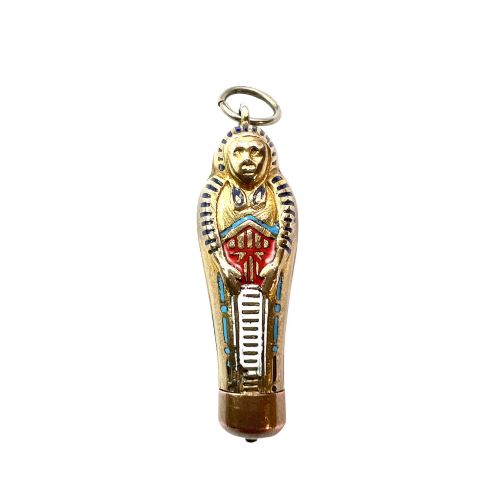
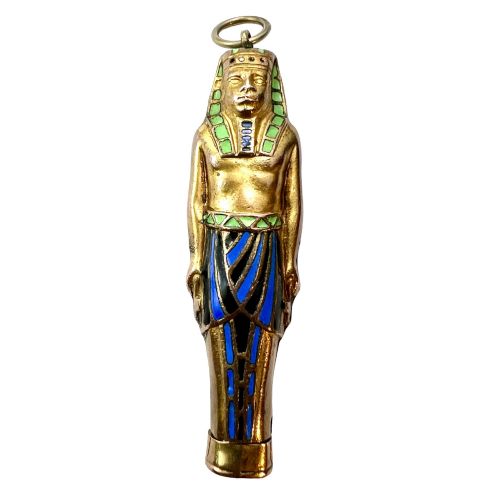
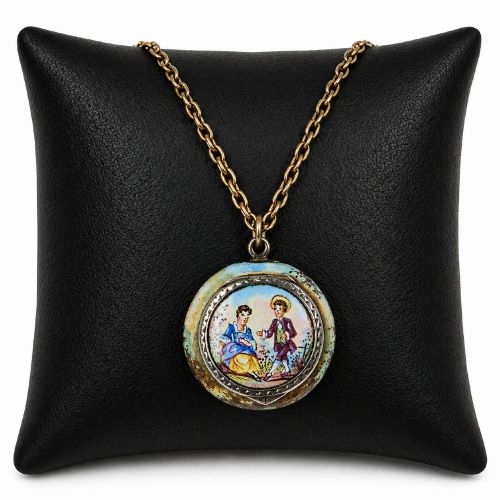
These vintage enamelled pendant designs span multiple centuries and feature precious metals fused with vitreous glass coatings.
Vintage Enamelled Pendant
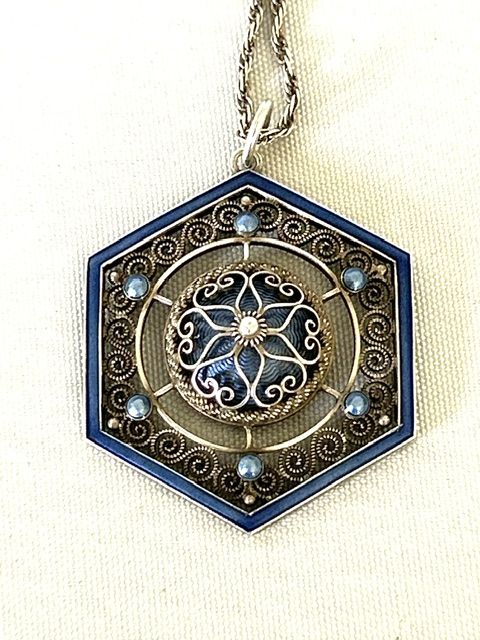
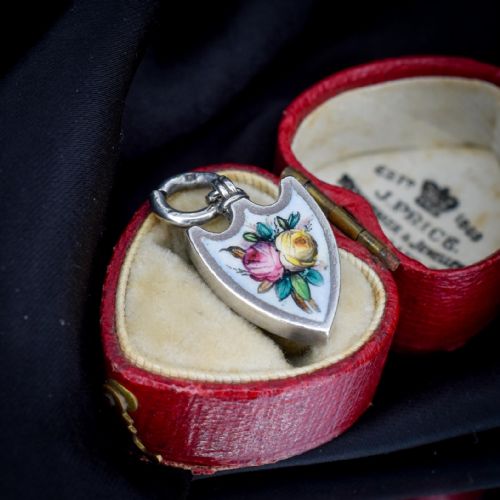
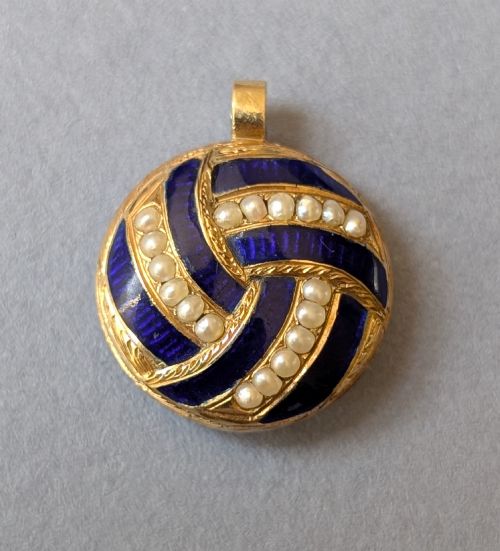
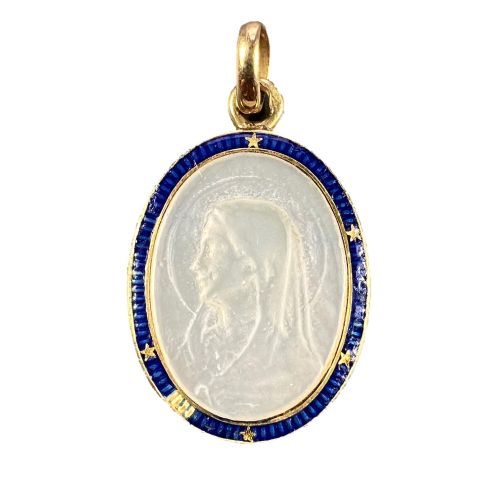
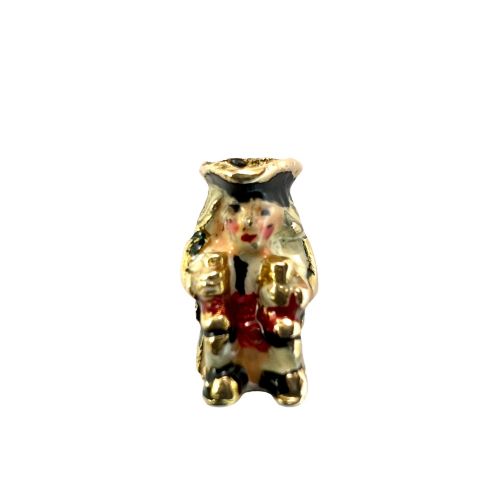
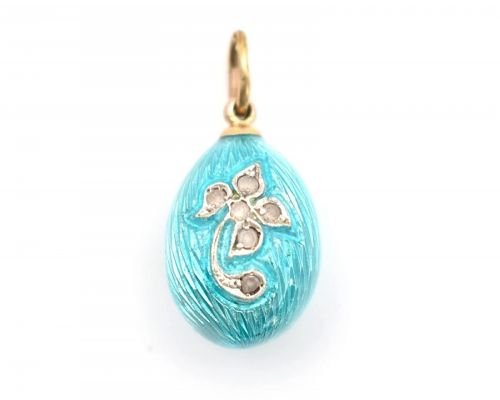
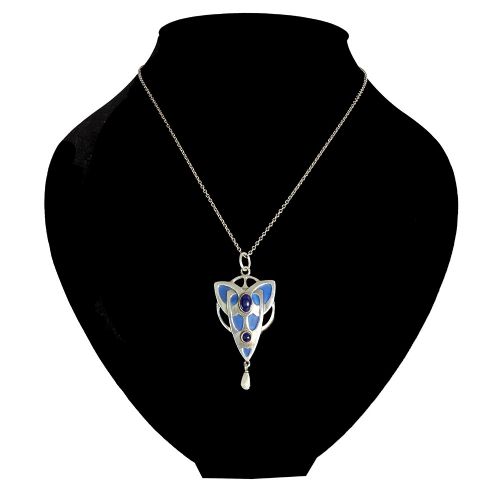
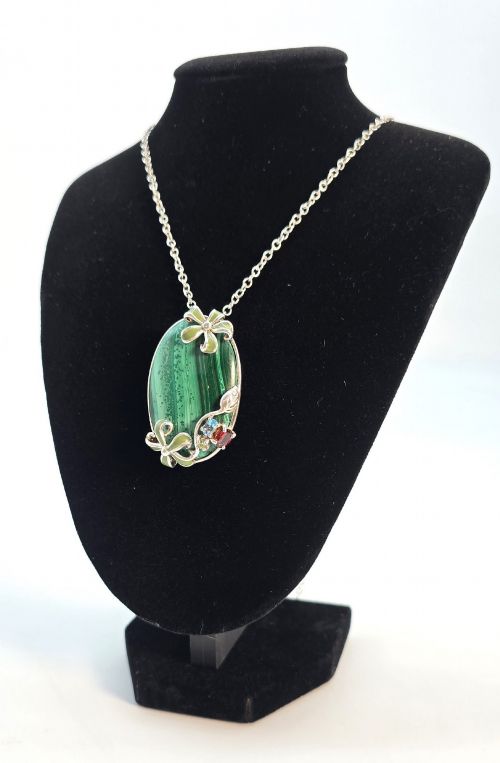
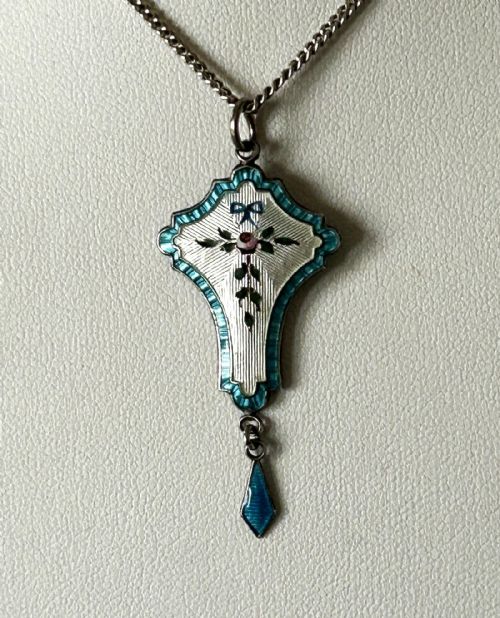
A vintage enamelled pendant brings together decorative metalwork and fused glass surfaces created across the nineteenth and twentieth centuries. Buyers seeking a vintage enamelled pendant encounter diverse forms ranging from floral shield charms to intricate religious medals and geometric motifs. The pieces originate from British, French, Scandinavian, and Russian workshops spanning Victorian, Edwardian, Art Nouveau, and Art Deco periods.
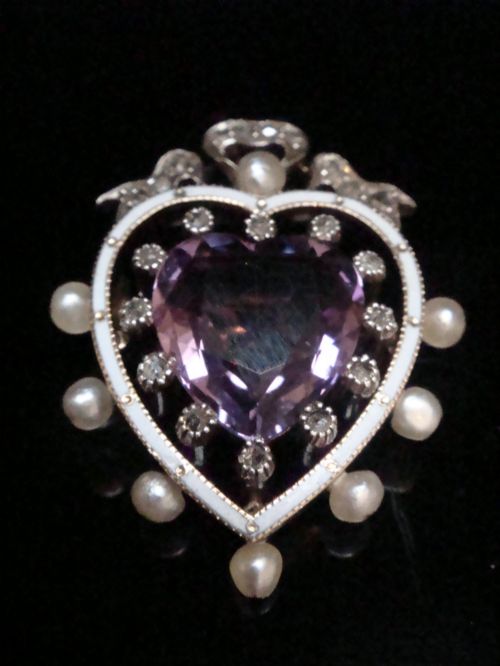
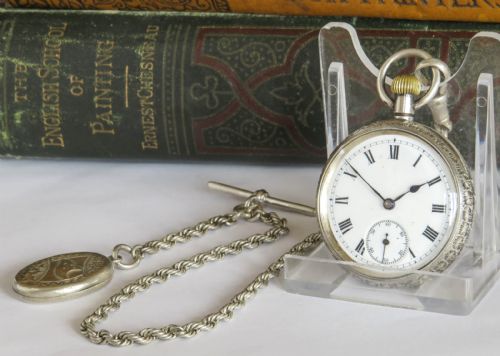
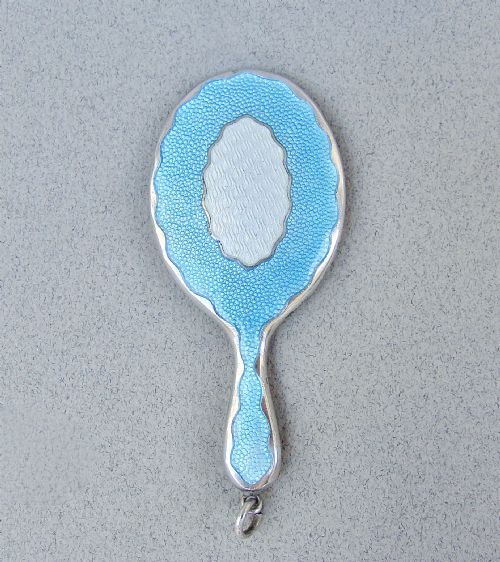
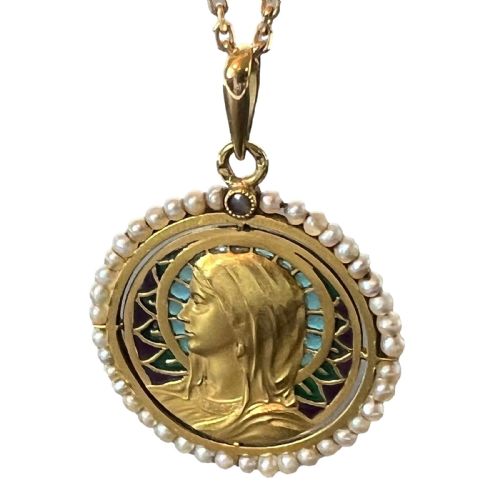
Most examples combine precious frames of silver, sterling silver, or yellow gold with coloured glass glazes applied by hand. Pendants often incorporate seed pearls, diamonds, chalcedony, or mother of pearl alongside the vitreous coating. Forms extend from traditional necklace drops to miniature purses, pocket watch conversions, and pictorial charms.
Materials and construction techniques
Craftsmen built these items using sterling silver, 9ct gold, 15ct gold, or 18K yellow gold as the structural base for the glass coatings. Artisans applied powdered glass pastes into engraved metal cells or onto guilloche machine-turned patterns before firing the metal in a kiln. This thermal process fused the vitreous enamel permanently to the underlying precious metal surface.
Specialised translucent techniques such as plique-à-jour allowed light to pass through the coloured enamel sections like stained glass without a solid metal backing. Workers finished the jewellery by setting natural pearls, diamonds, or turquoise cabochons into secure bezels or prongs surrounding the enamelled panels.
Evaluating craftsmanship and condition
Quality separates pieces through the precision of the metal engraving and the uniform clarity of the fired glass layers. Superior examples display smooth, polished enamel surfaces free from visible stress fractures, deep pitting, or erratic colour pooling within the metal compartments.
Marius Hammer·Henry Williamson·Henry Matthews·Archibald Knox·Liberty and Co·Murrle Bennett·Henry Perkins and Sons
The Vintage Enamelled Pendant Glossary
- Guilloche
- A decorative technique where a mechanical lathe etches precise geometric patterns into metal before translucent enamel is applied over the top. This creates shimmering wave or ray effects that shift as the pendant moves in the light.
- Plique-a-jour
- An enamelling method resembling miniature stained glass where the enamel is fired within an open metal framework without a backing. Light passes directly through the transparent coloured glass cells.
- Vitreous Enamel
- A material made by fusing powdered glass to a metallic substrate through high-temperature firing. The resulting glossy compound resists scratching and maintains its vibrant colour over generations.
- Seed Pearl
- Tiny natural or cultured pearls commonly utilised in historical jewellery for delicate borders or floral accents. They frequently accompany enamel work on Edwardian and Art Nouveau pieces.
- Sterling Silver
- An alloy consisting of silver and other metals to increase durability while maintaining a bright metallic lustre. Items made from this standard often feature hallmarks indicating the assay office and year of creation.
Vintage Enamelled Pendant: Frequently Asked Questions
How do I clean vintage enamel jewellery safely?
Clean vitreous enamel pieces gently using a soft cloth dampened with warm soapy water, avoiding harsh chemical dips or ultrasonic cleaners that can loosen glued stones or damage delicate metal finishes.
Dry the item thoroughly immediately after washing to protect any exposed steel pins or vulnerable pearl settings from moisture damage.
What is guilloche enamel?
Guilloche enamel involves engraving a precise repeating geometric pattern onto a metal disc using a mechanical lathe before applying a translucent coloured glass coating over the carved surface.
The underlying pattern shines through the glossy enamel layer, creating a distinctive shimmering effect that shifts with the viewing angle.
Are these pendants suitable for daily wear?
These historical items require careful handling because vitreous glass can chip or crack if struck against hard surfaces or dropped onto a floor.
Remove the jewellery before swimming, exercising, or performing manual tasks to protect the precious metal mounts and fragile enamel panels.
How can I identify an Art Nouveau pendant?
Art Nouveau examples typically feature flowing organic lines, natural floral motifs, and sinuous plant stems rendered in silver alongside translucent enamel.
These pieces often incorporate cabochon stones like chalcedony or hanging seed pearls that reflect the aesthetic movement popular around the turn of the twentieth century.