


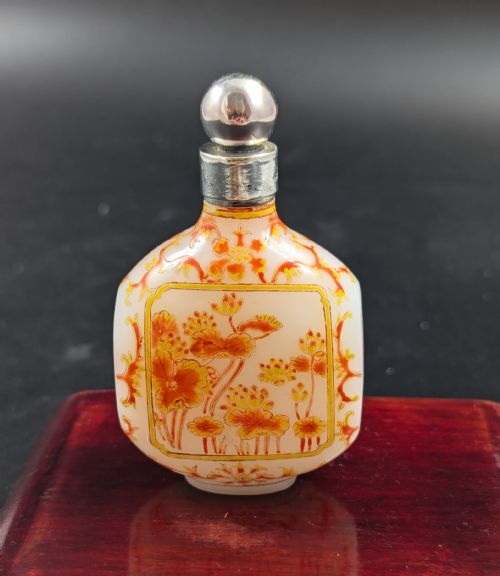


Vintage Enamel Perfume Flask
These vintage enamel perfume flask examples combine glass and precious metals with intricate coloured surfaces for the dressing table.
Vintage Enamel Perfume Flask
A vintage enamel perfume flask brings together glass vessels and decorated metalwork, primarily appearing in twentieth-century forms. Buyers seeking a vintage enamel perfume flask often encounter pieces created during the Art Deco and Edwardian eras, alongside French Belle Epoque designs.
The objects take the form of scent bottles, perfume bottles, and related vessels such as snuff bottles. Materials span cut glass, opaque glass, sterling silver, gold leaf, and enamel work.
Geometric Art Deco pieces sit alongside ornate French silver mounts and nineteenth-century glass traditions. Each vintage enamel perfume flask reflects the prevailing decorative tastes of its specific decade of production.
Materials and construction methods
Makers formed the foundational vessels from clear, cut, blue, or opaque glass, often shaping them into geometric or rounded profiles. Glass blowing and cutting created the sturdy reservoirs required to hold liquid scents safely.
Silver mounts and collars provided secure closures for the bottles, frequently incorporating guilloche enamel work across the lids or surfaces. Artisans applied coloured enamels and gold leaf details onto the metal to achieve patterned visual effects.
Listings feature items from the nineteenth century through the nineteen-thirties, utilising glass, sterling silver, gold leaf, and enamel.
Assessing quality in vintage enamel perfume flasks
Quality rests upon the precision of the metalwork and the clarity of the glass vessel. Superior examples display crisp guilloche patterns in the enamel and well-fitted silver mounts that secure the bottle properly.
The distinction between standard production pieces and finer items depends on the execution of the decorative surface and the reputation of the workshop involved in the creation.
Karl Palda·Henry Perkins·René Lalique
The Vintage Enamel Perfume Flask Glossary
- Guilloche enamel
- A decorative technique involving precise mechanical engraving beneath translucent enamel layers. This method produces repetitive geometric patterns that catch the light.
- Sterling silver
- A silver alloy containing a high proportion of pure silver by mass, used for bottle mounts and caps. It provides durability and a polished finish.
- Cut glass
- Glassware shaped and patterned by abrasive wheel cutting to create facets. This technique enhances the refractive quality of the vessel.
- Art Deco
- A design style characterised by sleek geometric shapes, streamlined forms, and bold ornamentation. It dominates the aesthetic of pieces from the nineteen-thirties.
Vintage Enamel Perfume Flask: Frequently Asked Questions
What materials make up these bottles?
The pieces combine glass bodies with silver mounts, gold leaf accents, and enamel decorations. Makers utilised cut glass and opaque glass for the main reservoirs.
Metal components typically consist of sterling silver, often decorated with guilloche enamel across the top sections or screw caps.
How do I date an Art Deco flask?
Art Deco pieces generally date from the nineteen-twenties and nineteen-thirties, identifiable by geometric lines and blue or clear glass forms.
Makers' marks, silver hallmarks, and characteristic styling help narrow the production period to specific decades.
Where were these scent bottles made?
Production locations span European workshops, including English silversmiths and continental glassmakers from France and other regions.
Individual pieces often bear assay office marks or maker signatures that indicate their origin.
How should I clean my flask?
Careful dusting with a soft cloth preserves the enamel and silver surfaces without causing abrasion to the delicate materials.
Avoid submerging pieces with vintage enamel or paper labels in water to protect the original finishes.