



Vintage Enamel Mirror
These vintage enamel mirror pieces are striking vanity accessories designed for daily use and display, bringing together coloured glass and metalwork.
Vintage Enamel Mirror
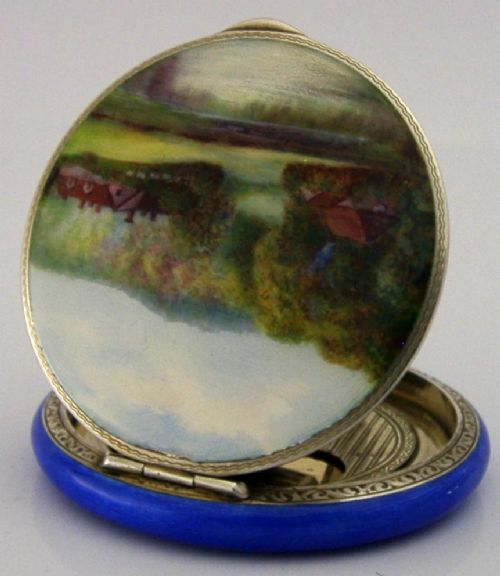
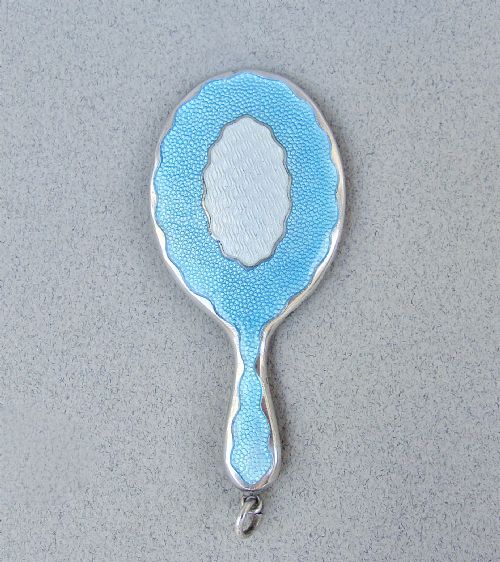
When you search for a vintage enamel mirror, you encounter a selection of personal vanity items spanning several decades from the late nineteenth century to the mid-twentieth century. The objects range from pocket compacts and miniature purse mirrors to hand-held looking glasses and large table mirrors.
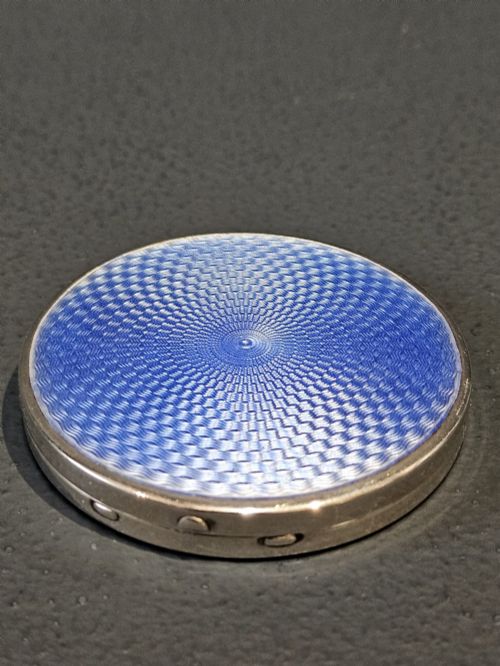
The version you are most likely to meet on this page is the Art Deco silver and guilloche enamel compact or hand mirror from around nineteen thirty. These pieces often incorporate blue enamel, sterling silver, or chrome alongside the reflective glass.
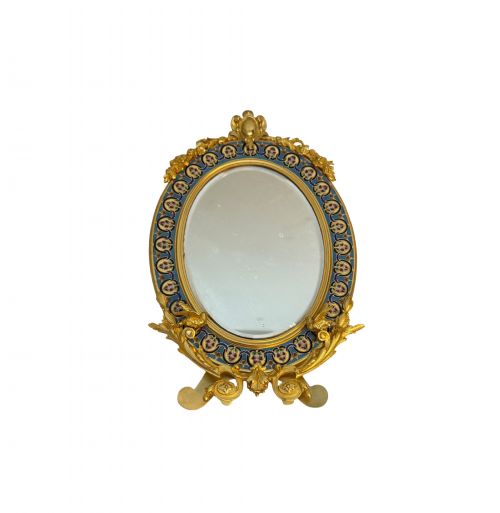
Earlier examples bridge the late nineteenth century and the Art Nouveau period, offering champleve work, gilt bronze, and romantic pendant lockets with internal mirrors. Mid-century Italian silver pieces also appear, demonstrating the continuation of enamelled vanity items into nineteen fifty.
Materials and construction methods
The construction relies on fusing vitreous enamel to metal bases such as sterling silver, gilt bronze, brass, and gilt metal. Guilloche techniques engrave geometric patterns into the metal beneath translucent enamel coatings, creating depth and shifting light effects.
Makers integrated glass mirrors into powder compacts, hand-held frames, and hinged purse cases, often combining enamel with silk suede linings or mesh structures. Silver components carry hallmarks from Birmingham and London alongside maker marks, while gilt bronze and champleve enamel define the heavier table mirrors.
Vintage Enamel Mirror Retail Price Guide 2026
Typical asking prices for vintage enamel mirror among the pieces listed under this phrase on Sellingantiques today, from the lower quarter to the upper quarter. They describe what is for sale here now, not the wider market.
Art Deco designs dominate the selection, appearing alongside French Napoleon III table mirrors, Art Nouveau pendants, and mid-century Italian compacts.
Quality factors in enamelled mirrors
Quality rests upon the precision of the guilloche engraving and the clarity of the vitreous enamel layer. Superior pieces display even colour saturation without pitting or restoration across the decorated surface.
The weight and purity of the metal frame, whether sterling silver, eight hundred silver, or gilt bronze, dictate the standard of the object. Finer specimens retain crisp mechanical closures on compacts and secure bezel settings around the mirror glass.
Henry Williamson·Henry Matthews·Giuliano Spinelli·Meyle And Mayer·Richard Hudnut
The Vintage Enamel Mirror Glossary
- Guilloche
- A decorative technique where a mechanical lathe engraves a precise, intricate repeating pattern into a metal substrate before translucent enamel is applied over the top. This creates a shimmering, patterned background beneath the coloured glass surface.
- Champleve
- An enamelling method where troughs or cells are dug out of a thick metal plate, filled with enamel powder, and fired. The metal walls remain visible as part of the overall design.
- Vitreous enamel
- A material made by fusing powdered glass to a metallic substrate at high temperatures, resulting in a smooth, durable, and glossy coloured coating. It resists scratching and maintains its hue for decades.
- Silver-gilt
- Sterling silver or another silver alloy that has been coated with a thin layer of gold on its surface. This finish provides a warm golden tone alongside the structural strength of silver.
- Powder compact
- A small portable case fitted with a mirror and a compartment for holding cosmetic face powder. Many vintage examples incorporate elaborate enamel lids and integrated puffs.
Vintage Enamel Mirror: Frequently Asked Questions
How do I date an enamel compact?
Dating relies on assay office hallmarks stamped into the silver, stylistic indicators like Art Deco geometry or Art Nouveau curves, and maker marks. Birmingham and London hallmarks provide specific years.
Material choices, such as chrome introduction in the nineteen thirties or mid-century Italian silver standards, also narrow the timeline.
Were these mirrors meant for travel?
Many of these items were designed for daily personal grooming on the move, fitting into handbags, evening purses, or pockets. Compacts and miniature purse mirrors included secure clasps and internal powder wells.
Larger table mirrors and heavy bronze pieces stayed on dressing tables rather than travelling with the owner.
How should I clean a vintage enamel mirror?
Enamel requires gentle cleaning with a soft, damp cloth to avoid scratching the glass coating or the surrounding silver and metal frame. Harsh chemical dips ruin enamel and damage antique patinas.
Silver components can be polished carefully while keeping polish away from the vitreous enamel surfaces and mirror edges.