


Vintage Enamel Compact Case
A vintage enamel compact case is a pocket mirror and powder container that brings tactile elegance to daily life.
Vintage Enamel Compact Case
A vintage enamel compact case is a pocket-sized accessory designed for cosmetics, carrying mirrors, powder compartments, and occasionally integrated card holders or cigarette sections. When you search for this phrase, you find small dressing table pieces intended to be carried in a handbag or displayed on a desk.
The versions most likely to meet you on this page date from the early decades of the twentieth century, with a strong representation of Art Deco geometric designs alongside Edwardian and mid-century examples. They appear in forms ranging from simple round powder containers to combination cases and pocket watch stands.
Materials span sterling silver, silver-gilt, chrome, brass, and gilt metal, each serving as a foundation for vitreous enamel surfaces. These objects capture an era when everyday functional items received meticulous decorative treatment from makers across Britain, Europe, and the United States.
How they were made
Makers applied vitreous enamel to metal bases by fusing powdered glass under high heat, creating a hard, glossy surface that resisted wear. This technique often involved sterling silver or base metals prepared with chased or engraved patterns beneath the translucent coating.
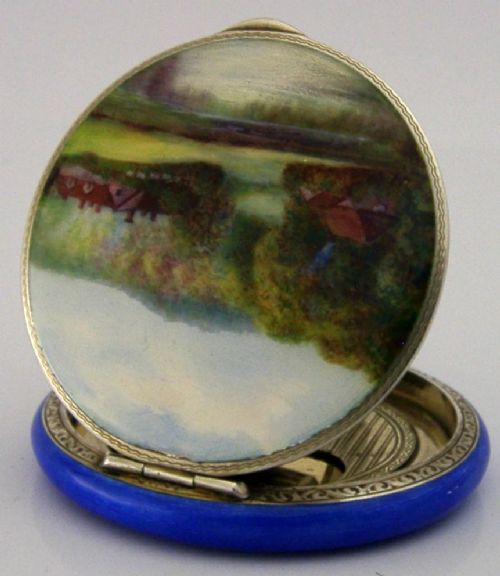
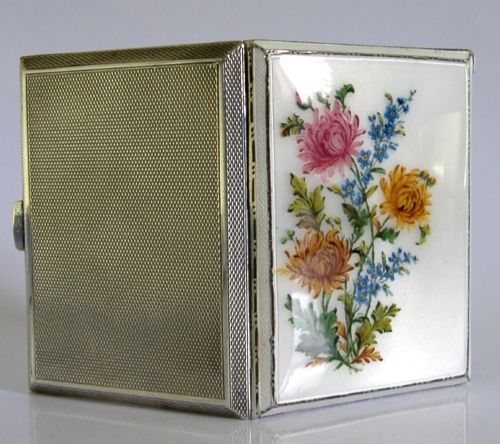
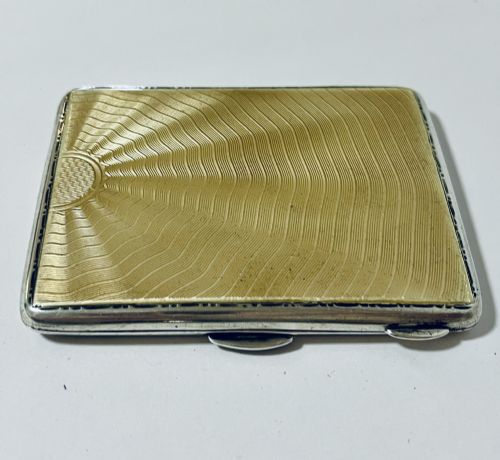
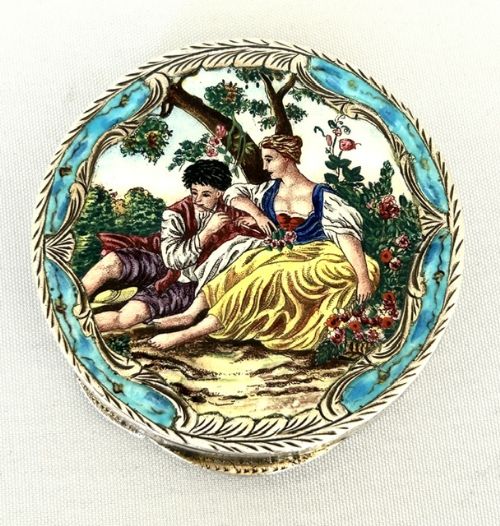
Guilloche decoration appears frequently, where a machine cut precise geometric or wave patterns into the metal before the enamel was added, allowing light to reflect through the coloured layers. Hand-painted floral motifs and scenic vignettes were also applied directly to the surface before firing.
Structural elements such as mesh panels, hinged lids, and internal suede linings required precision metalworking. Silver components typically bear hallmarks indicating the assay office and year of manufacture, confirming the origin of the metalwork.
Materials include vitreous enamel applied over engine-turned guilloche patterns, alongside hand-painted floral and scenic subjects.
What varies in quality
The distinction between standard pieces and finer examples rests on the complexity of the enamel work and the quality of the underlying metal. Sterling silver foundations and intricate guilloche patterns indicate higher craftsmanship than plain chrome or brass alternatives.
The integrity of the enamel surface dictates the overall standard of the piece, with smooth, uninterrupted glazing representing superior preservation and execution. Painted details such as hand-painted chrysanthemums or Italian scenic views show varying degrees of artistic skill.
Maker attribution elevates the standing of a compact, with recognised names and clear hallmarks providing a documented pedigree. The tightness of the hinge closure and the clarity of the internal mirror also signal the original grade of manufacture.
Henry Matthews·Henry Perkins and Sons·Giuliano Spinelli·Richard Hudnut·Houbigant
The Vintage Enamel Compact Case Glossary
- Guilloche
- A decorative technique where a mechanical lathe engraves precise geometric patterns into metal. This patterned base shines through translucent enamel to create depth and movement.
- Vitreous enamel
- A material made by fusing powdered glass to a metal substrate at high temperatures. It forms a durable, glass-like coating that holds colour over decades.
- Silver-gilt
- Sterling silver that has been coated with a thin layer of gold. This treatment provides a warm golden finish while retaining a solid silver base.
- Combination compact
- A multi-functional accessory designed to hold several items at once, such as face powder, lipstick, and cigarettes. These pieces reflect the changing social habits of the twentieth century.
Vintage Enamel Compact Case: Frequently Asked Questions
How do I date a silver compact?
Silver compacts made in Britain typically feature hallmarks stamped into the metal frame. These marks indicate the assay office, the standard of silver, and a date letter corresponding to the specific year of manufacture.
Continental and American pieces rely on maker signatures, style markers such as Art Deco geometry, or patent dates stamped on the interior. Comparing the closure style and materials helps narrow down the production era.
Were these compacts used for daily wear?
These accessories were designed for daily use by women carrying powder, rouge, and mirrors in their handbags for touch-ups throughout the day. Many included integrated compartments for visiting cards, coins, or cigarettes.
Owners often stored them in dedicated pouches or kept them on dressing tables as part of a matching vanity set. Their robust metal construction allowed them to withstand regular handling.
What is the difference between silver and chrome compacts?
Silver compacts use sterling silver or silver-gilt as the primary structural metal, often carrying official hallmarks and weighing significantly more in the hand. Chrome and brass versions emerged as durable, cost-effective alternatives during the Art Deco period.
While silver pieces were produced by traditional silversmiths, base metal versions allowed manufacturers to experiment with modern industrial finishes and mesh designs. Both types utilised vitreous enamel for exterior decoration.