







Vintage Enamel Bowl
These vintage enamel bowl examples span intricate Japanese cloisonne to crisp Art Deco silver and glass.
Vintage Enamel Bowl
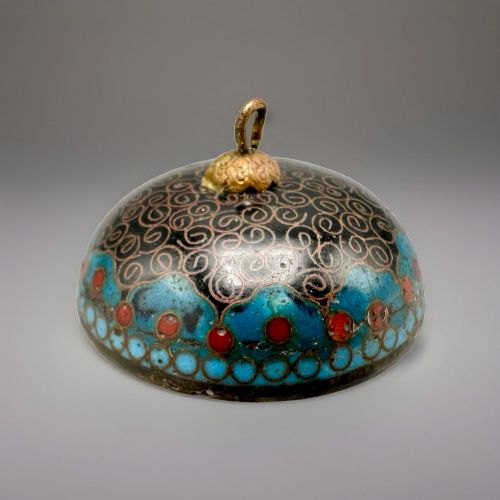
When you search for a vintage enamel bowl, you encounter a surprisingly varied group of objects originating from British, European, and Asian workshops. The selections here range from decorative Japanese cloisonne vessels and Chinese bronze pieces to European dressing table jars, silver-topped cut glass dishes, and Arts and Crafts copper pedestals.
You are most likely to meet Japanese cloisonne pieces produced during the late nineteenth and early twentieth centuries, alongside twentieth-century European vanity items and glassware. Forms stretch beyond simple basins into ashtrays, trinket dishes, salt cellars, punch bowls, and lidded jars.
The materials span base metals like copper and bronze paired with fine wirework, sterling silver mounts set with guilloche enamel, and glass or porcelain decorated with fired vitreous pastes. Periods stretch from the eighteenth century through the Edwardian era and into the mid-twentieth century.
How They Were Made
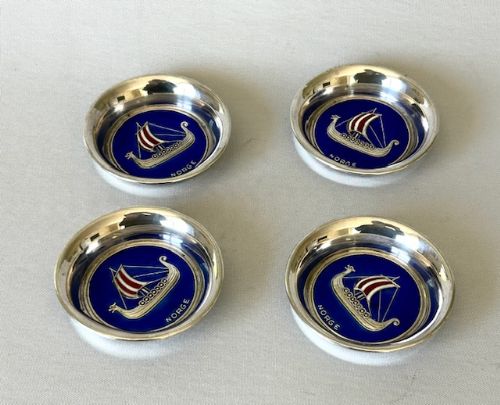
Many Asian items rely on cloisonne technique, where thin metal wires form individual cells on a copper or bronze base before being filled with coloured enamel paste and fired. European pieces frequently combine cast sterling silver or gilt metal with translucent enamel applied over engine-turned guilloche grounds.
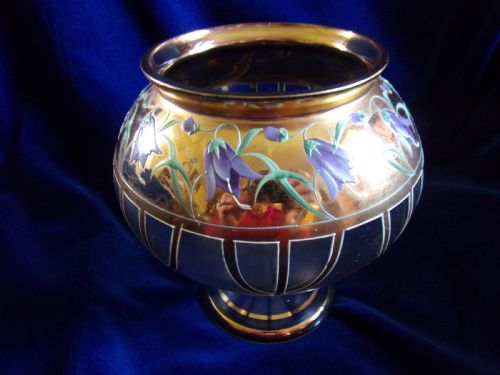
Glass and porcelain vessels integrate enamel decoration through hand painting or gilding, fixed permanently to the surface in a kiln. Arts and Crafts examples utilise hammered copper bodies set with raised enamel cabochons.
Metalwork foundations undergo shaping, beating, or casting before the vitreous enamel application fuses glass powder to the substrate at high temperatures.
Vintage Enamel Bowl Retail Price Guide 2026
Typical asking prices for vintage enamel bowl among the pieces listed under this phrase on Sellingantiques today, from the lower quarter to the upper quarter. They describe what is for sale here now, not the wider market.
The listings span the eighteenth, nineteenth, and twentieth centuries, uniting Japanese cloisonne, European silver, and cut glass.
What Varies in Quality
The refinement of the metalwork and the precision of the enamel separation dictate the standing of each piece. Superior items display intricate wire placement without bubbling or pitting in the fired vitreous surface.
Design complexity and the integration of precious materials such as sterling silver, gold leaf, or jade rims elevate certain vessels above standard utilitarian wares. Hand-painted motifs on porcelain and glass show varying degrees of artist dexterity and line control.
The Vintage Enamel Bowl Glossary
- Cloisonne
- A metalwork technique where thin wires are soldered to a base to create compartments filled with enamel paste. This method produces intricate cellular patterns common in Japanese and Chinese decorative arts.
- Guilloche
- An ornamental mechanical engraving technique that etches precise geometric patterns into metal. Translucent enamel layers applied over this engraving create shimmering depth.
- Cabochon
- A gemstone or enamel piece shaped and polished into a smooth convex dome rather than faceted. These elements frequently ornament Arts and Crafts metalwork.
- Imari
- A style of Japanese porcelain featuring distinctive underglaze blue and overglaze red, gold, and black decoration. Pieces often display complex floral and panel motifs.
- Ogee
- A double-curved architectural line resembling an elongated S-shape. This contour appears in the moulded profiles of certain drinking vessels and bowls.
Vintage Enamel Bowl: Frequently Asked Questions
How do I clean an antique enamel bowl?
Wash gently in lukewarm water using mild soap and a soft cloth, avoiding harsh abrasives that scratch the vitreous surface. Dry thoroughly immediately afterward.
Keep pieces away from prolonged direct sunlight and moisture to protect delicate metal mounts and coloured glass elements.
Were these bowls used for food?
While some larger antique punch bowls and salt cellars served dining functions, many smaller vessels were designed as trinket dishes, ashtrays, or dressing table jars. Utility depends entirely on the specific form and material composition.
Items containing lead-based glazes or delicate internal wirework are best reserved for display rather than culinary use.
What periods do these pieces cover?
The selections span from eighteenth-century porcelain and Limoges enamel to Victorian, Edwardian, and Art Deco creations from the early twentieth century. Mid-century modern examples also appear alongside earlier Asian works.
Stylistic cues such as geometric silver mounts or organic Art Nouveau glass forms help establish the manufacturing era.