



Vintage Ebonised Mirror
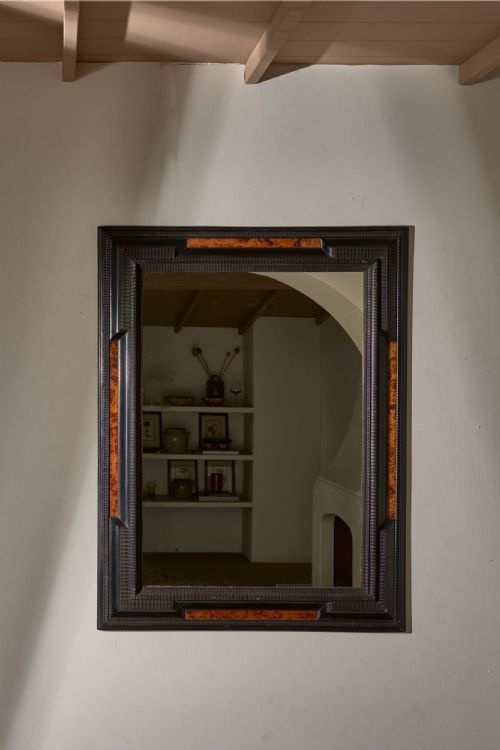
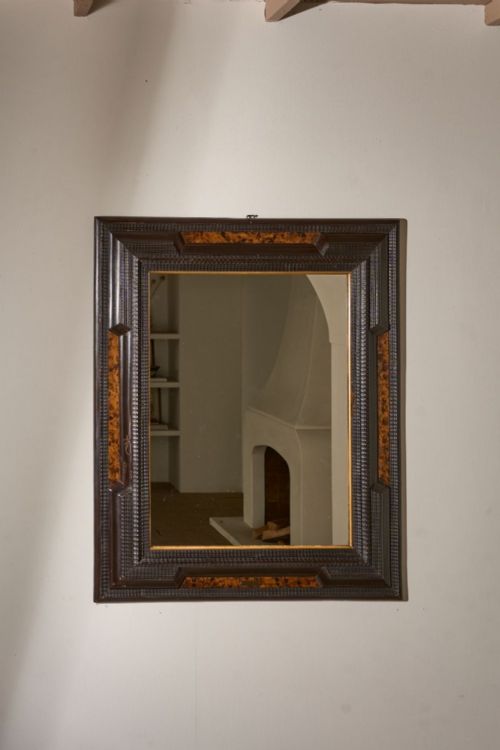
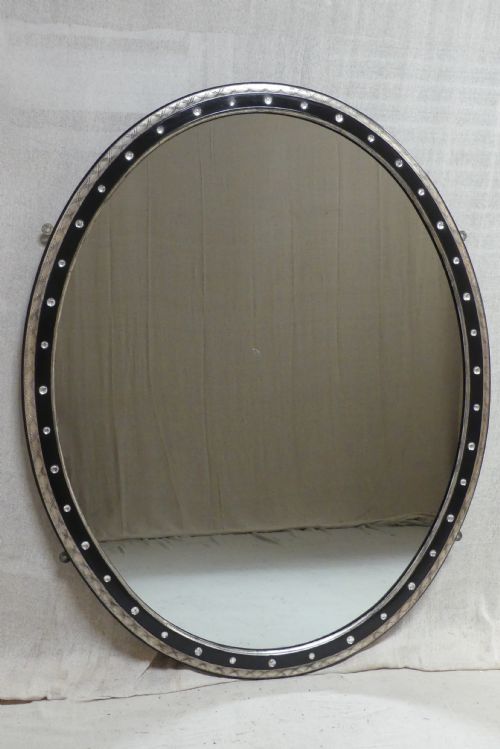
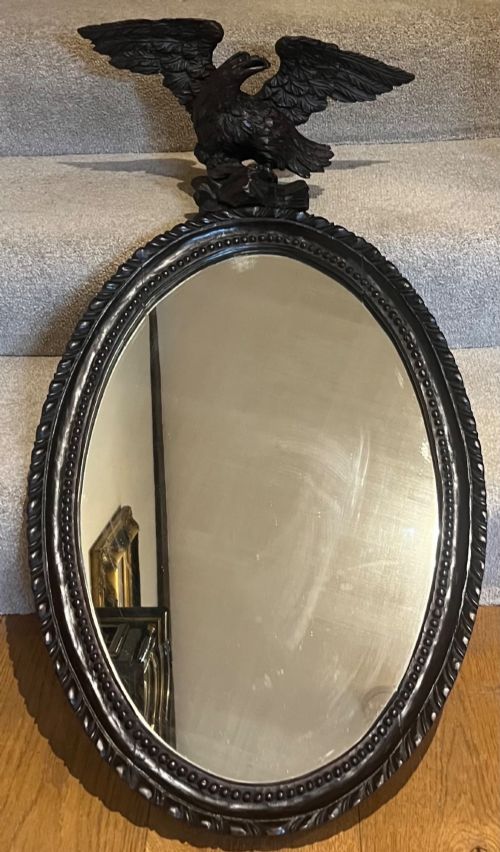
A vintage ebonised mirror brings a dark, striking silhouette to a room, shifting between austere Victorian black finishes and ornate Regency gilt decoration.
Vintage Ebonised Mirror
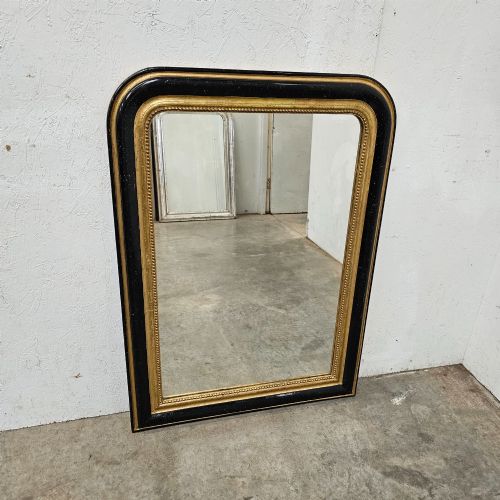
A vintage ebonised mirror relies on a blackened wood finish to create a sharp contrast with reflective glass and gilded highlights. These pieces range from simple wall mirrors to large overmantel frames designed for nineteenth-century reception rooms.
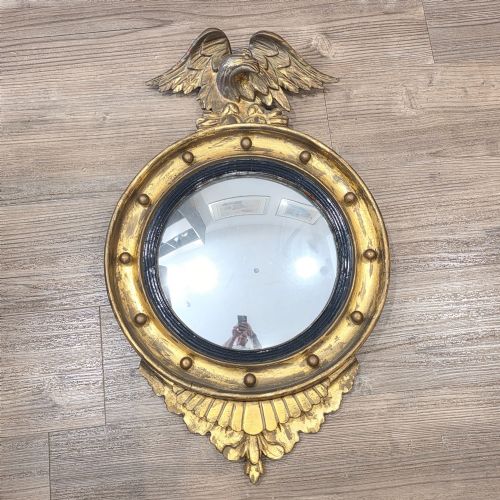
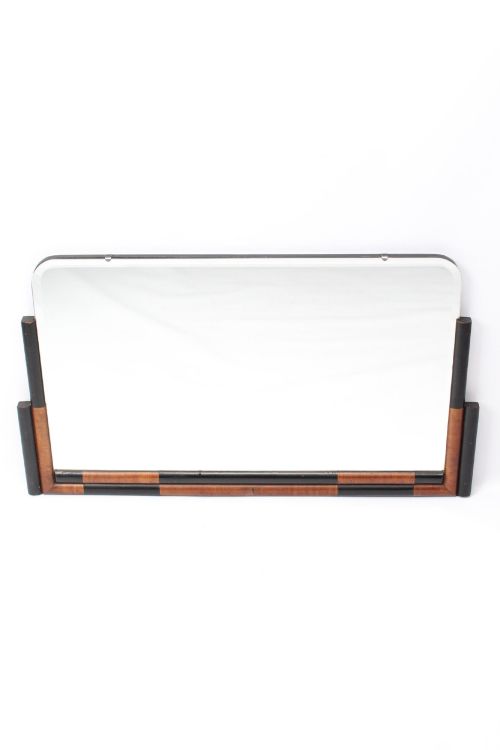
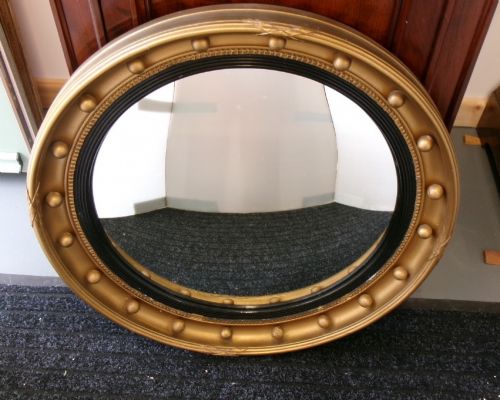
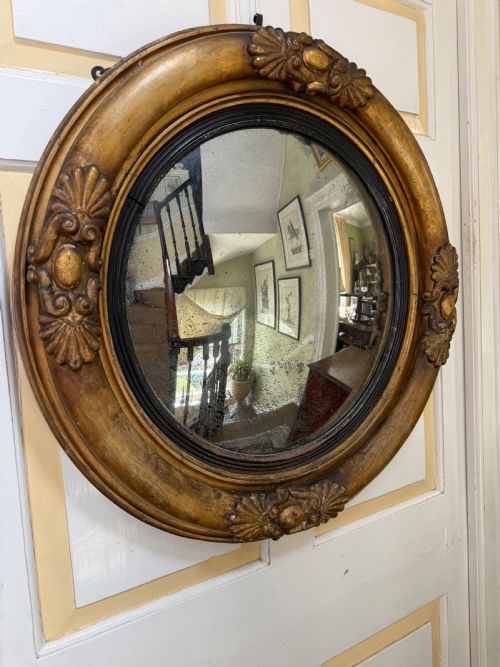
The selections available here lean heavily into nineteenth-century production, featuring Victorian and Regency influences alongside later Edwardian and Art Deco interpretations. Buyers encounter circular convex porthole formats, rectangular wall hanging versions, and grand overmantel proportions.
Makers utilised dark finishes to imitate costly exotic hardwoods like ebony, applying the treatment to pine, walnut, and birch. This decorative approach suits interiors that demand strong architectural lines and historical character without relying on bright mahogany or oak tones.
Materials and construction
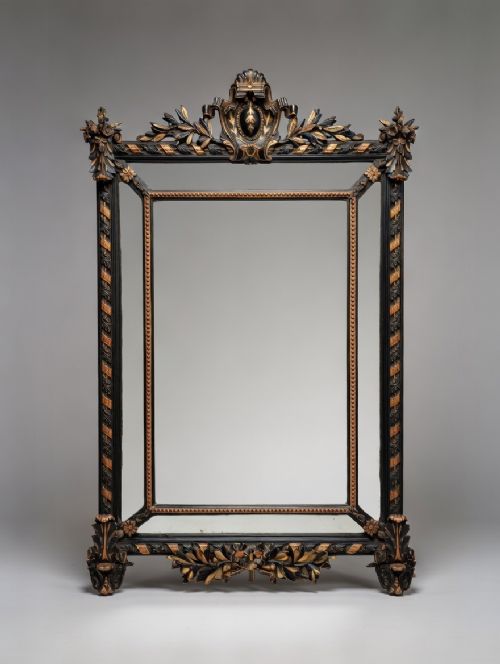
Craftsmen shaped timber frames using carved wood or applied gesso to build up intricate relief patterns before adding the black finish. Parcel-gilt details and gold leaf were often applied to raised carvings, creating a bright contrast against the dark ebonised background.
Glass plates in these pieces were frequently bevelled, silvered by hand, or etched with floral and geometric motifs depending on the period. The backing boards and frame joints typically show period-appropriate construction methods such as tongue-and-groove or hand-cut joinery.
Listings feature periods spanning from the Regency and Victorian eras through to Art Deco and Edwardian designs, predominantly in ebonised wood and glass.
Evaluating the standard
Quality in these frames depends upon the depth of the carving and the crispness of the parcel-gilt highlights against the black surface. Superior examples maintain intact gesso relief and retain their original mirror plates rather than modern replacements.
The integrity of the ebonised finish dictates much of the value, with pieces showing honest wear and stable patination scoring above clumsy modern repainting. Heavier overmantel structures require sound internal framing to support the substantial weight of the glass plate.
The Vintage Ebonised Mirror Glossary
- Ebonised
- Wood finished with a black stain or paint to imitate ebony. This technique gained popularity during the Victorian era for furniture and frames.
- Parcel-gilt
- Partially gilded woodwork where gold leaf or gilt is applied to specific raised portions of the design. It accents carved details against a dark background.
- Gesso
- A plaster-like mixture applied to wood frames and carved into decorative relief before gilding or painting. It allows for sharp, intricate ornamentation.
- Convex mirror
- A circular mirror with a curved glass plate that provides a wide-angle reflection of the room. These are often framed with gilded balls or eagle mounts.
- Overmantel mirror
- A wide mirror designed to hang specifically above a fireplace mantelpiece. They anchor the wall space in nineteenth-century domestic interiors.
Vintage Ebonised Mirror: Frequently Asked Questions
How do I hang a heavy overmantel mirror safely?
Large overmantel mirrors demand secure wall fixings distributed evenly across structural studs or masonry anchors. Professional mirror hangers utilise heavy-duty brackets capable of supporting the combined weight of the timber frame and thick glass plate.
Lower hanging wire is rarely sufficient for substantial nineteenth-century frames. Fixing the base as well as the top prevents the piece from tipping forward away from the wall.
What causes foxing on vintage mirror glass?
Foxing appears as small dark spots or cloudy patches where the silver backing behind the glass has degraded over decades. Moisture and atmospheric exposure react with the metal coating, creating this characteristic aged appearance.
Many collectors value original foxing as proof of age and authenticity. Replacing the glass entirely removes this historical patina, altering the visual character of the piece.
How should I clean an ebonised wooden frame?
Dust the carved surfaces gently with a soft, dry brush to prevent dirt accumulation in the recessed areas. Avoid standard household sprays or wet cloths that can strip or dull the aged black finish.
Microfibre cloths work well for polishing the glass plate without transferring moisture to the vulnerable wooden edges. Regular gentle maintenance preserves both the finish and the underlying gesso.
Are convex mirrors functional or purely decorative?
Convex mirrors produce a distorted, wide-angle reflection that captures the entire room in miniature rather than offering a direct portrait view. Regency interiors utilised them to distribute natural light effectively across darker spaces.
While they do not serve well for close grooming, they function brilliantly as optical focal points on living room or hallway walls.