




Vintage Drop Trunk Clock
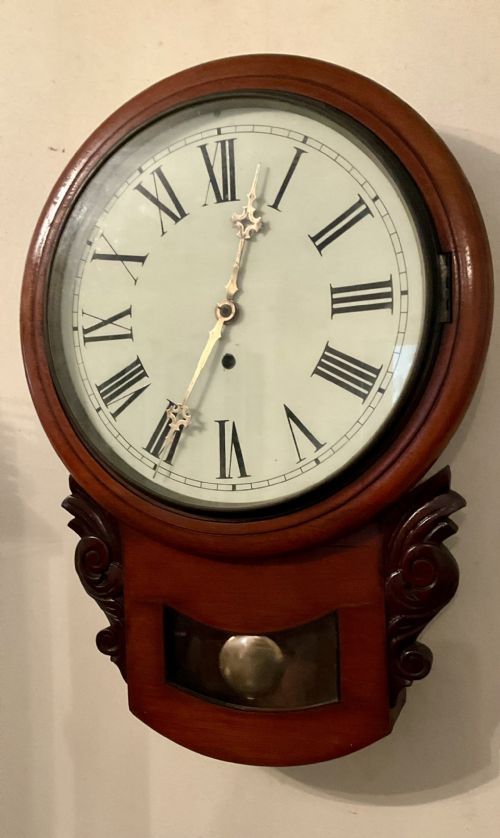
These vintage drop trunk clocks are dependable wall timepieces combining a circular dial with an extended lower case, originating from Georgian, Regency, and Victorian periods.
Vintage Drop Trunk Clock
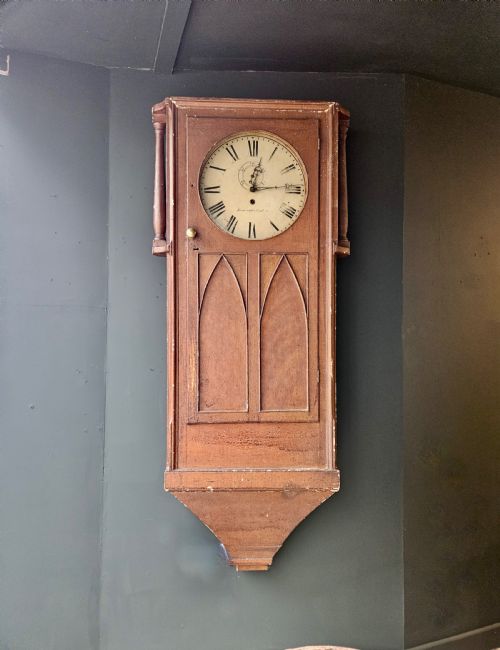
A vintage drop trunk clock is a wall-mounted timepiece featuring an upper dial case and a lower wooden trunk, commonly associated with the 19th century. When exploring this selection, buyers frequently encounter mahogany and rosewood examples dating across the Victorian era, alongside earlier Regency and Georgian pieces.
These clocks served practical purposes in public houses, offices, and railway stations before finding a permanent place in domestic interiors. The design accommodates a hanging pendulum within the lower trunk, allowing the movement to maintain accurate time in a compact vertical format.
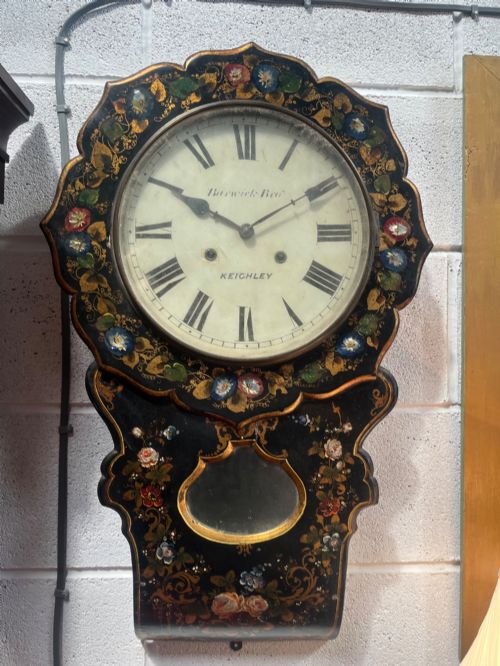
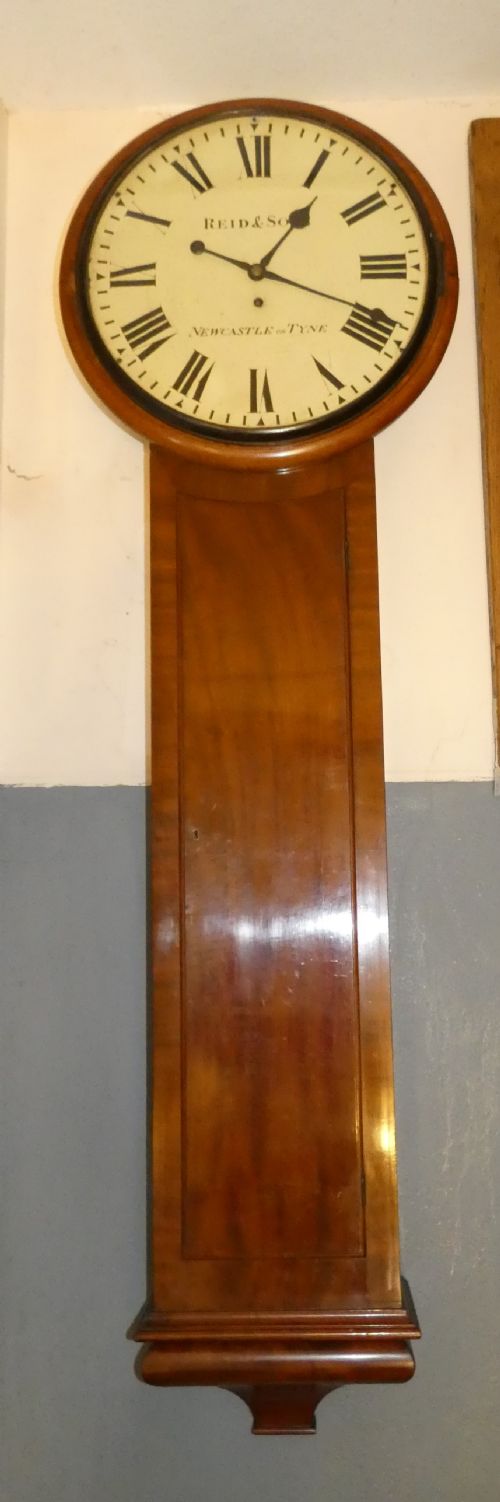
Most pieces seen here adhere to British and English traditions, including robust fusee movements and painted dials behind glass bezels. Variations span from plain pine tavern clocks to heavily inlaid rosewood cases and specialised models bearing maker signatures on the dial.
Materials and construction
Cabinet makers utilised dense timbers such as mahogany, rosewood, and ebonised wood to build the structural cases, often incorporating brass bezels and glass doors to protect the dial. Pine served for regional tavern clocks, sometimes finished in original paint or decorative schemes.
Mechanisms rely on brass gear trains and iron components, with fusee movements and weight-driven systems providing steady power to the escapement. Dials are constructed from wood, metal, or enamel, featuring painted numerals and occasionally delicate hand-painted decoration.
Some tavern clocks wear their original paint like a stubborn badge of honour, refusing centuries of polite stripping.
Factors of quality and origin
Superior examples display crisp secondary wood choices, clean dial lettering, and original brass bezels that close tightly against the case. Quality manifests in the precision of the fusee movement and the retention of original finish on the timber rather than later restoration.
Signed dials bearing recorded provincial or London makers elevate a piece beyond standard anonymous workshop production. The integration of the lower trunk to the upper dial ring reveals the joinery skill of the original maker.
Joseph Mansfield·R. Roberts of London·John Thwaites·J.W. Enock of Warwick·C. Coleman·Mark Bartley·Sansom
The Vintage Drop Trunk Clock Glossary
- Drop dial
- A wall clock featuring a circular dial attached to an extended lower trunk case. This configuration houses the pendulum neatly beneath the visible face.
- Fusee
- A conical pulley connected to a chain or cord that equalises the declining power of the mainspring as it unwinds. It ensures consistent force reaches the escapement.
- Tavern clock
- A large, often painted wall clock once common in public spaces, featuring a prominent dial and a long trunk. These pieces date largely from the 18th and 19th centuries.
- Bezel
- The brass or wooden ring that holds the protective glass in front of the clock face. It typically swings open on a hinge to allow hand-setting.
- Chisel bottom
- A lower trunk design terminating in a sharp, angular point rather than a curved or box base. This shape appears on specific regional English wall clocks.
Vintage Drop Trunk Clock: Frequently Asked Questions
How do I wind a fusee wall clock?
Use the appropriate winding key on the dial arbor, turning it carefully until resistance indicates the mainspring is fully tensioned. Avoid over-winding to protect the historical mechanism.
Ensure the pendulum remains stationary during transport and is properly hung on its suspension spring before setting the clock in motion.
Where were these clocks originally used?
These timepieces hung in railway offices, public houses, and domestic hallways where reliable timekeeping and clear visibility were essential. Their wall-mounted design saved floor space in busy environments.
Provincial examples often served community buildings and substantial homes across different regions of England.
How can I tell a Victorian clock from a Georgian one?
Georgian and Regency examples often display simpler, purer proportions with fine mahogany veneers and understated dial layouts. Victorian versions frequently incorporate heavier mouldings, rosewood inlay, or robust fusee movements.
Maker signatures and style indicators help anchor the piece to a specific decade within the nineteenth century.
Do these clocks require professional setup?
Hanging the clock securely to a sturdy wall is vital for the pendulum to swing freely and keep accurate time. Levelling the case ensures the beat remains even.
Many collectors consult a horologist for initial oiling and adjustment if the movement has been stationary during transit.