
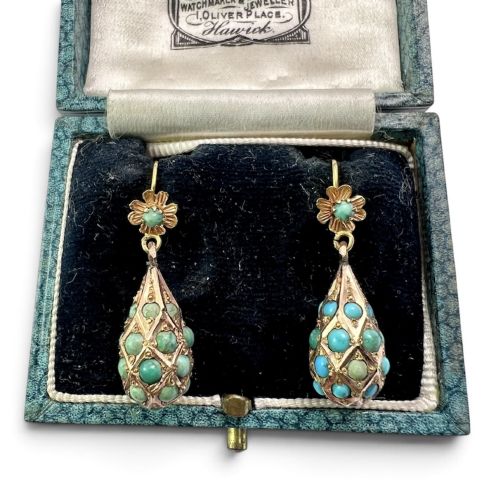
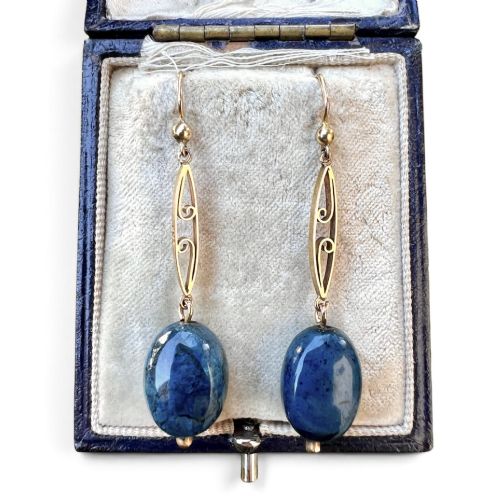
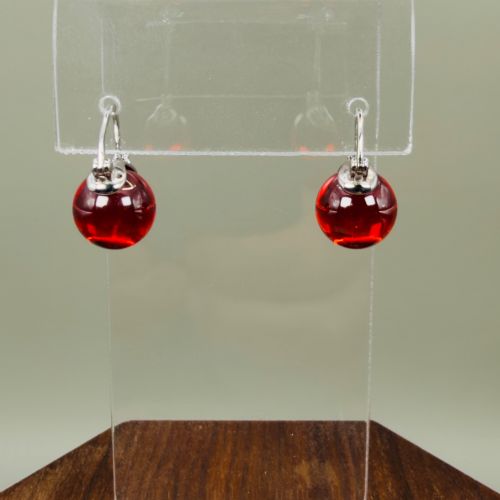
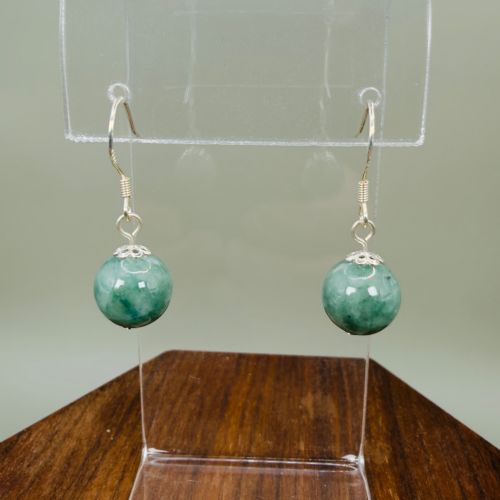
Vintage Drop Earrings
Vintage drop earrings bring movement and sparkle to the ear, spanning styles from delicate Edwardian clusters to geometric Art Deco designs.
Vintage Drop Earrings
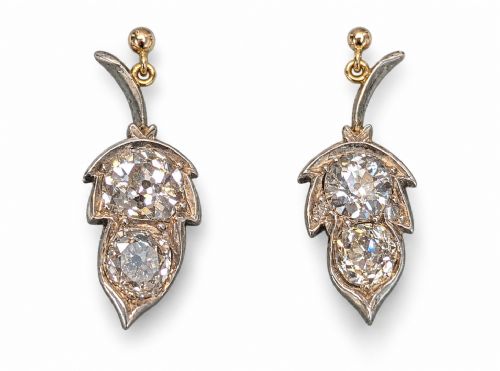
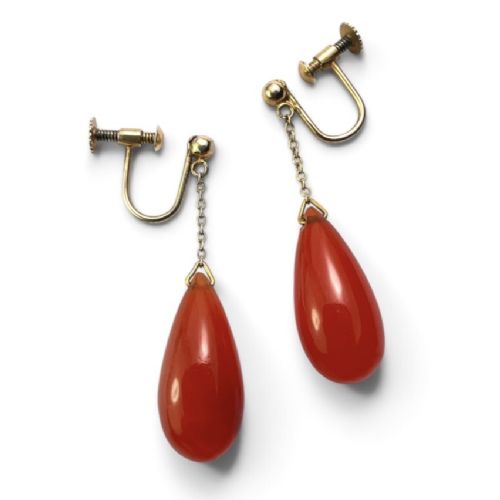
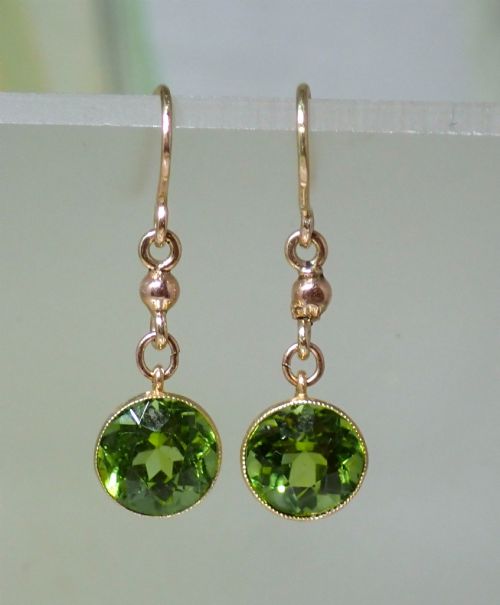
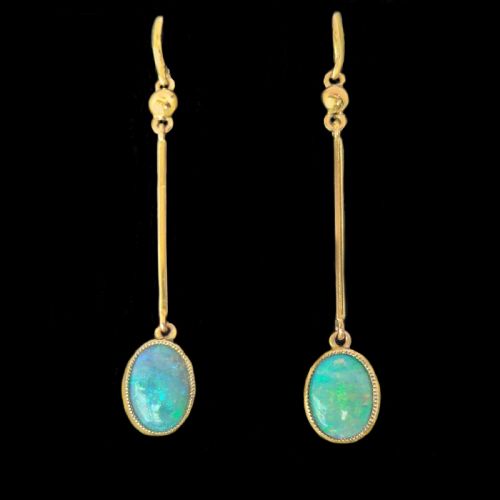
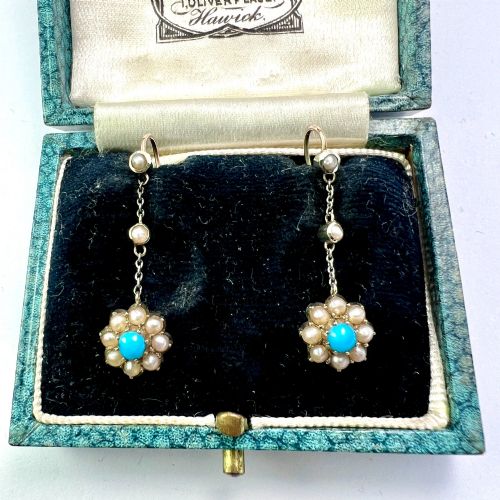
Vintage drop earrings encompass swinging and dangling jewellery forms originating from the Victorian era through to the mid twentieth century. Buyers seeking this phrase encounter varied configurations, including chain drops, cluster pendants, and articulated chandelier designs.
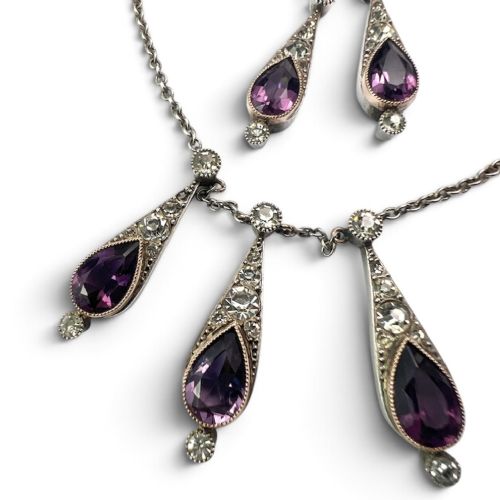
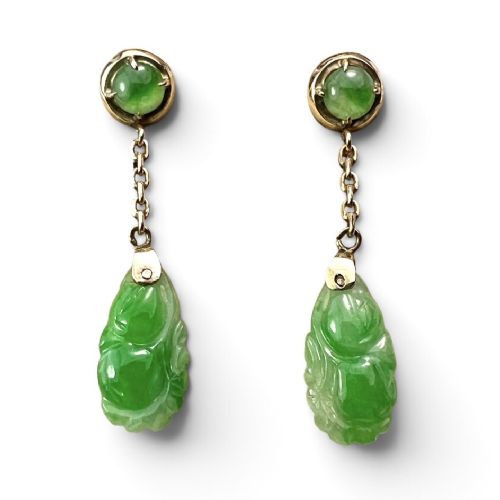
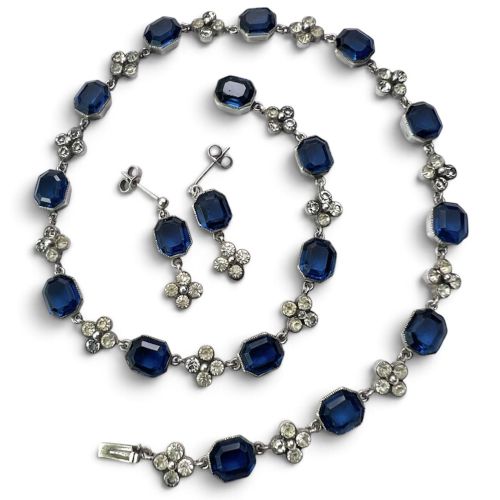
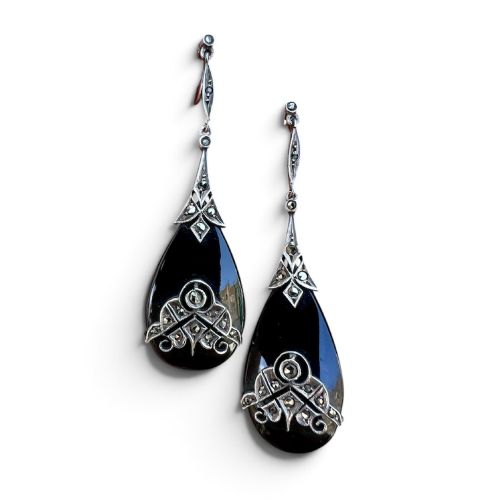
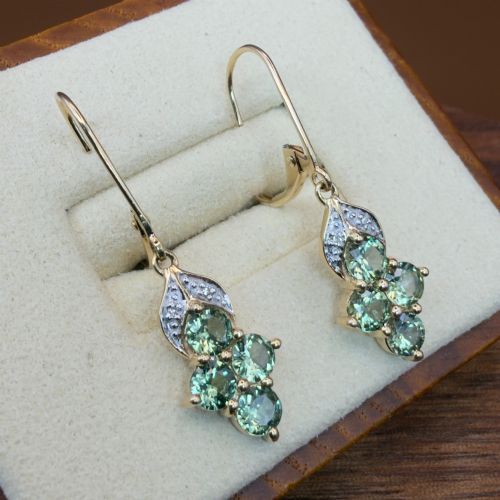
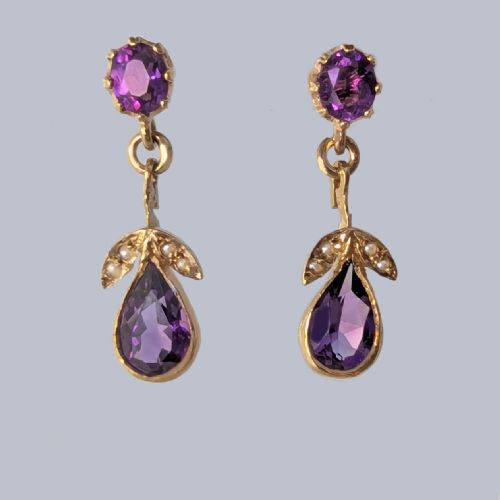
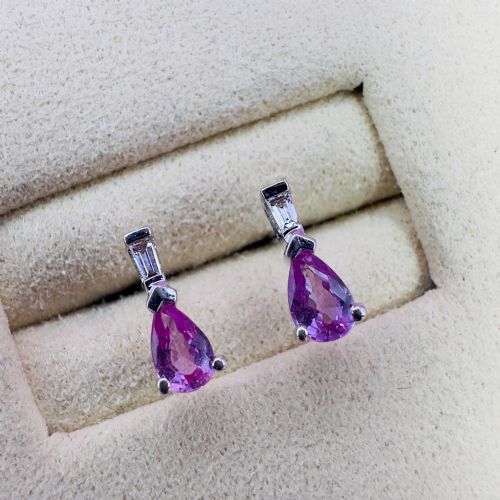
Many examples utilise vibrant coloured stones such as amethyst, turquoise, jade, and aquamarine, often paired with marcasite or paste for decorative effect. Forms vary from simple teardrop pendants to elaborate floral motifs and tassels.
Materials and construction
Goldsmiths utilised yellow and white gold, sterling silver, and platinum to fabricate secure settings for both precious and semi-precious stones. Metals were cast, hammered, and drawn into fine wire for chain drops and articulated links.
Gemstones such as diamonds, sapphires, and rubies were secured using claw, bezel, and pave techniques, while paste and marcasite stones were frequently foil-backed or glue-set in silver. Hollow construction methods, such as puffy hoops and stamped components, allowed for substantial visual weight without excessive heaviness on the earlobe.
Vintage Drop Earrings Retail Price Guide 2026
Typical asking prices for vintage drop earrings among the pieces listed under this phrase on Sellingantiques today, from the lower quarter to the upper quarter. They describe what is for sale here now, not the wider market.
The inventory spans Victorian revival pieces, Edwardian filigree, geometric Art Deco drops, and mid-century modern cluster designs.
Factors of quality
Quality in these pieces depends on the precision of metalwork, the symmetry of stone cutting, and the integrity of the original fixings. Hand-cut diamonds and well-matched natural gemstones elevate a piece above standard mass-produced alternatives.
Artisanal execution is evident in the articulation of joints, the security of settings, and the fineness of wirework. Superior items maintain original clasps, hooks, or screwbacks that function smoothly while preserving the balance of the drop.
Knoll And Pregizer·Harold Arthur Lazarus·Deakin And Francis·Cropp And Farr·Ciro
The Vintage Drop Earrings Glossary
- Paste
- Hand-cut glass used as a substitute for gemstones, common in historical jewellery. It can achieve high refractive brilliance when foil-backed in silver settings.
- Marcasite
- Small faceted iron pyrites polished and set closely together in silver. This technique provides a dark metallic sparkle reminiscent of diamonds.
- Chandelier drop
- An elaborate, multi-tiered earring design that spreads outwards and downwards. These pieces often incorporate numerous small stones cascading from a central cluster.
- Hinge back
- A secure fastening mechanism featuring a hinged wire that clicks into a small notch behind the earlobe. This closure became popular in mid-century jewellery design.
- Old cut
- A diamond cutting style preceding modern brilliant cuts, characterised by a small table, high crown, and large culet. These stones display distinctive broad flash patterns under candlelight.
Vintage Drop Earrings: Frequently Asked Questions
Were these earrings converted from other pieces?
Jewellers frequently converted older dress clips, broken brooches, or necklace components into dangling earrings during the twentieth century. Such adaptations utilise period-correct metals and findings, maintaining historical continuity while updating the form for the ear.
Examine the reverse of the setting and the attachment points for signs of historic solder or modifications. Professional conversions often blend seamlessly with the original design elements.
Can screwback earrings be changed to posts?
Skilled jewellers can convert non-pierced closures like screwbacks or clip-ons into traditional posts or wire hooks. This adjustment allows historical designs to be worn comfortably with modern piercings.
Original conversions should be undertaken carefully to preserve maker marks or stamps located on the reverse of the finding. Reversible adapters offer an alternative solution that avoids permanent alteration to the metal.
How do I identify Art Deco drop earrings?
Art Deco designs rely on geometric symmetry, straight lines, and high-contrast combinations such as platinum paired with onyx, diamond, or calibrated sapphires. Drop styles from this era frequently incorporate baguette cuts, step cuts, and rigid drop configurations.
The use of white gold and platinum settings alongside stylized floral or abstract motifs distinguishes these pieces from earlier Victorian and Edwardian work. Construction techniques of the period prioritised crisp angles and architectural frameworks.