
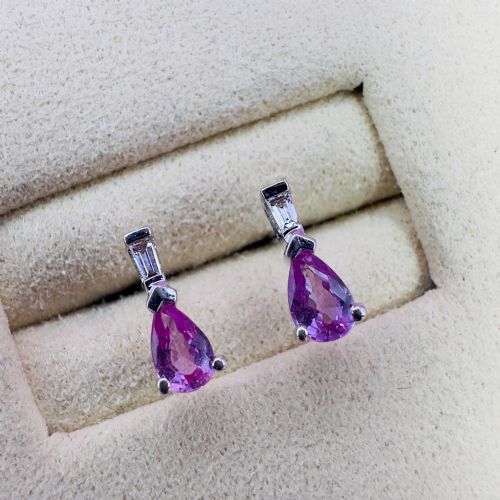
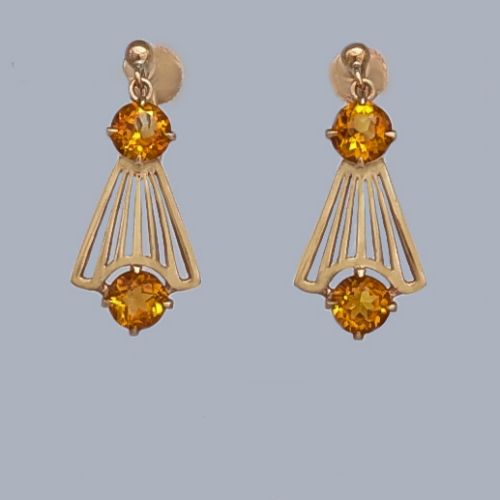


1920s Gold Earrings
These 1920s gold earrings bring striking geometric lines and fine precious stones to the ear, offering authentic period elegance for daily wear.
1920s Gold Earrings
When you search for 1920s gold earrings, you encounter distinctive jewellery defined by the Art Deco style, alongside occasional pieces from the Edwardian period or the 1930s. These items range from simple 9ct gold or 18ct gold studs to elaborate drop earrings and clip-ons.
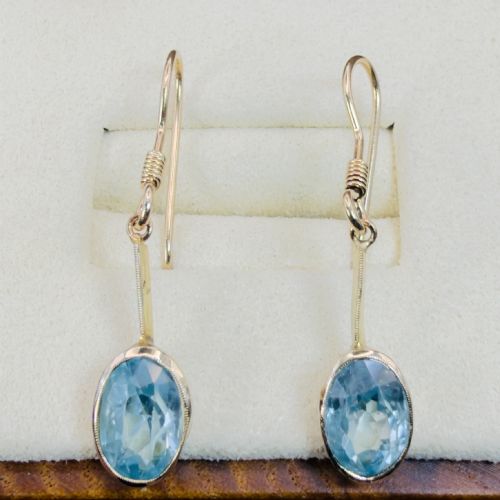
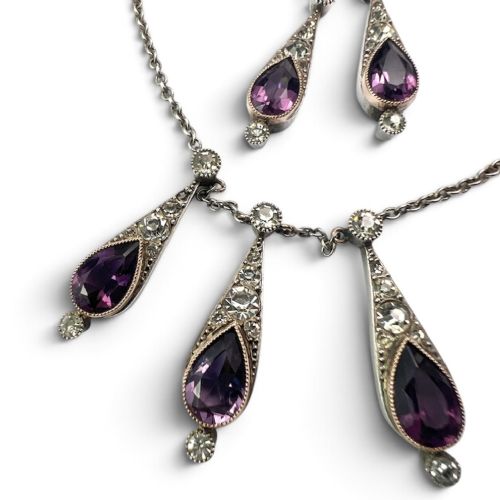
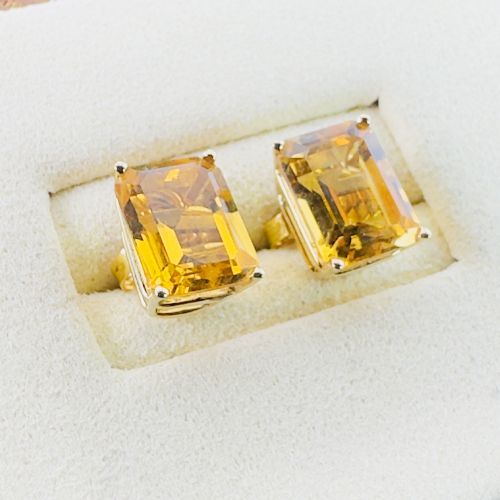
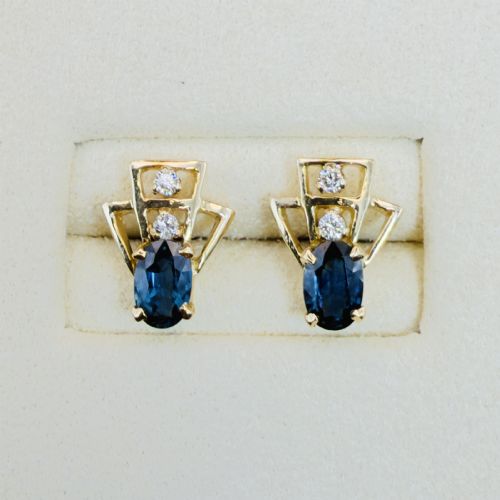
Gemstone choices span from bright diamonds and pearls to colourful accents like emerald cut citrines, sapphires, rubies, jade, amethyst paste glass, and mother of pearl. This variety reflects the bold aesthetic choices popular during the period.
How they were made
Makers utilised solid 9ct gold, 18ct gold, and 18ct white gold as the primary metal foundations, frequently combining them with platinum or silver to securely hold stones and create bright colour contrasts. These metals were shaped into articulated drops, screwback hoops, and secure settings for diamonds and coloured gems.
Artisans employed traditional cutting techniques, incorporating old cut diamonds, trapezoid cut stones, and emerald cut citrines into geometric arrangements. Details such as bamboo designs, pearl accents, and marcasite settings further demonstrate the precise craftsmanship of the era.
Certain earrings cleverly transition from daytime studs to evening drops using removable night and day sections.
What varies in quality
Quality in these earrings rests upon the calibre of the gemstones and the intricacy of the metalwork. Pieces featuring substantial old cut diamonds, natural pearls, or finely carved jade sit at the upper end of the range.
The sophistication of the construction also dictates value, particularly in articulated drop designs and convertible night and day settings that require precise engineering to function smoothly.
The 1920s Gold Earrings Glossary
- Art Deco
- A design style dominant in the 1920s and 1930s characterised by geometric shapes, stylised motifs, and strong lines. It marked a sharp departure from the flowing curves of earlier periods.
- Old cut
- A vintage diamond cutting style with a small table, high crown, and large culet, designed to catch candlelight and gaslight. These stones display a softer, deeper sparkle than modern brilliant cuts.
- Night and day drop earrings
- Versatile earrings featuring removable sections that transform a shorter daytime cluster or stud into a longer evening drop. This clever design suited the busy social schedules of the era.
- Clip on
- An earring fastening designed for non-pierced ears, utilising a hinged clip to secure the piece. They gained significant popularity during the 1920s and 1930s.
- Paste glass
- Hand-cut and polished glass utilised to imitate precious gemstones in antique jewellery. High quality paste exhibits impressive brilliance and depth of colour.
1920s Gold Earrings: Frequently Asked Questions
Are these earrings suitable for daily wear?
Many solid gold and platinum examples withstand regular use when handled with proper care. Screwback and clip-on styles require gentle handling to preserve their mechanisms.
More delicate drop designs with pearls or intricate articulation benefit from being reserved for special occasions to protect the fine metalwork and secure stone settings.
How do I care for antique gold earrings?
Gentle cleaning with a soft cloth removes everyday oils and dust from the metal and stones. Avoid harsh chemical dips, particularly if the piece incorporates pearls or softer gems like mother of pearl.
Store each pair separately in a lined box to prevent scratching between the gold settings and harder diamonds or gemstones.
How can I tell an Edwardian piece from a 1920s one?
Edwardian designs often feature delicate lacy platinum work, garlands, and softer floral motifs. They lean towards a romantic, ethereal aesthetic.
In contrast, pieces from the 1920s embrace bold geometry, sharp angles, and strong colour contrasts typical of the Art Deco movement.
What is the difference between white gold and platinum here?
Platinum offers a naturally bright, durable white metal foundation that held tiny diamond settings securely without tarnishing. It was a preferred metal for fine Art Deco creations.
White gold provided a similar bright appearance while remaining a slightly warmer and more accessible precious metal option for makers of the period.