






Vintage Drink Accessories
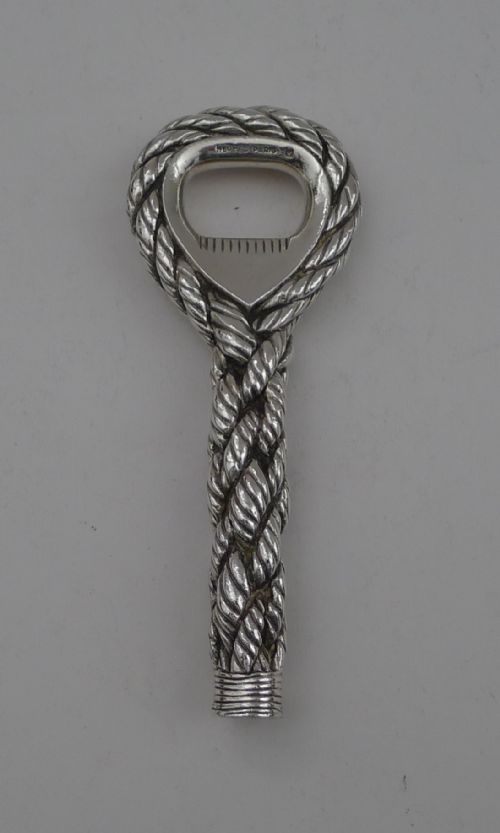
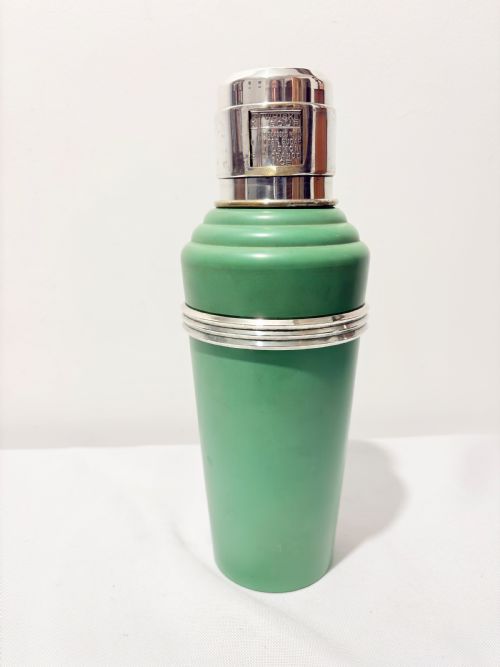
Vintage drink accessories bring together cocktail shakers, bottle openers and tantaluses from the Victorian era to the mid-twentieth century for entertaining.
Vintage Drink Accessories
Vintage drink accessories comprise equipment used for preparing, serving and storing alcohol, spanning periods from the Victorian era through Edwardian times to the mid-twentieth century. The selection on this page relies heavily on the 1920s, 1930s and 1940s, capturing the height of cocktail culture.
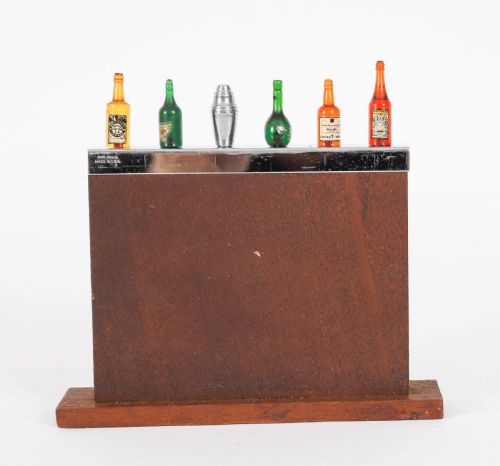
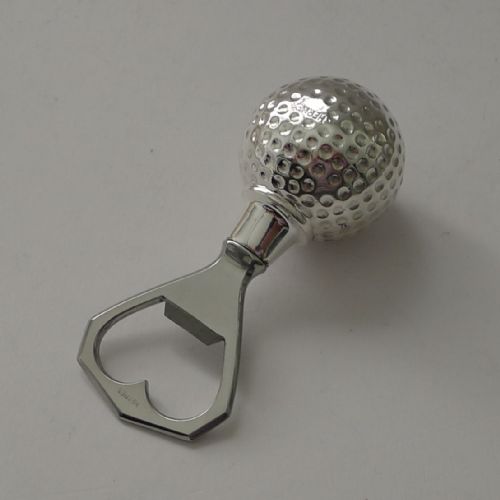
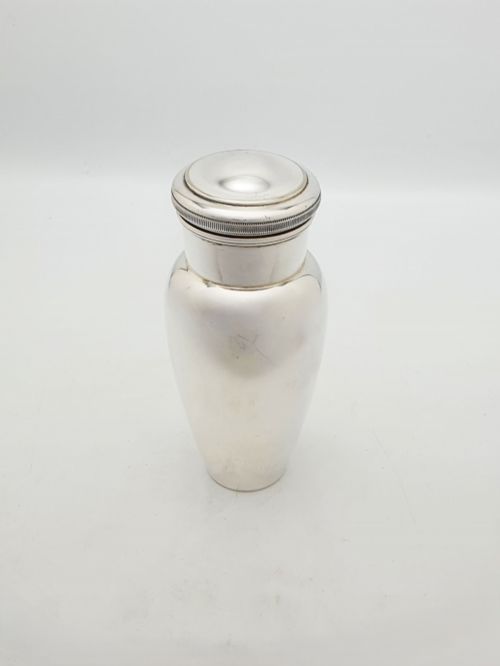
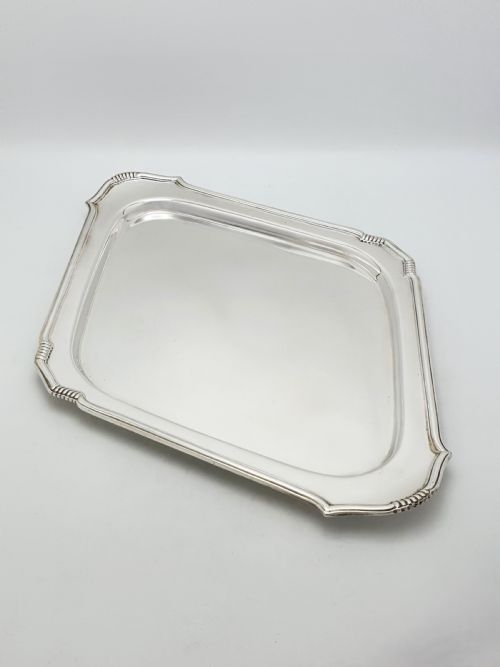
The most common forms encountered here are silver-plated cocktail shakers, often designed in the Art Deco style, alongside novelty cocktail stick sets, bottle openers and serving trays. Items range from bachelor shakers and recipe shakers to spirit flasks and after-dinner tantaluses in oak and glass.
How they were made
Makers utilised silver plate, electroplated nickel silver, sterling silver and chrome over metal substrates to form the bodies of shakers, trays and coasters. Glass and ceramic elements appear in shakers, flasks and ice buckets, frequently paired with wood such as oak.
Detailing often involved coloured enamel, Bakelite handles and intricate engraving, particularly on recipe shakers that list cocktail ingredients directly onto the metal surface.
Listings feature items spanning the Victorian era through the 1960s, with a strong concentration of Art Deco pieces from the 1930s.
What varies in quality
Quality in these pieces rests upon the weight of the metal, the balance of the shaker body and the integrity of the silver plating. Substantial gauge silver plate and solid sterling silver maintain their finish better through handling.
Design distinction also separates standard production from pieces by notable makers. Integrated mechanisms, such as built-in lemon squeezers, rolling mixer recipes or fitted ice breakers, indicate superior manufacturing thought.
Hermes Paris·Sudre·Keith Murray·J. B. Chatterley And Sons·James Dixon And Sons·Lino Sabattini·Christofle·William Suckling·Gaskell And Chambers·Mappin And Webb
The Vintage Drink Accessories Glossary
- Electroplated Nickel Silver
- A base metal alloy of copper, nickel and zinc coated with a layer of silver. This material provided a durable and lustrous finish for twentieth-century barware.
- Bachelor Shaker
- A smaller-capacity cocktail shaker designed for single servings rather than group entertaining. These compact vessels were popular during the Art Deco period.
- Bakelite
- An early form of synthetic plastic used for handles, knobs and decorative accents on shakers and bar sets. Its smooth moulded finish defined mid-century design.
- Spirit Flask
- A portable glass and metal container designed for carrying liquor, often wrapped in leather for pocket or travel use during the Victorian and Edwardian periods.
Vintage Drink Accessories: Frequently Asked Questions
How do I use a tantalus?
A tantalus holds decanters securely within a wooden frame, secured by a hinged metal bar and a functional lock and key mechanism.
To access the bottles, the key must be turned to release the upper bar, allowing the decanters to be lifted free from the oak base.
What are cocktail stick sets?
Cocktail stick sets consist of a collection of small metal or enamel picks housed in a decorative stand or novelty holder.
They were placed on tables during gatherings for spearing garnishes such as olives, cherries or cocktail onions.
How can I tell the period of a silver plated shaker?
The period can often be identified through stylistic cues, manufacturer marks stamped on the base, and material combinations such as Bakelite or coloured enamel.
Art Deco geometric forms point to the 1920s and 1930s, while heavier oak framing and cut glass indicate earlier Victorian or Edwardian origins.