


Antique Cocktail Sticks
Antique cocktail sticks bring sharp twentieth-century style to a gathering, offering a refined way to spear olives and fruit.
Antique Cocktail Sticks
Antique cocktail sticks are small barware accessories designed for serving appetizers and garnishes at drinks parties. When searching for antique cocktail sticks, buyers typically encounter sets created during the Art Deco period of the nineteen-twenties, nineteen-thirties, and nineteen-forties. These sets often include fitted holders or stands, making them both practical barware and decorative tabletop objects.
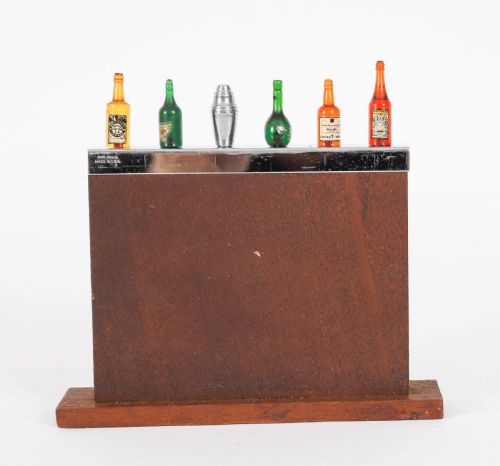
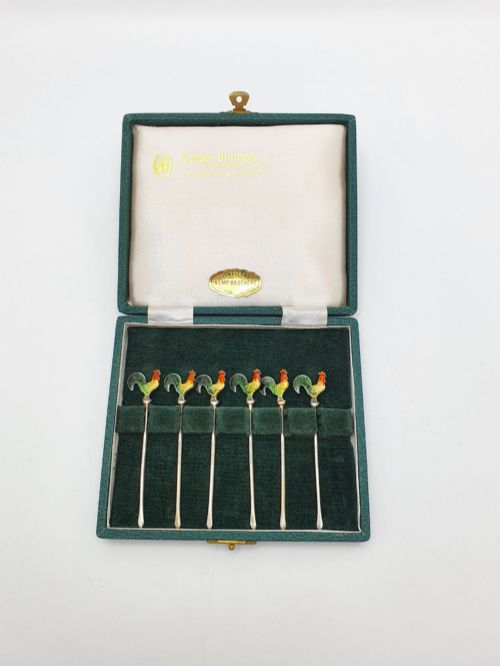
The objects on this page predominantly showcase the bold, geometric, and whimsical designs of the nineteen-thirties. Formats range from simple cased sterling silver sets to novelty figures and enamelled motifs. French makers and British assay offices both feature strongly among the origins of these surviving pieces.
How they were made
Makers utilised a combination of precious metals, early plastics, and glass to construct these barware sets. Sterling silver provides the structural integrity for many traditional handles and shafts, often paired with vitreous enamel for bright colour. Cut glass forms the bases of holders, while chrome-plated metal and early synthetics like bakelite define the more industrial Art Deco pieces.
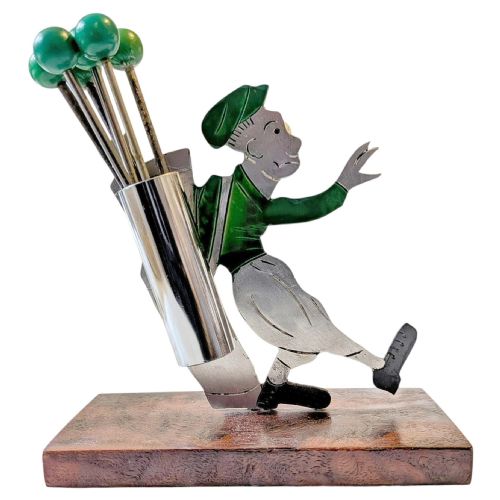
Craftsmen applied specialised techniques such as cold enamel decoration and detailed metal casting to achieve novelty shapes like golfers and cherry motifs. Bakelite and plastic components were moulded into specific geometric or figurative silhouettes typical of the era. These materials were carefully finished and fitted into dedicated presentation boxes.
Several sets feature comical golfers and cherry motifs, proving that nineteen-thirties cocktail hour did not take itself too seriously.
What varies in quality
Quality in these barware sets often rests on the preservation of delicate enamel work and the presence of original fitted boxes. Pieces bearing clear hallmarks from major assay offices like London or Birmingham demonstrate verifiable provenance. Novelty details executed with precision by named makers distinguish finer examples from standard production items.
The integrity of early plastics such as bakelite and the retention of original chrome plating also indicate superior manufacture. Complete sets containing their original matching holder or cut glass stand command greater interest than assembled or partial groups.
Sudre
The Antique Cocktail Sticks Glossary
- Art Deco
- A design style spanning the nineteen-twenties and nineteen-thirties characterised by streamlined geometric shapes and modern materials. It heavily influences the aesthetic of vintage barware accessories.
- Bakelite
- An early form of thermosetting plastic utilised extensively in the manufacture of twentieth-century household objects and decorative handles. It appears frequently in colourful novelty sets.
- Assay mark
- A stamp or series of marks applied to precious metals indicating purity, origin, and the year of testing. These hallmarks help date sterling silver cocktail accessories accurately.
- Enamel
- A glassy substance fused to the surface of metal through firing to provide smooth, coloured decoration. It adds vibrant hues to silver and novelty shafts.
- Barware
- Equipment and utensils used for mixing, preparing, and serving drinks and accompanying garnishes. Cocktail picks and their holders form a specialised subset of this category.
Antique Cocktail Sticks: Frequently Asked Questions
How were antique cocktail sticks used?
These utensils were placed on cocktail carts or bar counters during formal gatherings and parties. Guests used them to pick up olives, cherries, and citrus garnishes from drinks and canapés.
Their small scale meant they were typically housed in dedicated stands, cased boxes, or novelty figures when not actively in service.
What materials are common in antique sets?
Sterling silver, enamel, bakelite, and chrome-plated metal dominate surviving examples from the early twentieth century. Many incorporate cut glass for the accompanying holders and bases.
Precious metals provided durability for the thin shafts, while early plastics and enamel introduced bright decorative colour.
How do I date a set of cocktail sticks?
British sterling silver items often carry hallmarks stamped by assay offices that reveal the exact year of manufacture. Stylistic indicators, such as geometric Art Deco lines or specific plastic compositions, point toward the nineteen-twenties and nineteen-thirties.
Boxed sets and accompanying retailer stamps also assist in narrowing down the period of production.
How should I display them at home?
Many collectors keep complete cased sets displayed inside cabinets or utilise the original cut glass holders on a bar cart. Their small size allows them to sit neatly alongside vintage decanters and glassware.
Displaying them in their fitted boxes protects the delicate enamel and novelty figures from accidental damage.