



Vintage Dresden Porcelain
Vintage dresden porcelain brings flamboyant continental charm to interiors through ornate figurines, centrepieces and lighting shaped in the nineteenth and early twentieth centuries.
Vintage Dresden Porcelain
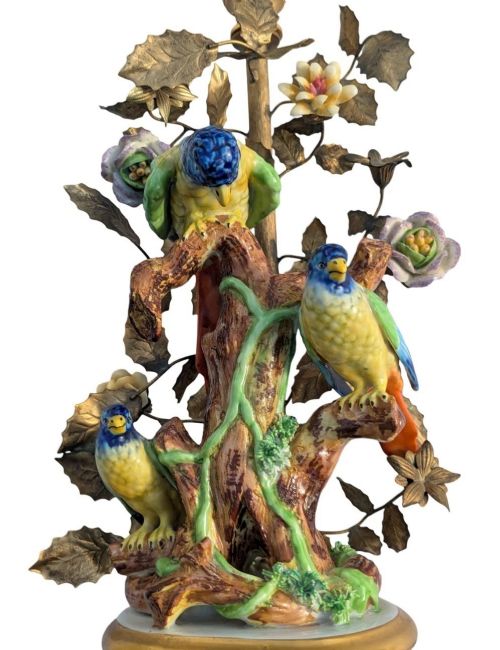
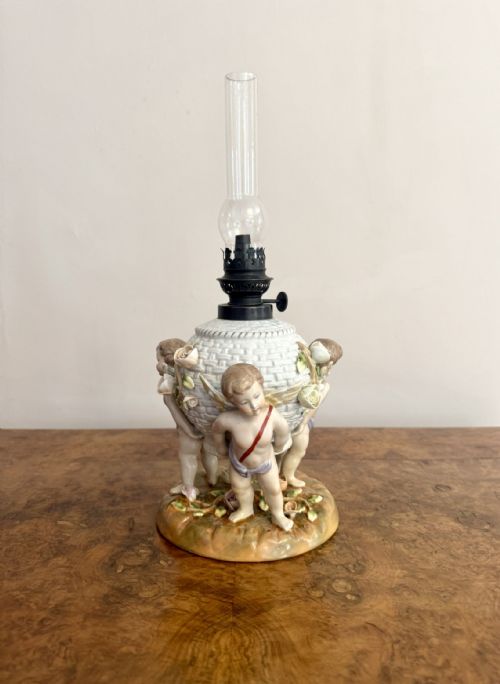
When searching for vintage dresden porcelain, buyers encounter highly decorative German ceramics spanning the late nineteenth and early twentieth centuries. These pieces encompass elaborate table lamps, oil lamps, candelabras, figural groups and large ornamental centrepieces decorated with applied flowers and putti. Most items reflect the decorative tastes of the Victorian period and the revival of rococo styles.
The objects on this page largely originate from German workshops and factories active around nineteen hundred, including Sitzendorf, Schierholz and Carl Thieme. While named after the Saxon city, much of this porcelain emerged from surrounding manufacturing centres in Germany. Forms range from functional table mirrors and cache pots to sculptural figurines depicting musicians, lovers and gardeners.
Materials and methods
Makers shaped these items from hard-paste porcelain, finished with hand-painted enamel colours and detailed gilding in gold leaf. Many elaborate figures incorporate fragile lace elements formed from actual fabric dipped in slip before firing. Brass, mirror glass and gilt mountings frequently support larger centrepieces, wall sconces and dressing table mirrors.
Techniques relied upon meticulous hand modelling, particularly for the applied roses and sculptural putti that adorn mirrors and candelabras. Artisans combined intricate moulding with careful brushwork to render Saxon bouquets and facial expressions. Gilding was applied by hand to highlight raised scrollwork and rococo revival framing.
Vintage Dresden Porcelain Retail Price Guide 2026
Typical asking prices for vintage dresden porcelain among the pieces listed under this phrase on Sellingantiques today, from the lower quarter to the upper quarter. They describe what is for sale here now, not the wider market.
Current listings feature porcelain, enamel, gold leaf, gilt, glass, brass, mirror glass and gilding across the nineteenth and twentieth centuries.
Assessing quality and execution
Quality in these ceramics rests upon the crispness of the modelled detail and the delicacy of applied elements such as lace and individual petals. Superior pieces maintain sharp relief in floral encrustations and clean separation between painted enamels and gilt highlights. Lesser examples show blurred moulding and thick, clumsy application of decorative flowers.
Scale and ambition also dictate standing, with large centrepieces, figural groups and monumental candelabras representing more complex factory output than standard dishes or cache pots. The precision of the painting on Saxon bouquets and figurative subjects distinguishes standard decorative wares from exceptional studio output.
Sitzendorf·Schierholz·Carl Thieme·Meissen·Ernst Bohne Söhne·Helena Wolfsohn·Paul Müller Selb·Rudolstadt Volstedt·Herend
The Vintage Dresden Porcelain Glossary
- Putti
- Plural of putto, representing plump, naked male infants often depicted as winged cupids on centrepieces and figural groups. These figures are hand-modelled and frequently clustered around bases or rims.
- Cache pot
- An ornamental flowerpot container designed to hold a plain planting pot inside. These decorative vessels often carry rococo revival scrollwork and hand-painted floral motifs.
- Candelabra
- A branched candlestick holder designed to support multiple candles simultaneously. Continental versions frequently incorporate porcelain figural stems and applied floral decoration.
- Hard-paste porcelain
- A dense, durable ceramic material fired at very high temperatures using kaolin and petuntse. This body provides the bright white base characteristic of German factory output.
Vintage Dresden Porcelain: Frequently Asked Questions
What is vintage dresden porcelain?
Vintage dresden porcelain refers to ornate German ceramics produced during the nineteenth and early twentieth centuries. These objects include decorative figurines, oil lamps, mirrors and large centrepieces styled in revivalist rococo aesthetics.
Items often feature hand-painted floral bouquets, applied porcelain lace, and sculptural figures of putti or lovers. The designation encompasses output from various Saxon and German factories associated with the Dresden decorative tradition.
How do I identify Sitzendorf porcelain?
Sitzendorf pieces are typically identified by their intricate figural groups, candelabras and mirrors adorned with applied flowers. The factory specialised in highly decorated rococo revival items during the late nineteenth and early twentieth centuries.
Many examples feature elaborate floral bases supporting gardeners, musicians, or putti rendered in hand-painted enamel and gilt.
Where were these porcelain pieces made?
These decorative items originated primarily in Germany, spanning manufacturing centres such as Sitzendorf, Plaue, Rudolstadt and Thuringia. While linked to the cultural hub of Dresden, the workshops operated across various towns in the region.
Some related continental examples also originate from factories in neighbouring countries like Hungary during the broader twentieth century.
How should I clean porcelain lace figures?
Porcelain lace figures require extremely gentle maintenance due to the fragile nature of the ceramic drapery. Dusting should be performed with a soft, dry artist brush rather than cloths that might snag.
Moisture should be avoided entirely to prevent weakening the delicate hard-paste elements and delicate enamel decoration.