

Vintage Draw Leaf Table
A vintage draw leaf table is a clever extending dining table that expands smoothly via hidden leaves, offering flexibility for everyday meals and larger gatherings alike.
Vintage Draw Leaf Table
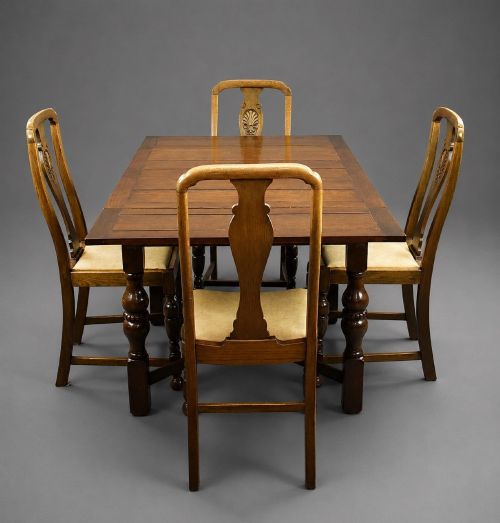
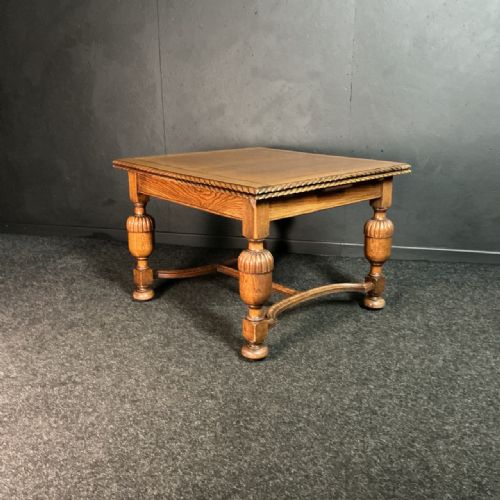
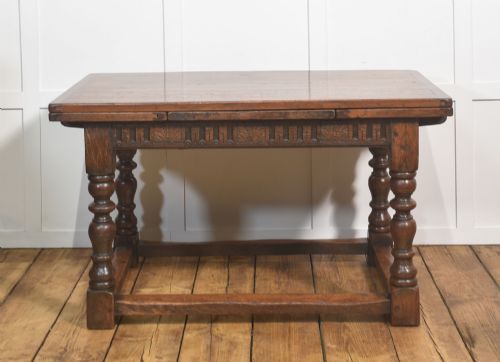
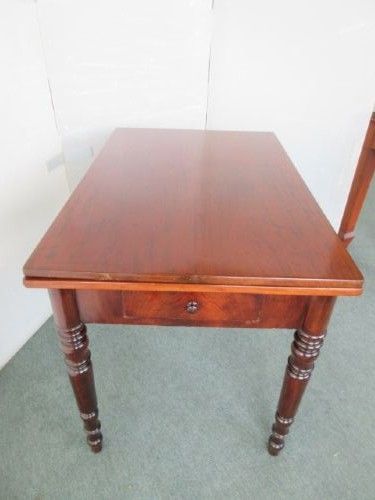
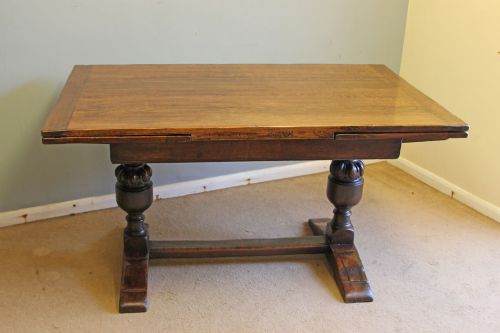
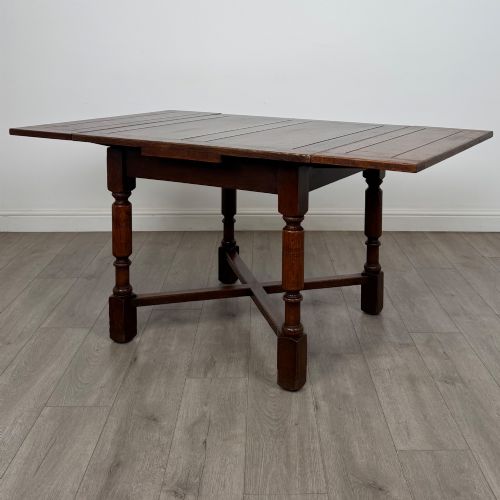
A vintage draw leaf table is primarily encountered in sturdy oak, walnut, cherry, and mahogany, spanning periods from the nineteenth century through the Edwardian era and the nineteen-thirties. These practical dining tables and sets often reflect revival styles such as Jacobean, Elizabethan, and French Provincial, alongside rustic farmhouse and Arts and Crafts aesthetics.
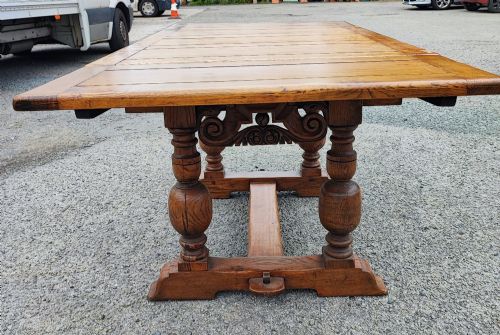
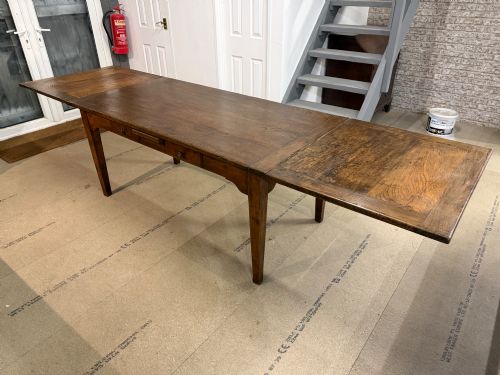
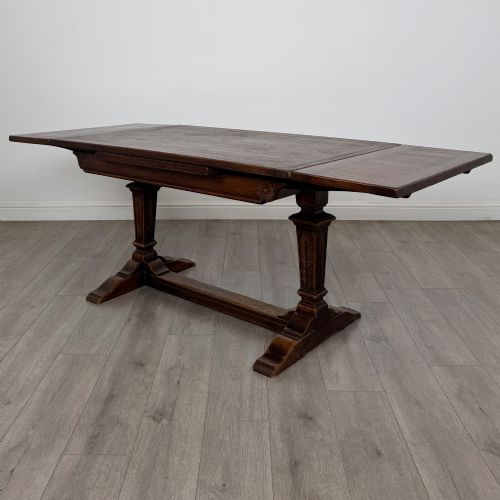
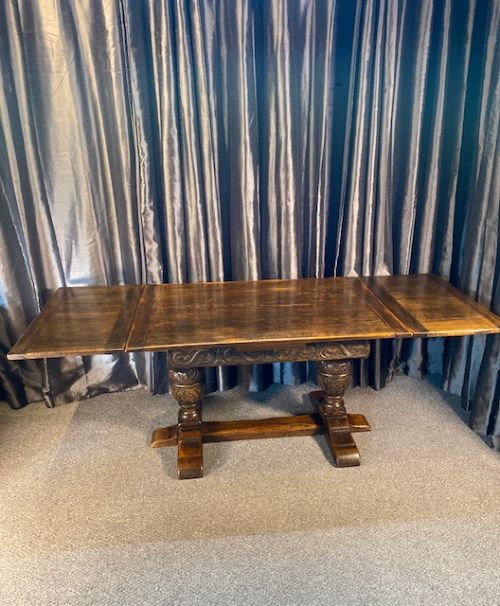
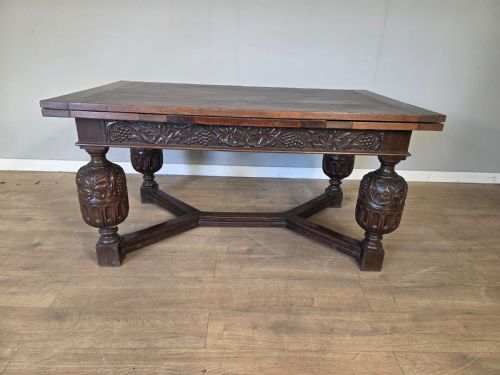
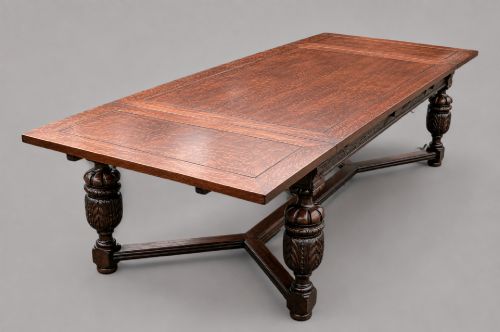
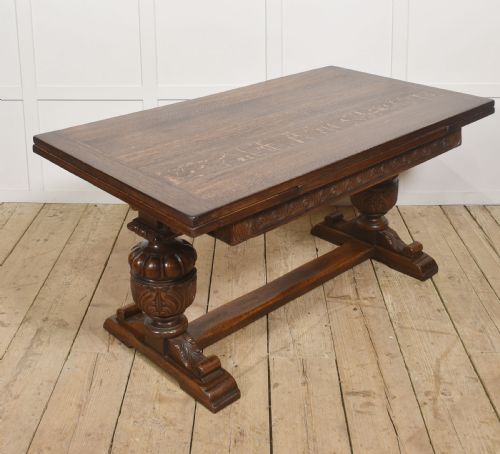
The defining characteristic of these pieces is the ingenious mechanism where two leaves slide out from beneath the main top, instantly increasing surface area without removing centrepieces. Most examples found here adopt the classic refectory format, resting on substantial carved bases, trestles, or cabriole legs suited for kitchen and dining spaces.
Materials and Construction
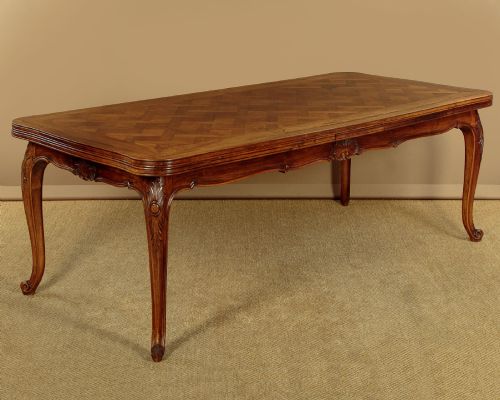
Makers relied heavily on solid oak, walnut, and cherry timbers, occasionally incorporating intricate parquet and parquetry patterns onto the surface for added visual texture. Frames were built with robust joinery to support the sliding extension leaves beneath the main top.
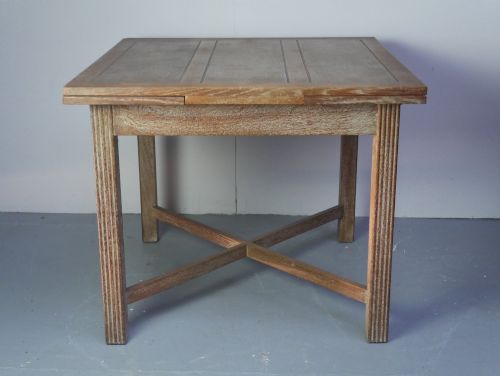
Carved details adorn legs, friezes, and bases, particularly in Jacobean and Elizabethan revival pieces, while specific examples showcase limed finishes or bread slides.
Revival styles represented include Jacobean, Elizabethan, French Provincial, and Arts and Crafts.
Assessing Quality and Craftsmanship
Quality in these extending tables rests upon the precision of the mechanics, ensuring the hidden leaves slide out smoothly and align flush with the primary surface without sagging. Superior pieces exhibit tight joinery, carefully selected timber grains, and crisp, hand-carved detailing on the bases.
The choice of materials also dictates distinction, moving from standard utility oak to decorative walnut parquetry or rich cherry wood with refined cabriole legs.
Maple and Co·Heals
The Vintage Draw Leaf Table Glossary
- Draw leaf
- An extending table mechanism where two additional leaves are stored underneath the main top and pulled out from the ends when needed.
- Parquetry
- A geometric mosaic of wood pieces used for decorative inlay on tabletops, often utilising oak or walnut.
- Refectory table
- A long, narrow dining table traditionally used in monasteries and large halls, characterised by sturdy legs and a longitudinal stretcher.
- Cabriole leg
- A furniture leg that curves outward at the knee and tapers inward toward the foot, commonly seen on eighteenth and nineteenth-century designs.
- Bread slide
- A pull-out wooden shelf positioned beneath the main surface, historically used for slicing bread or serving dishes.
Vintage Draw Leaf Table: Frequently Asked Questions
How do the extension leaves operate?
The secondary leaves sit on runners directly beneath the main surface of the table. When pulled, they slide outward while the main top drops slightly into place to create a flat, continuous surface.
This clever design allows a compact dining table to double its seating capacity within seconds without requiring extra storage space for loose boards.
Where were these tables used originally?
These tables served primarily in country houses, farmhouses, and town residences as versatile furniture for daily family meals and larger hosting occasions.
Their robust construction made them ideal for busy kitchens and formal dining rooms alike.
How do I care for a wood top?
Protect the timber surface by using coasters and placemats, and clean regularly with a soft, dry cloth. Avoid placing the table near direct heat sources to prevent the wood from drying out.
Periodical waxing helps maintain the natural lustre of the oak, walnut, or cherry finish.
How do I identify the period?
Dating relies on examining the timber species, carving styles, and construction techniques used in the base and legs. Heavy Elizabethan or Jacobean revival carving typically points toward the late nineteenth or early twentieth century.
Cleaner lines, parquetry, and limed oak finishes often indicate later Edwardian or nineteen-thirties production.