




Vintage Double Pedestal Desk
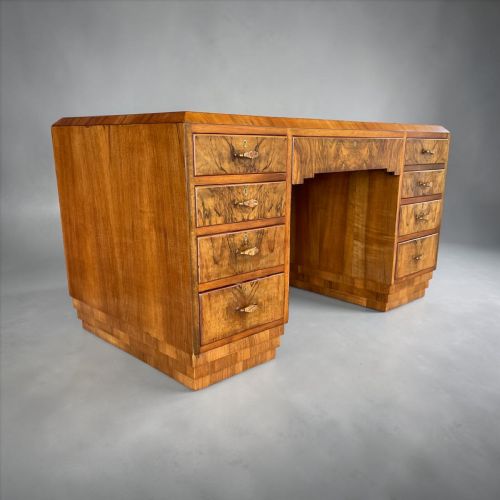
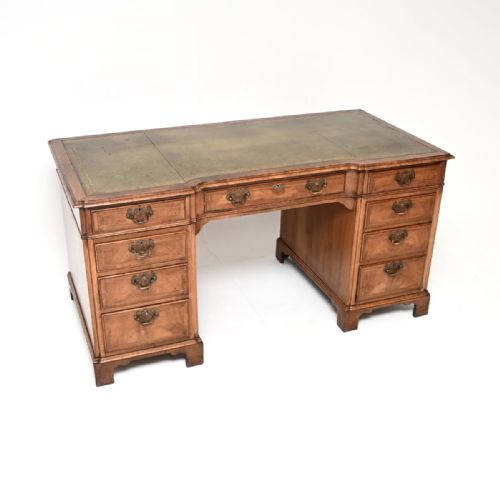
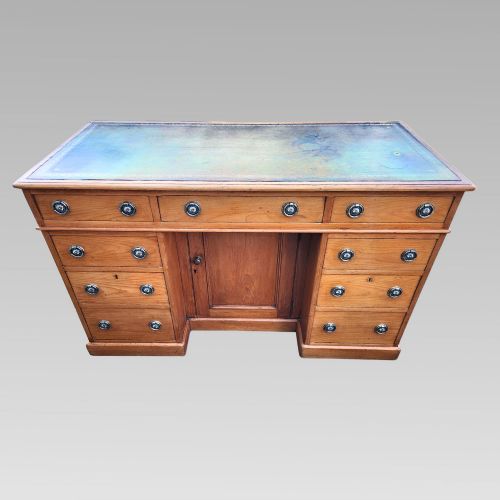
A vintage double pedestal desk provides a substantial working surface supported by banks of drawers, built to anchor a serious study.
Vintage Double Pedestal Desk
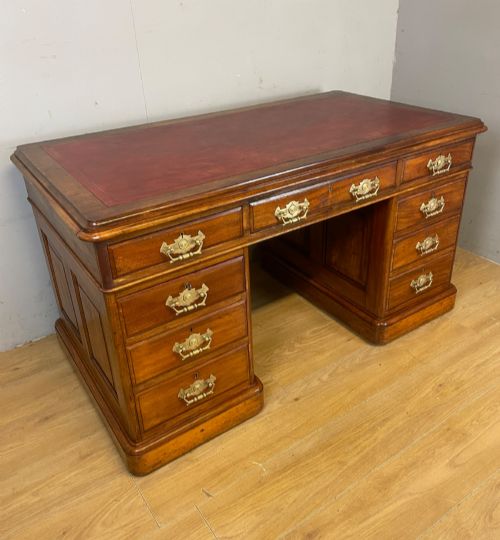
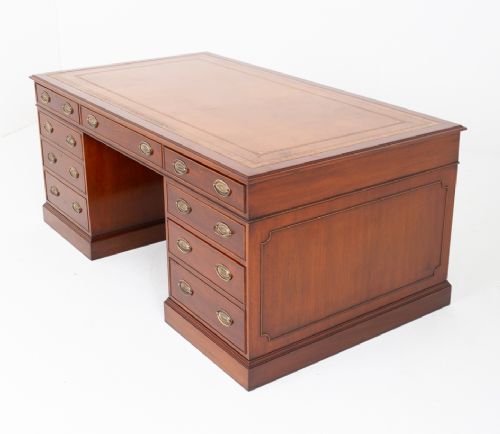
A vintage double pedestal desk stands upon two separate drawer units beneath a broad writing surface, often configured as a partners desk with workspaces on both sides. These heavy pieces originate from periods spanning the 19th century through the early 20th century, drawing on Victorian, Edwardian, and Georgian revival aesthetics.
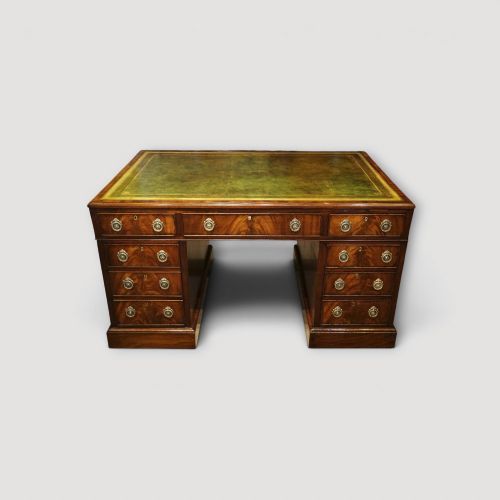
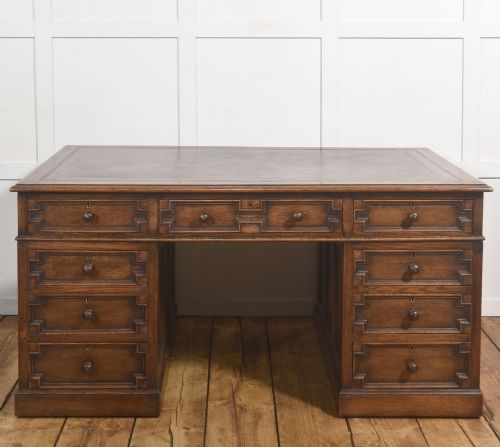
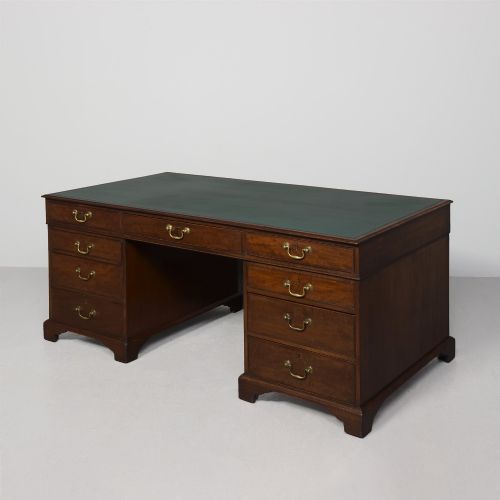
The versions most commonly met on this page include mahogany partners desks from the Victorian era and oak examples from the Edwardian period. Cabinets range from standard kneehole layouts to large free-standing office tables fitted with tooled leather writing surfaces.
Materials and Construction
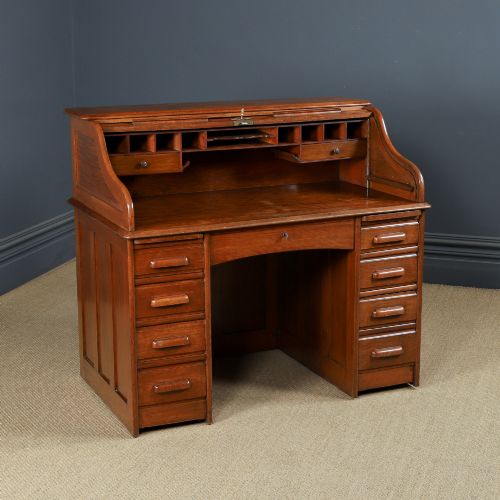
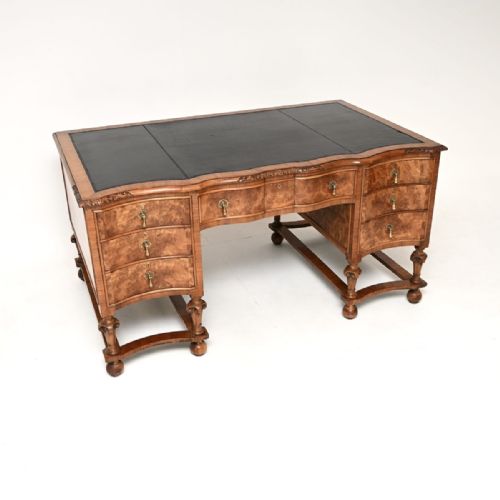
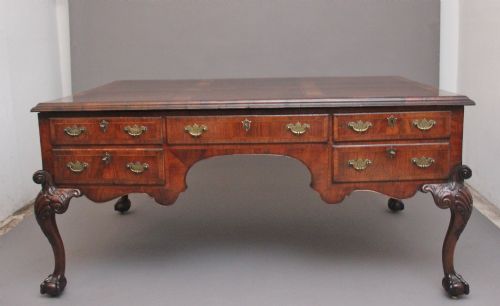
Makers utilised dense timbers such as mahogany, oak, walnut, and burr walnut, frequently pairing them with inset leather writing surfaces and cast brass hardware. Selected pieces incorporate figured mahogany veneers, carved ornamentation, and tambour or roll top mechanisms.
Construction relies on sturdy pedestal carcasses containing multiple drawers, often built in three modular sections for transportation. Panel construction and precise joinery stabilise the heavy timber frames against warping.
The styles represented span Victorian, Edwardian, Regency, Chippendale Revival, and Jacobean Revival periods.
Distinctions in Quality
Quality rests upon the selection of timber and the depth of figuring in veneers, such as burr walnut or curl mahogany. Superior examples display restrained carving, balanced proportions, and original leather writing surfaces with intact tooling.
Internal construction also separates workshops, seen in solid secondary woods for drawer linings and robust brass handles. Pieces retaining their original finish and structural integrity command greater regard than heavily altered variants.
Maple and Co·Cookes of Finsbury London·T Wilson
The Vintage Double Pedestal Desk Glossary
- Partners desk
- A large double pedestal desk designed with drawer banks on both sides so two people can sit opposite one another. This form served offices, libraries, and banking halls.
- Pedestal desk
- A writing table supported by two vertical columns of drawers resting on the floor. The top usually comprises three separate modular sections.
- Tambour top
- A flexible desk covering made from narrow wooden strips glued to canvas, sliding along tracks to enclose the workspace. This mechanism appeared on office desks from the late 19th century onward.
- Kneehole
- The central recessed space beneath a desk where the user sits. Some variations include a small cupboard set back within this opening.
- Tooled leather
- Leather writing inserts decorated with gold leaf impressions stamped along the borders. These panels provide a smooth surface for writing.
Vintage Double Pedestal Desk: Frequently Asked Questions
What is a partners desk?
A partners desk is a large double pedestal desk featuring drawers and cupboards on both long sides, allowing two people to work face to face. These substantial pieces were traditionally used in libraries, banks, and estate offices.
Today, they function well as central room pieces because all four sides are finished for display, unlike standard desks meant to back against a wall.
How do I arrange a large desk in a room?
Because double pedestal desks are finished on all sides, they sit best in the middle of a study or library rather than pushed against a wall. Ensure there is adequate clearance around the pedestal units for chairs and movement.
Lighting is best positioned from the side to avoid glare on the leather writing surface and polished timber top.
How do I care for the leather top?
The leather writing surface benefits from occasional cleaning with a slightly damp cloth followed by a neutral leather cream to prevent drying and cracking. Avoid abrasive cleaners or excess water near the gold leaf tooling.
Keep the timber surround nourished with appropriate wax polish applied sparingly and buffed with a soft cloth.
How do I date a pedestal desk?
Dating relies on timber choices, construction methods, and hardware styles, comparing them against known periods like the Victorian or Edwardian eras. Secondary woods inside the drawer linings and the type of dovetailing also indicate the period of manufacture.
Maker stamps or labels inside drawer boxes offer the most precise clues to a desk's age and origin.