




Vintage Double Inkwell Stand
A vintage double inkwell stand is the foundational desk accessory for the writer, bringing period materiality and twin reservoirs to the desktop.
Vintage Double Inkwell Stand
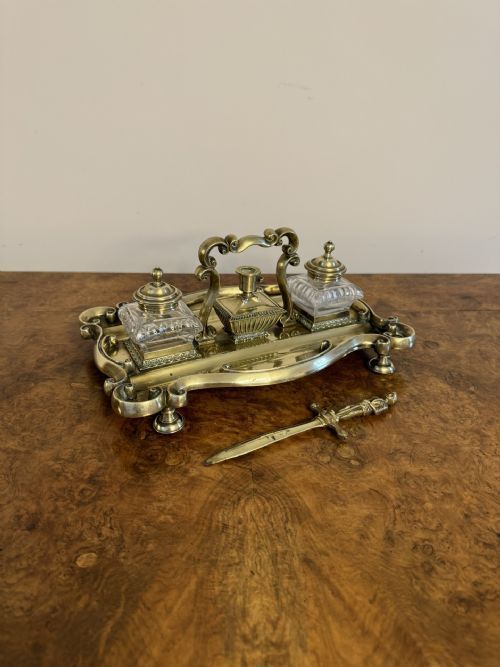
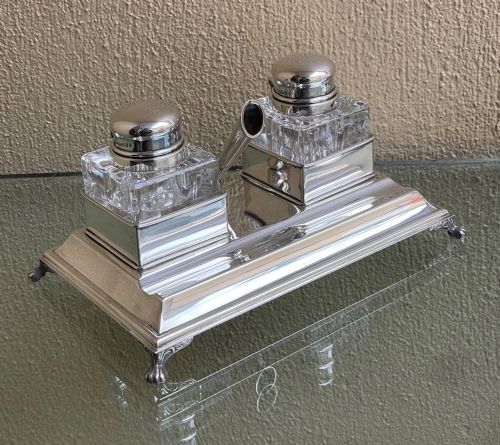
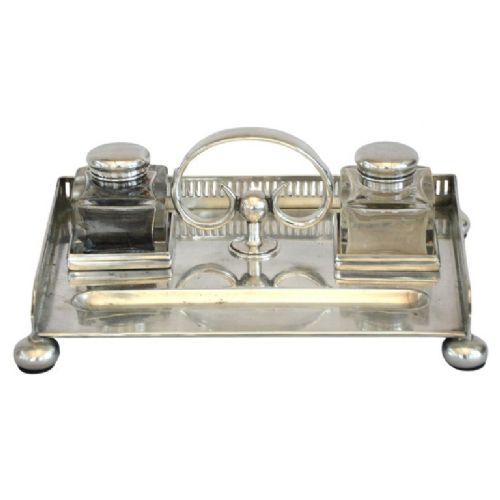
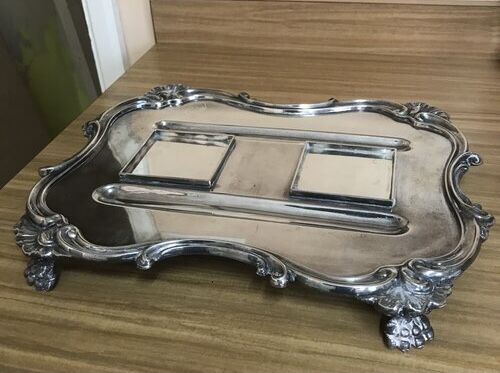
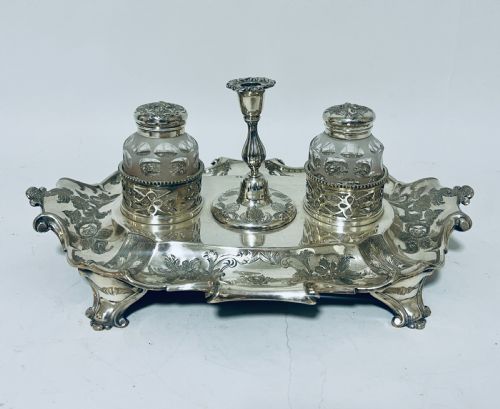
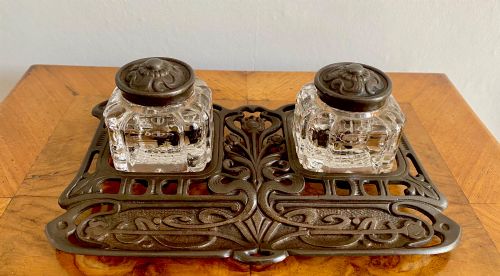
A vintage double inkwell stand provides twin receptacles for ink alongside pen rests and trays, emerging across periods from the Victorian era through the mid-twentieth century. The version met most frequently on this page combines heavy brass or silver plate with fitted glass ink bottles, often incorporating wooden bases in mahogany or walnut.
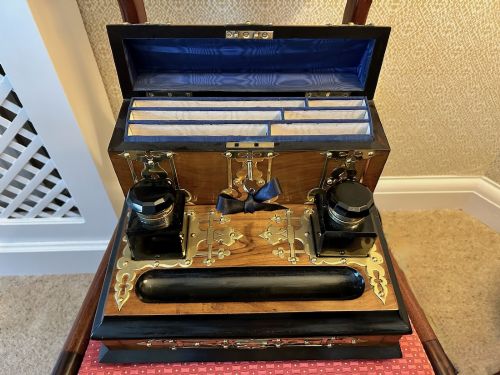
These desk accessories served writing desks and libraries where correspondence required black and red ink or simply a larger reserve. Formats range from ornate Rococo Revival and flowing Art Nouveau brass to compact wooden box stands and fitted trays with integrated drawers.
How They Were Made
Metalwork dominates these pieces, utilising cast brass, ormolu, silver plate, and sterling silver shaped into ornate frames, hinged lids, and pen rests. Wood bases in mahogany, walnut, and ebony provide structural weight and rich grain, frequently mounted with brass galleries and fitted interiors.
Form variations on this page include fitted box stands, desktop companions with drawers, and open ormolu trays.
What Varies In Quality
The distinction between standard production and top-tier pieces rests on the weight of the metal casting and the presence of original components. Heavier brass, crisp chasing, and intact glass liners with matching collars elevate an inkstand.
Maker attribution and material combination also drive quality, where silver-plated mounts by known firms or burr walnut housings demonstrate superior workshop execution.
Walker And Hall·Harrods·James Cartland And Sons·Maurice Dufrene·Martin Hall
The Vintage Double Inkwell Stand Glossary
- Inkstand
- A complete desk accessory comprising one or more inkwells, pen rests, and a tray for holding writing implements. These units anchored the nineteenth-century writing table.
- Pen rest
- An integrated groove, bridge, or channel designed to hold dip pens off the desk surface. It prevents ink from soiling surrounding papers.
- Ormolu
- Gilded bronze or brass applied to decorative metalwork, common in French Empire and revivalist desk pieces. It provides a rich, warm golden lustre.
- Faience
- Tin-glazed earthenware produced in European ceramic traditions, seen in Dutch Delft desktop accessories. This material offers a porous white body painted under the glaze.
- Silver plate
- A base metal layer coated with a thin layer of silver, utilised by major silversmithing firms for domestic deskware. It offered the appearance of solid silver at a lower cost.
Vintage Double Inkwell Stand: Frequently Asked Questions
How do I date a brass inkstand?
Dating relies on stylistic markers such as cast ornamentation, manufacturing techniques, and the profile of the ink bottles. Victorian pieces often display heavy Rococo Revival cast brass, while later twentieth-century examples show cleaner lines.
Makers' marks stamped into the metal base or hinge mounts also provide precise chronological anchors. Comparing the construction of the pen tray and hinge pins helps distinguish nineteenth-century production from later revivals.
Are the glass inserts usually original?
Finding original glass ink inserts is common but not guaranteed, as fragile glass components frequently suffered breakage over decades of use. Replacements are often fitted to match the collar dimensions of the brass or silver housing.
Examing the base of the glass for wear patterns and matching the tint to the period helps determine originality. A snug fit within the metal collar generally indicates a correct period replacement if not the original bottle.
How were these inkstands used?
These stands functioned as the primary writing station on a library desk or bureau, holding the ink required for daily correspondence with dip pens. The twin wells typically accommodated black ink in one reservoir and red ink in the other for accounting or annotations.
Pen rests kept nibs elevated to prevent staining the writing surface, while integrated trays held wafers, sanders, or sealing wax. They remained essential desktop fixtures until fountain pens and ballpoints replaced dip pens.
How do I care for antique metal inkstands?
Maintenance involves gentle dusting with a soft, dry cloth to protect patinated brass, bronze, and silver-plated surfaces. Aggressive polishing should be avoided to preserve the historic surface finish and original highlights.
Glass inserts can be washed separately in warm soapy water if removed from the stand. Ensuring the wooden or felt bases remain dry prevents moisture damage to underlying surfaces.