



Vintage Dog Grate
These vintage dog grate examples bring heavy ironwork and gleaming brass into the hearth, offering a commanding focal point for any traditional room.
Vintage Dog Grate
When you search for a vintage dog grate, you are looking at substantial hearth furniture designed to hold burning fuel while supporting heavy fire dogs or andirons at the sides. These assemblies serve both a practical function in containing coal or logs and an architectural purpose in framing the fireplace opening.
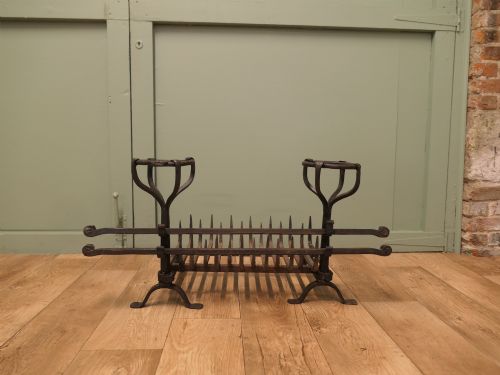
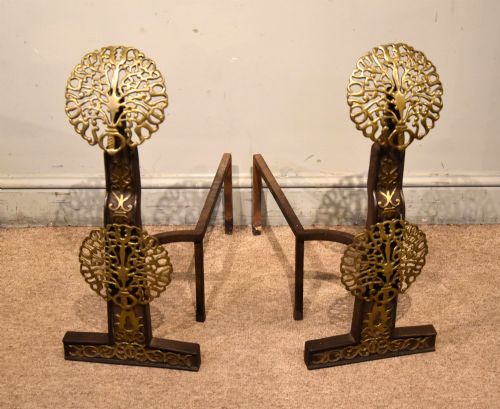
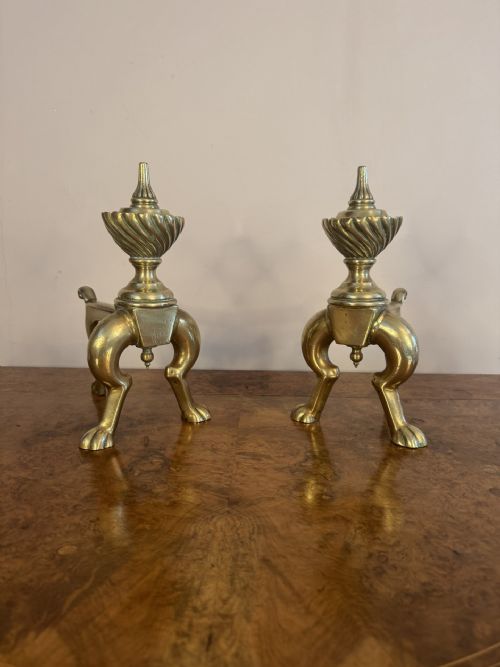
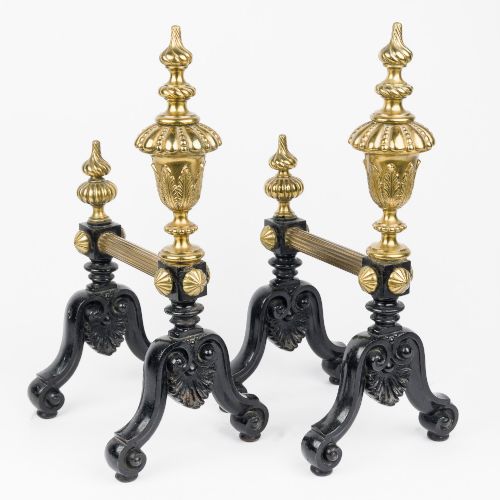
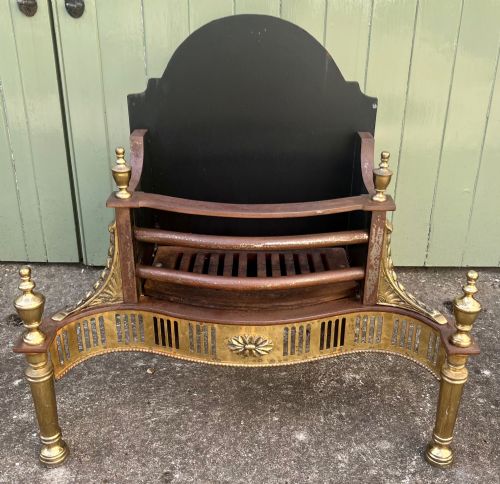
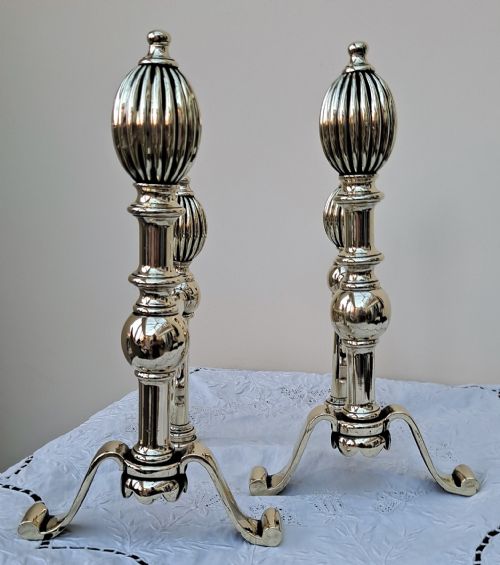
The pieces on this page span several centuries of British metalworking, taking the form of fire baskets, andirons, and complete fireplace sets with grates and fenders. You will encounter robust cast iron fire baskets paired with bright brass fire dogs, alongside integrated sets that include decorative firebacks.
Originating across multiple eras from the Georgian period through the Victorian and Edwardian decades, these items reflect enduring domestic styles. The selection leans heavily towards Victorian and Edwardian examples, supplemented by Neoclassical Adam style pieces and Gothic Revival ironwork.
How they were made
The primary construction relies on heavy cast iron for the structural fire baskets and grates, chosen for its ability to withstand intense hearth heat without warping. Wrought iron is also utilised for specific components, offering fibrous strength where the metal needs to be beaten into shape rather than cast.
Brass elements are cast and polished to provide a sharp contrast against the dark, textured surface of the iron fire dogs and baskets. These brass finials and mounts catch the light of the room, turning utilitarian metalwork into decorative metal sculpture.
Manufacturing techniques combine sand casting for the substantial iron firebacks and baskets with hand-finishing for the decorative brass andirons. Many items bring together separate cast iron baskets and brass fire dogs to form a matched fireplace set.
Vintage Dog Grate Retail Price Guide 2026
Typical asking prices for vintage dog grate among the pieces listed under this phrase on Sellingantiques today, from the lower quarter to the upper quarter. They describe what is for sale here now, not the wider market.
Listings feature four distinct metals: cast iron, wrought iron, iron, and brass, spanning the Georgian, Victorian, and Edwardian periods.
What varies in quality
Quality in these hearth furnishings is defined by the weight of the metal and the crispness of the casting. Heavier cast iron components indicate a sturdier build designed for decades of solid use, while thinner metal can suffer from thermal fatigue over time.
The artistic merit of the decorative detailing separates standard items from finer examples. Neoclassical Adam style pieces or Gothic Revival castings display sharply rendered mouldings and well-proportioned brass work that show greater attention from the pattern maker.
Condition and completeness also drive the standing of a piece within its type. Matched pairs of fire dogs retain their original balance and uniformity, whereas mismatched or heavily pitted ironwork lacks the intended symmetry of the hearth.
The Vintage Dog Grate Glossary
- Dog grate
- A metal basket for holding fuel inside a fireplace, often raised on legs or supported by separate fire dogs. It sits within the hearth to improve air circulation around the fire.
- Fire dog
- A heavy metal support placed at either side of a hearth to hold logs or support a fire basket. They are also frequently known as andirons.
- Fire basket
- An open container made of iron or steel designed specifically to hold coal or wood safely within the fireplace opening. These often incorporate decorative brass elements.
- Fireback
- A heavy cast iron plate placed against the back wall of a fireplace. It radiates heat back into the room and protects the brickwork from intense flames.
- Andiron
- A horizontal iron bar raised on short legs with a vertical pillar at the front, used in pairs to support logs in an open fireplace. The front pillars are frequently decorated in cast brass.
Vintage Dog Grate: Frequently Asked Questions
What is a dog grate?
A dog grate is an open metal basket designed to hold coal or wood within a fireplace, typically elevated to allow air to circulate beneath the burning fuel. These fixtures often feature matching supports at the sides.
They combine structural ironwork with decorative metal elements to serve as the functional heart of a traditional fireplace.
How do I clean cast iron?
Cleaning cast iron hearth furniture requires gentle brushing to remove soot and ash without scratching the metal surface. Avoid harsh chemical cleaners that can strip the historic finish.
Light applications of oil help protect ironwork from moisture and preserve the deep dark colour of the metal over time.
Can I burn real wood?
Most antique grates and baskets are built from heavy cast iron specifically to contain solid fuel fires like wood and coal. It is wise to check the thickness and integrity of the iron before lighting any fire.
Smaller decorative baskets or those with fragile repairs are better suited for display or fitted with gas fire alternatives.
How do I date an iron grate?
Dating these pieces involves looking at the prevailing style, such as Georgian Neoclassical symmetry, Victorian ornamentation, or Edwardian simplicity. The casting techniques and types of fixings also offer clues to the era of manufacture.
Comparing the decorative motifs with documented design periods helps narrow down the decade in which the metal was poured.