

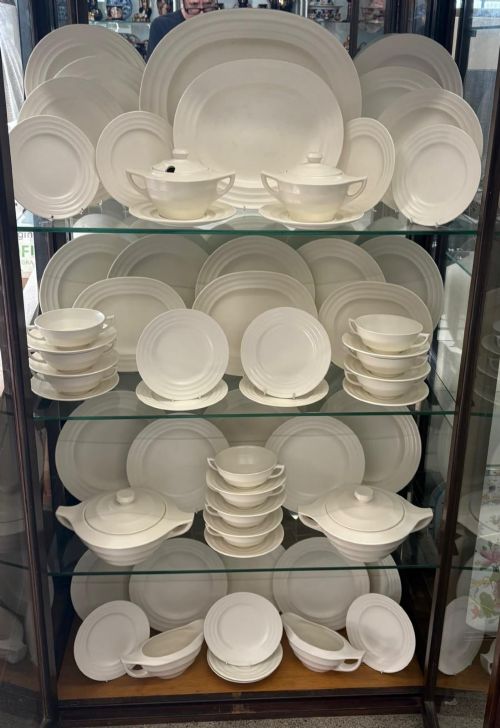
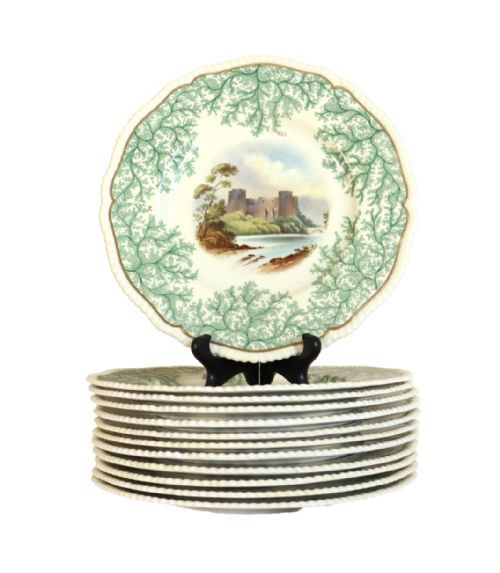
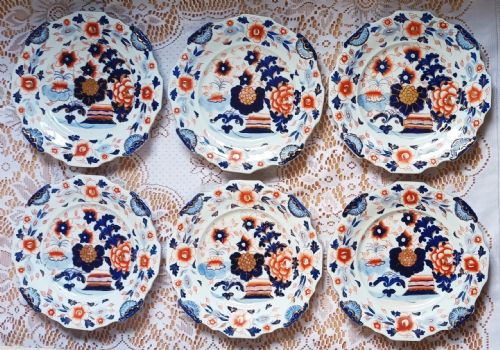
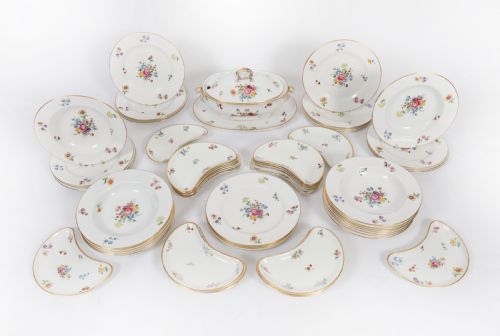
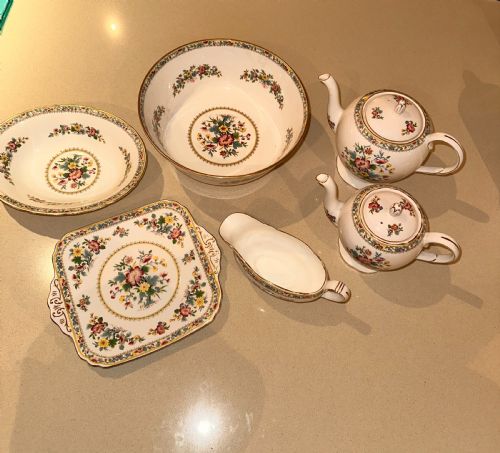


Vintage Dinnerware Set
These vintage dinnerware set pieces span the nineteenth and early twentieth centuries, bringing traditional earthenware, ironstone and porcelain to the table.
Vintage Dinnerware Set
A vintage dinnerware set brings together matched or complementary ceramic pieces designed for formal or everyday dining across the nineteenth and twentieth centuries. These gatherings range from modest plate collections to extensive services comprising dozens of plates, platters and serving vessels.
The selections encountered here stretch from Georgian ironstone and Victorian earthenware through to Edwardian porcelain and Art Deco designs. Buyers typically find complete services by makers such as Wedgwood, Spode and Copeland, alongside smaller groupings of plates bearing traditional patterns.
Forms vary from utilitarian dinner services intended for substantial meals to delicate botanical and scenic groupings. Each period introduces distinct decorative vocabularies, from hand-painted botanical studies to transfer-printed landscapes and gilt-edged borders.
Materials and production methods
Potters of the nineteenth and early twentieth centuries relied primarily on earthenware, ironstone and fine porcelain bodies shaped by hand or moulded. Ironstone provided a robust, heavy base suited to daily use, while porcelain and refined earthenware offered a lighter, more translucent surface for formal dining.
Decoration involved hand-painting, transfer printing and applied glazes, often finished with gilt accents. Factories utilised cobalt blue underglaze printing for enduring patterns such as botanical studies and scenic landmarks before applying protective transparent glazes and firing in kilns.
Vintage Dinnerware Set Retail Price Guide 2026
Typical asking prices for vintage dinnerware set among the pieces listed under this phrase on Sellingantiques today, from the lower quarter to the upper quarter. They describe what is for sale here now, not the wider market.
Listings span the nineteenth and twentieth centuries, featuring earthenware, ironstone and porcelain across periods from the Georgian era through to the 1930s.
Distinctions in quality and execution
Quality separates mass-produced domestic wares from ambitious services commissioned by prominent families or designed by notable artists. The finesse of the ceramic body, the crispness of transfer printing and the precision of hand-painted details determine the standing of each service.
The completeness and integrity of a service alter its character significantly, particularly when matching sixty or a hundred individual pieces. Retaining original provenance or factory markings adds historical weight to the collection.
Wedgwood·Spode·Copeland·Booths·Müller Volkstedt MV Co.·Doulton·Elkin & Newbon
The Vintage Dinnerware Set Glossary
- Ironstone
- A heavy, durable type of earthenware patented in the nineteenth century to imitate Chinese porcelain. It resists chipping and forms the base of many practical antique dining services.
- Transfer printing
- A method of applying a detailed design to ceramics by pressing paper from an engraved copper plate onto the unfired surface. This technique allowed factories to produce uniform scenic and floral patterns in large quantities.
- Gilt
- A thin layer of gold applied to the rims and handles of ceramic plates and serving vessels. It signals a more formal service intended for special dining occasions.
- Earthenware
- A porous, opaque ceramic fired at lower temperatures than porcelain. It requires a protective glaze to become waterproof and forms the substance of many traditional English services.
- Porcelain
- A fine, vitrified ceramic fired at high temperatures until non-porous and translucent. It represents the height of refinement in historical table services.
Vintage Dinnerware Set: Frequently Asked Questions
How do I care for antique dinnerware?
Wash antique ceramics by hand in warm water using a mild detergent, avoiding modern dishwashers that can damage old glazes and wear away gilt edges. Store plates with felt dividers between them to prevent surface scratching.
Keep ironstone and earthenware away from sudden temperature extremes to prevent thermal shock, which can cause historical ceramic bodies to crack.
Can I use these sets for everyday meals?
Many nineteenth and twentieth-century ironstone and earthenware services were built for robust daily use and handle modern dining well. However, pieces with delicate hand-painted enamels or extensive gilding are better reserved for occasional display or careful dining.
Inspect the glaze for any existing crazing, as porous historical bodies absorb liquids and staining if exposed to foods for extended periods.
What is the difference between earthenware and ironstone?
Earthenware is a traditional porous ceramic that requires a smooth glaze to seal the body, while ironstone is a denser, heavier stoneware formulation patented in the nineteenth century. Ironstone offers greater resistance to chipping and wear during regular use.
Both materials appear frequently across Victorian and Edwardian dining services, often decorated with transfer-printed or hand-painted motifs.
How are different periods identified?
Periods are identified through a combination of maker's marks, ceramic body composition, decorative style and registration numbers stamped into the base of the pieces. Victorian and Georgian wares often display distinct heavy ironstone bodies and cobalt blue transfer prints, while later pieces adopt Art Deco forms.
Documentation, family provenance and stylistic cues such as specific floral borders further help narrow down the decade of production.