

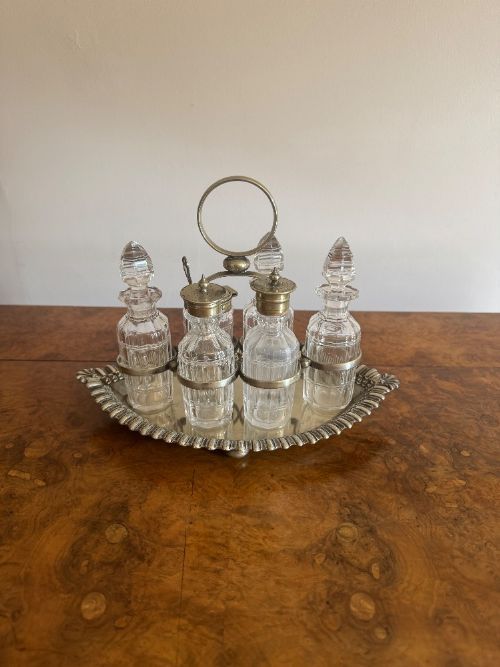


Vintage Dining Table Cruet
A vintage dining table cruet holds your condiments in style, bringing practical elegance and period charm straight to the middle of the table.
Vintage Dining Table Cruet
When you search for a vintage dining table cruet, you encounter sets designed to hold condiments, sauces, and seasonings within easy reach during a meal. These functional vessels range from simple three-piece arrangements to elaborate stands fitted with multiple bottles.
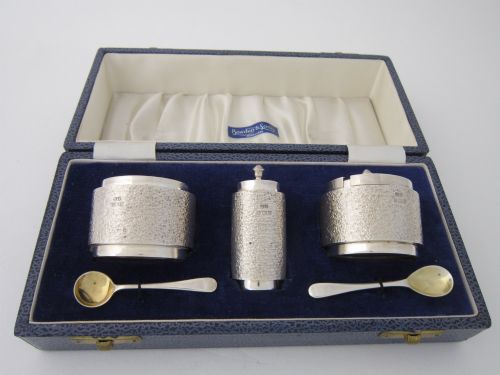
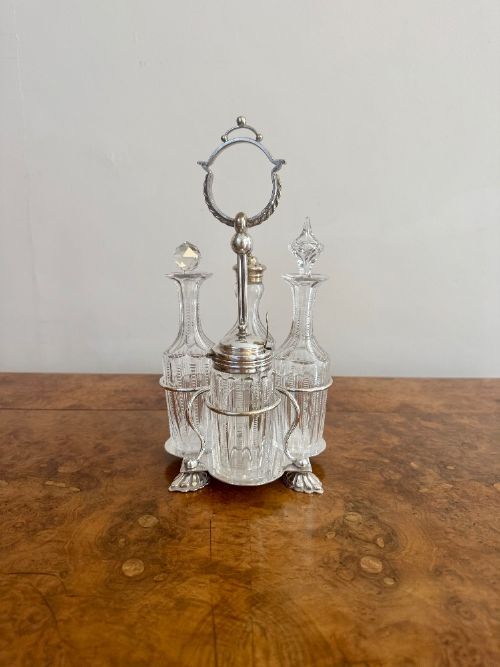
The selections available here draw principally from the Edwardian and Victorian eras, alongside earlier Georgian examples and mid-century modern pieces. You are most likely to meet silver-plated stands holding cut glass bottles, or sturdy oak frames fitted for everyday dining.
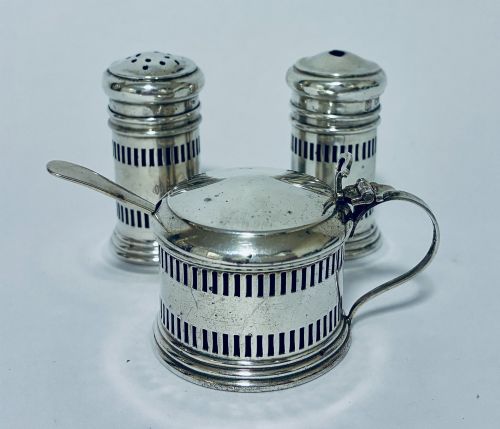
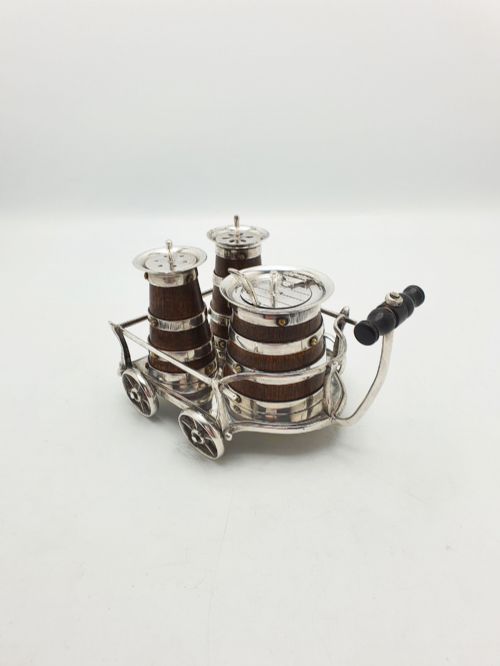
Forms vary from compact three-piece sets to large oval eight-piece configurations and novelty barrel designs. Each piece reflects the formal dining habits of its period, uniting utility with decorative craftsmanship.
How they were made
Maker techniques rely heavily on combining metalwork with glass production, uniting silver or silver plate with heavy cut glass bottles and stoppers. Frames are cast, pierced, or shaped from metals like sterling silver and gold plate, sometimes incorporating turned wood such as oak.
Glass bottles feature deep hand-cut patterns to catch the light on the dining table, fitted with silver mounts or collars. Wood stands utilise traditional joinery and ebonising techniques to create sturdy, polished bases complete with fitted handles.
Vintage Dining Table Cruet Retail Price Guide 2026
Typical asking prices for vintage dining table cruet among the pieces listed under this phrase on Sellingantiques today, from the lower quarter to the upper quarter. They describe what is for sale here now, not the wider market.
Some Victorian makers turned an ordinary oak barrel on its side, fitted it with silver hoops, and called it a condiment set.
What varies in quality
Quality rests in the weight of the metal and the clarity of the glass, distinguishing robust silver plate or sterling construction from lighter alternatives. Finely cast handles, crisp piercing on the stands, and deeply faceted cut glass indicate superior workshop production.
The completeness of the set and the matching nature of the bottles dictate the overall standard of the piece. Sets retaining their original collection of undamaged bottles command greater appreciation than those assembled from mixed replacements.
Wade Wingfield Wilkins
The Vintage Dining Table Cruet Glossary
- Cruet stand
- A frame or stand designed to hold multiple condiment bottles, typically featuring a central carrying handle. These stands formed a standard centrepiece on dining tables for holding sauces, oils, and seasonings.
- Cut glass
- Glass decorated by grinding facets and patterns into the surface using a wheel. This technique creates brilliant light reflections and a textured grip on condiment bottles.
- Silver plate
- A layer of silver fused to a base metal, commonly used to create decorative tableware. It provided the luxurious appearance of solid silver at a more accessible cost.
- Condiment set
- A matched group of small containers for salt, pepper, mustard, or sauces. They sit either within a dedicated stand or directly on the table surface.
- Ebonised
- Wood treated with a finish to imitate ebony, giving a deep black appearance. This treatment was frequently used on Georgian and Victorian stands to provide a striking contrast against silver mounts.
Vintage Dining Table Cruet: Frequently Asked Questions
What is a cruet set?
A cruet set is a collection of small bottles and containers designed to hold table condiments like oil, vinegar, salt, pepper, and mustard. They sit together in a fitted stand for easy transport around the dining table.
Historically, these sets kept essential flavourings within reach of diners before individual place settings became standard practice during meals.
How were they used?
These sets were placed centrally on the dining table or passed among guests during formal meals to season food to taste. Servants would also use the stand to replenish individual place settings throughout the course.
They served both a practical culinary function and a decorative purpose, displaying the host's refined tableware to visiting guests.
How do I date a cruet?
Dating relies on stylistic clues, manufacturing techniques, and hallmarks stamped onto the metal mounts. Victorian and Edwardian pieces often display ornate decorative motifs, whereas Georgian examples show restrained elegance.
Examining the cut of the glass and the shape of the frame helps narrow down the period of production alongside any maker marks.
How should I clean silver plate?
Clean silver-plated stands gently using a specialised silver cloth or mild polish designed for plated items. Avoid harsh abrasives that can wear away the thin silver layer over the base metal.
Wash the glass bottles separately in warm soapy water, ensuring stoppers and mounts are dried thoroughly before reassembling the set.
Can I use them daily?
Many vintage sets remain sturdy enough for everyday dining, provided you handle the cut glass bottles with care. Using modern oils and vinegars inside antique glass requires gentle hand washing afterwards.
Alternatively, they make striking decorative displays on sideboards or dining room tables when not in active use.