
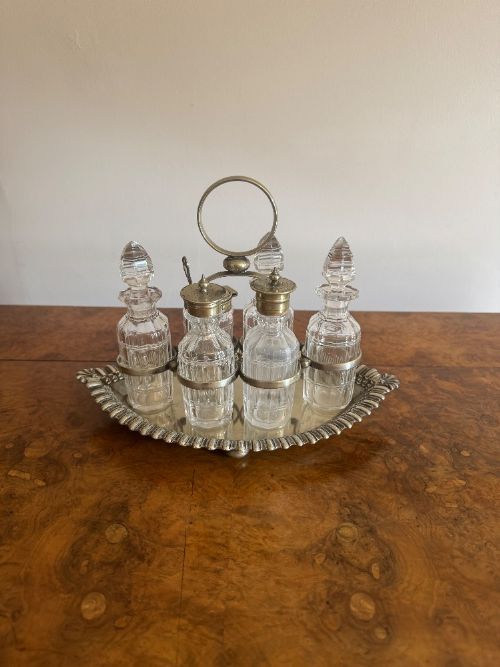
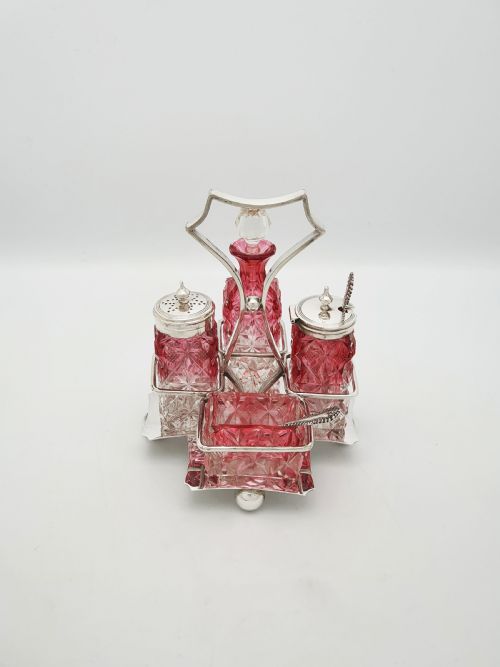


Antique Table Condiment Frame
An antique table condiment frame organises your sauces and seasonings with period elegance, offering a practical centrepiece for any dining table.
Antique Table Condiment Frame
An antique table condiment frame houses multiple bottles, castors and jars to serve mustard, oil, vinegar and sauces together at the table. These vessels range from compact bachelor sets with a few bottles to large oval stands holding up to eight pieces.
The selections span the eighteenth century through the Edwardian era, taking forms such as cruet sets, condiment stands and relish caddies. Georgian examples frequently combine solid silver frames with fitted bottles and casters, while later pieces favour silver plate combined with cut glass.
Victorian and Edwardian iterations dominate the selection, bringing ornate silver plate and cranberry flashed cut glass to the dining room. Georgian versions appear alongside these, represented by makers such as Hester Bateman and the Warwick design.
How they were made
Silversmiths constructed solid silver or silver-plated frames using casting and soldering techniques, often incorporating intricate pierced galleries and handles. Mahogany also appears as a base material for certain stands, pairing wooden frames with glass and metal fittings.
Glass bottles and casters were shaped using mould-blown and cut glass techniques, sometimes utilising cranberry glass for rich colour. The individual glass pieces were then hand-cut with geometric patterns to catch the light on the dining table.
Materials across the listings span cut glass, silver plate, sterling silver, cranberry glass and mahogany.
What varies in quality
Quality rests in the heaviness of the silver or the thickness of the plating over the base metal, alongside the clarity and depth of the cut glass. Complete sets retaining their original matching bottles and castors command greater regard than those assembled later from mixed parts.
Artisanal execution dictates the distinction between standard production and exceptional work, visible in crisp silver chasing, pierced work and the precision of the bottle cuts. Maker attributions to prominent silversmiths further elevate the standing of a piece.
Hester Bateman·Mappin Brothers·William Hutton & Sons
The Antique Table Condiment Frame Glossary
- Cruet set
- A collection of glass bottles or cruets for oil, vinegar, mustard and other seasonings, held within a fitted frame. These sets formed an essential part of formal dining arrangements from the eighteenth century onwards.
- Caster
- A small cylindrical jar with a perforated top used for sprinkling sugar or dry spices onto food. Casters frequently accompany bottles within larger cruet stands.
- Silver plate
- A layer of silver bonded to a base metal, typically nickel silver or copper, offering the appearance of solid silver at a lower cost. This technique gained widespread popularity during the Victorian and Edwardian periods.
- Cranberry glass
- A type of transparent pinkish-red glass produced by adding gold chloride to the molten glass batch. It appears frequently in late nineteenth and early twentieth-century tableware.
- Relish caddy
- A specialised frame designed to hold small jars or dishes for pickles, relishes and sauces. These pieces provide a streamlined alternative to traditional multi-bottle cruet stands.
Antique Table Condiment Frame: Frequently Asked Questions
How do I clean an antique condiment frame?
Wash glass bottles gently in warm soapy water using a soft brush, avoiding harsh abrasives that might scratch the surface. Clean silver or silver-plated frames with a dedicated metal polish applied sparingly with a soft cloth to protect any chased details.
Dry all components thoroughly before returning the bottles to the frame. Take care around vintage plating to prevent wearing down the silver layer over time.
Are all the bottles in a set original?
Many antique condiment sets have experienced glass replacements over the decades due to accidental breakages during daily use. Matching bottles should share identical glass weight, cutting styles and rim dimensions to indicate they belong together.
Checking the fit inside the frame apertures helps determine if the vessels are contemporaneous with the stand. Minor variations in glass tint often suggest replacement components.
How were these sets used?
Condiment frames sat at the centre of dining tables to allow guests to season food to taste during meals. Individual bottles held wet condiments such as vinegar, oil and mustard, while shakers dispensed dry spices.
Smaller bachelor sets catered to intimate dining or solitary meals, whereas large oval stands served multiple diners in formal households.
How do I tell Georgian from Edwardian sets?
Georgian condiment frames often feature solid silver construction with neoclassical pierced designs and distinct maker marks from the eighteenth century. The glass vessels tend to be hand-blown with simpler geometric or panel cutting.
Edwardian sets frequently utilise silver plate over base metals, displaying heavier cast ornament and intricate cranberry flashed glass. The overall aesthetic of Edwardian pieces leans towards ornate revival styles.