

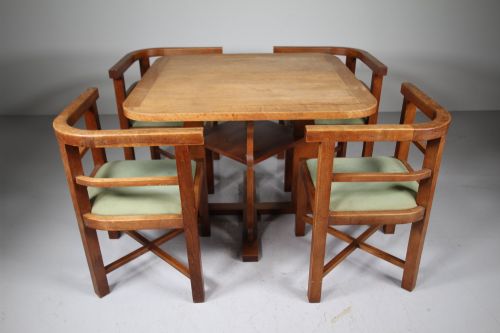
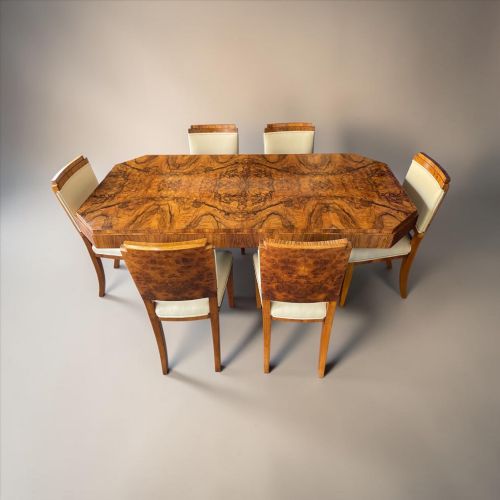
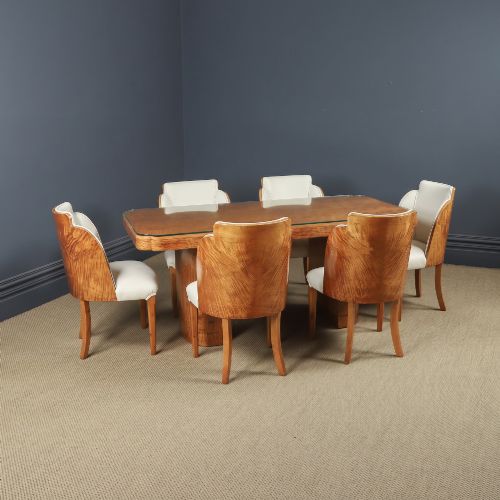
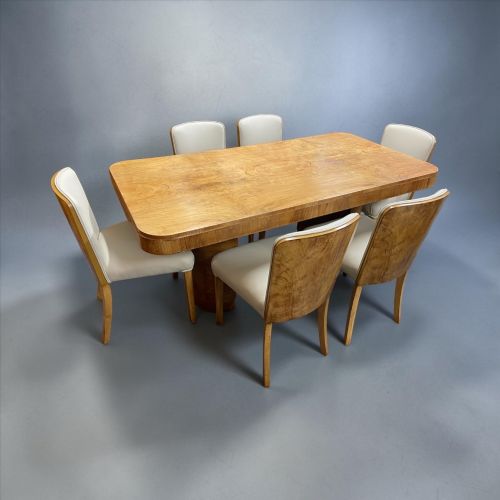
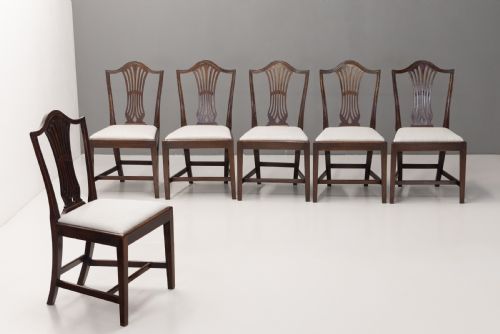


Vintage Dining Room Suite
A vintage dining room suite brings matched character to the home, uniting table, chairs, and occasional pieces through period craftsmanship.
Vintage Dining Room Suite
A vintage dining room suite brings together matched tables and chairs created across the Edwardian era and the 1920s and 1930s. Buyers searching for a vintage dining room suite encounter comprehensive sets that often pair tables with six or more chairs, sometimes accompanied by matching sideboards.
The offerings span traditional revivalist tastes and striking modernist designs. Pieces range from formal Edwardian oak dining suites to streamlined Art Deco groups featuring exotic veneers.
Alongside complete suites, the selection includes distinct dining sets and individual groups of chairs. These provide cohesive seating solutions derived from specific historical periods without requiring a full room overhaul.
Materials and construction methods
These suites rely on a foundation of solid timbers such as mahogany, oak, and walnut, complemented by decorative applications like burr walnut, satinwood, maple, calamander, macassar, and ebony. Cabinetmakers shaped these woods to form robust dining tables and supportive chair frames.
Seating components frequently integrate leather or fabric upholstery to provide comfort alongside structural stability. Metal elements like brass appear selectively for hardware or supportive details.
Revivalist suites display detailed hand carving across chair backs and table frames, whereas Art Deco suites showcase smooth surfaces that highlight the natural grain patterns of exotic wood veneers.
Vintage Dining Room Suite Retail Price Guide 2026
Typical asking prices for vintage dining room suite among the pieces listed under this phrase on Sellingantiques today, from the lower quarter to the upper quarter. They describe what is for sale here now, not the wider market.
Object types vary from expansive eleven-piece dining suites and tables with ten chairs down to intimate salon chairs intended for re-upholstery.
Distinctions in construction and design
Quality in a vintage dining room suite rests on the integrity of the timber selection and the precision of the joinery. Superior suites feature carefully matched veneers and robust structural frames that withstand daily use.
The condition of original upholstery and surface finishes influences the overall integrity of the suite. Preserved surfaces and intact traditional joinery maintain the historical character intended by the maker.
Harry and Lou Epstein·Shoolbred
The Vintage Dining Room Suite Glossary
- Art Deco
- A design style from the 1920s and 1930s characterised by sleek lines, geometric forms, and exotic wood veneers. It represents a sharp departure from traditional revivalist aesthetics.
- Chippendale Style
- An eighteenth-century design tradition revived in later periods, known for intricate carved details and elegant chair back designs. It reflects classic British cabinetmaking conventions.
- Veneer
- A thin layer of decorative wood applied to a base timber surface. Cabinetmakers utilise figured woods like burr walnut or calamander to create striking visual patterns.
- Upholstery
- The padded covering applied to dining chairs, utilising leather or fabric materials. Original upholstery methods contribute to the period authenticity of a suite.
Vintage Dining Room Suite: Frequently Asked Questions
What pieces comprise a complete suite?
A complete suite typically incorporates a dining table accompanied by a set of matching chairs, often numbering six or more. Some larger suites also include complementary items such as sideboards or side tables to unify the room.
These collections ensure a cohesive aesthetic across all dining furniture rather than requiring a buyer to mix disparate styles or periods.
How do I identify an Art Deco suite?
Art Deco dining furniture is distinguished by geometric symmetry, streamlined silhouettes, and the use of striking exotic veneers like macassar and calamander. These sets originated predominantly around 1930 and favour smooth surfaces over heavy carving.
Makers such as Harry and Lou Epstein defined this modernist aesthetic through precise construction and dramatic wood grain patterns.
Are Edwardian suites heavily carved?
Edwardian dining furniture often draws upon earlier stylistic revivals, incorporating traditional woodwork techniques and substantial frames. Pieces from this era frequently display classical proportions alongside refined detailing.
Subsets within this period, such as Jacobean Revival pieces, introduce prominent carved oak elements that distinguish them from smoother Edwardian designs.
How should I care for polished wood surfaces?
Preserving vintage wood requires protection from direct sunlight and excessive moisture fluctuations that can affect timber and veneers. Regular dusting with a soft cloth maintains the natural lustre of the polish.
Avoid chemical cleaning products that might strip historical finishes, opting instead for traditional beeswax formulations suitable for antique furniture.