
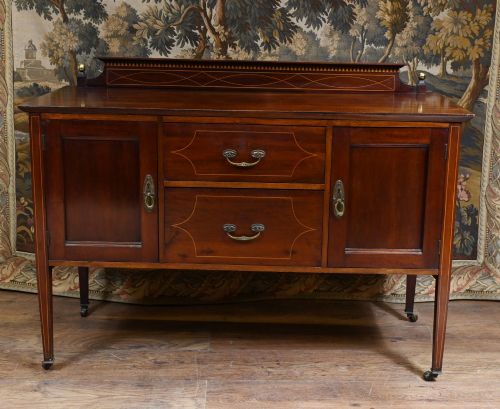


Vintage Dining Room Dresser
A vintage dining room dresser anchors a room with substantial timber and practical storage built for daily service.
Vintage Dining Room Dresser
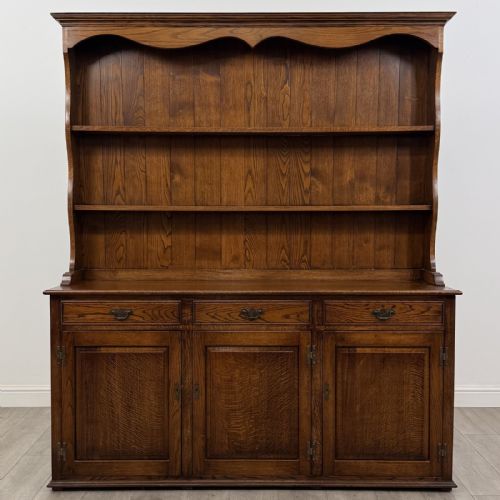
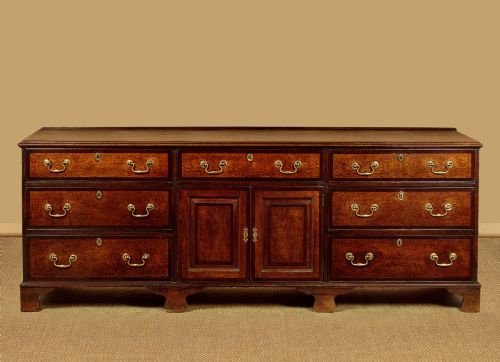
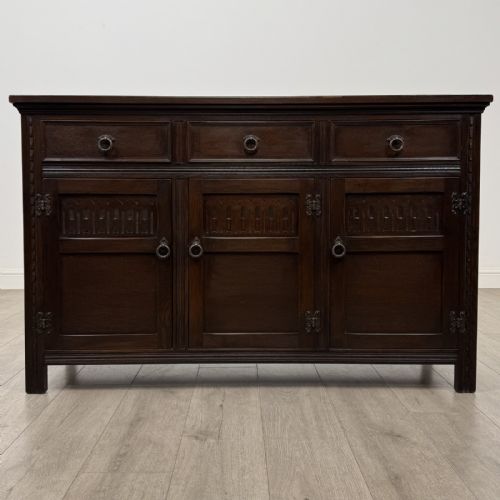
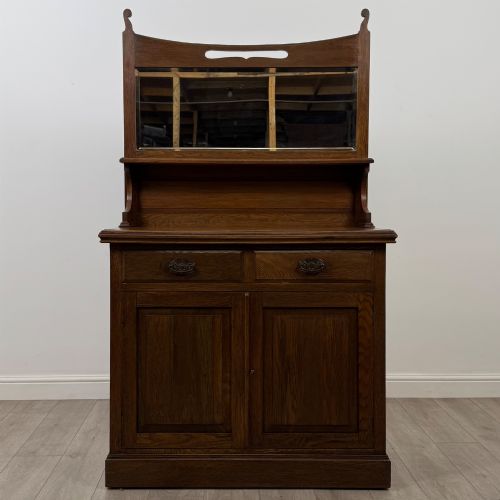
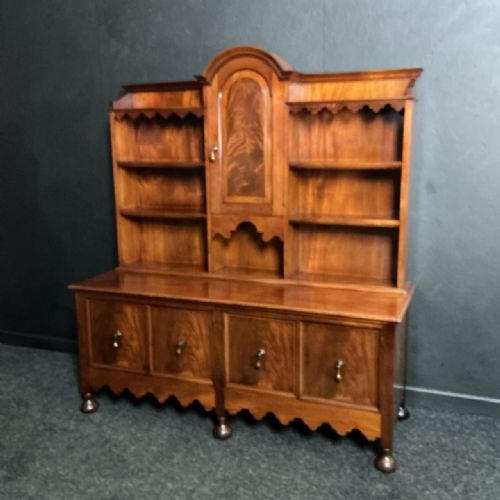
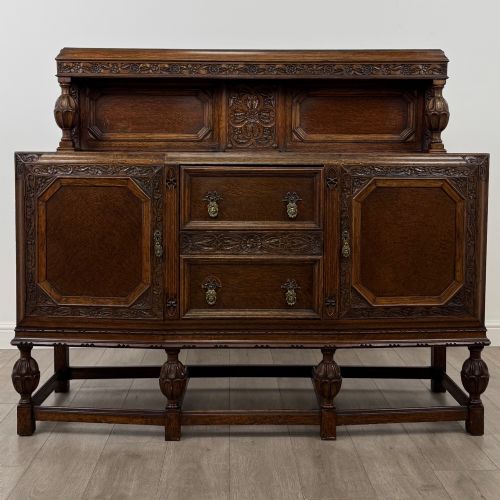
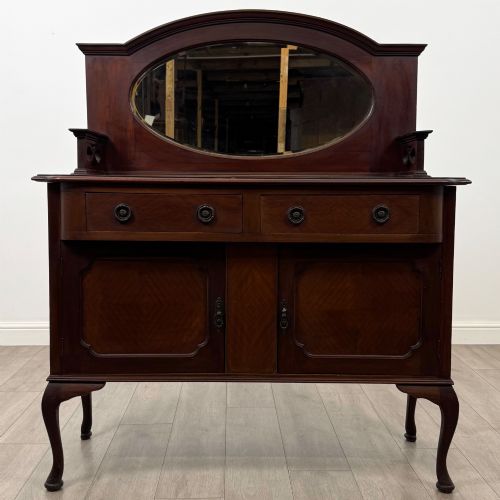
A vintage dining room dresser encompasses sideboards, buffet units, and dresser bases intended for the dining space. These forms provide deep drawers, cupboards, and occasionally upper shelving or mirror backs designed to hold tableware.
The selections span the Edwardian era, Victorian period, and the 1930s, alongside Georgian and Regency pieces. Oak and mahogany dominate the offerings, appearing in both solid construction and veneered finishes.
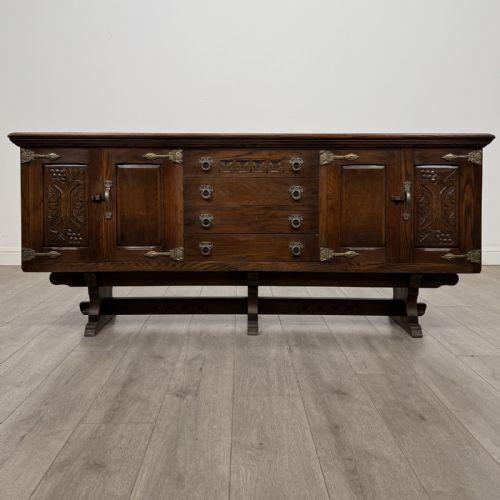
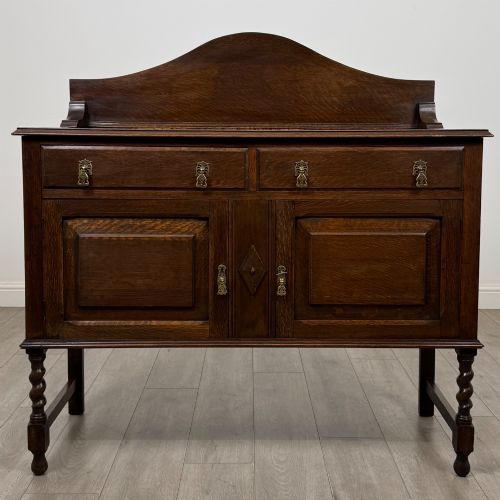
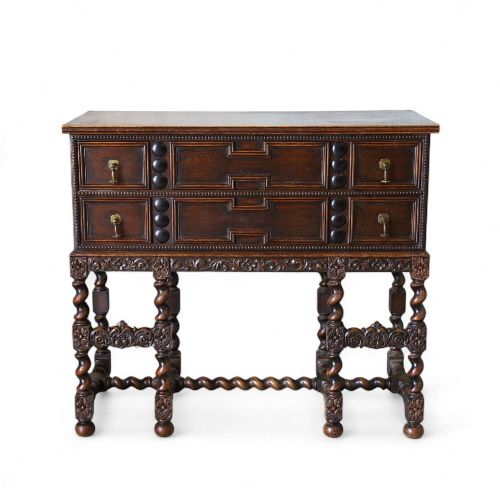
Edwardian oak sideboards with mirror backs or barley twist supports represent the most frequent finds in this category. Alongside them, Arts and Crafts and Jacobean Revival examples offer distinct stylistic details from the early twentieth century.
How they were made
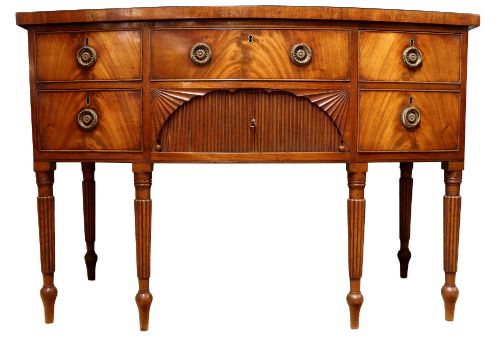
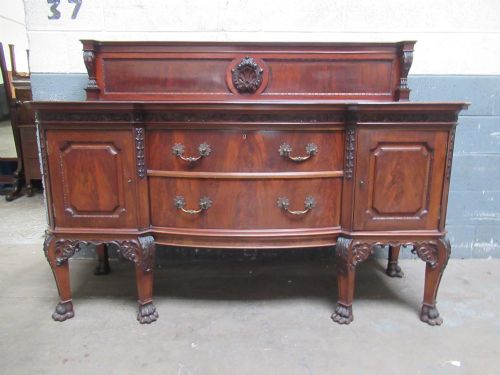
Joiners built these pieces primarily using solid oak and mahogany, often applying flame mahogany veneer to large flat surfaces for visual depth. Brass hardware, metal mounts, and mirrored glass frequently complement the primary timber frames.
Construction techniques combine traditional framing with applied decorative elements such as boxwood inlay, Sheraton-style marquetry, and deep relief carving. Structural supports range from straight legs and stretcher bases to turned barley-twist uprights.
Listings feature oak and mahogany predominantly, spanning the Georgian period through the Edwardian era and into the 1930s.
What varies in quality
The depth of hand-carving and the choice of primary timber distinguish standard production pieces from finer workshops. Selection of figured veneers and the crispness of inlaid boxwood lines separate straightforward utilitarian furniture from master-carved examples.
Integrity of the timber grain, stability of joints, and originality of brass handles and mirror glass influence the overall standing of each piece. Finer examples retain their original surface patination without heavy modern intervention.
Maple & Co
The Vintage Dining Room Dresser Glossary
- Dresser base
- A low cabinet featuring drawers and cupboards without the upper plate rack or shelving superstructure. This form serves as a heavy sideboard for serving food.
- Mirror back
- An upright wooden frame holding a glass mirror attached to the rear of a sideboard top. These additions reflect light and display decorative objects placed upon the surface.
- Barley twist
- A carved wooden support turned in a spiral resembling a stalk of barley. This decorative leg style appears frequently on Edwardian and Jacobean Revival oak furniture.
- Bow front
- A convex, outwardly curved front elevation typical of fine Georgian and nineteenth-century sideboards. This curved shaping requires advanced cabinetmaking skill to execute smoothly.
- Inlay
- The technique of inserting contrasting strips of wood or metal into recessed portions of the primary timber base. Boxwood and Sheraton motifs commonly form these decorative patterns.
Vintage Dining Room Dresser: Frequently Asked Questions
What is a vintage dining room dresser used for?
These pieces provide heavy storage for dining china, linens, and silver while offering a broad top surface for serving meals. Cupboards and drawers keep dining room necessities organised close to the table.
Historically, they functioned as the central staging area for large family meals and formal dinner parties. Today, they serve a similar practical purpose while anchoring the traditional or eclectic style of a dining room.
How do I identify an Edwardian sideboard?
Edwardian examples often feature lighter timbers like mahogany, frequently enhanced with subtle boxwood inlay or oval mirror backs. Turned legs and brass face handles are also characteristic of this period.
They generally show lighter proportions compared to heavy Victorian pieces, reflecting changing interior tastes around the turn of the twentieth century.
Are these dressers made of solid wood?
Most pieces combine solid timber frames with high-quality wood veneers applied to panels and drawer fronts. Oak and mahogany are the primary woods used throughout these periods.
Veneering allowed makers to display dramatic grain patterns, such as flame mahogany, without warping the core structural boards.
How do I fit a large sideboard into a modern room?
A substantial wooden sideboard works best against a primary wall where its depth and length do not crowd daily movement. Pair the timber tones with neutral wall colours to let the natural grain stand out.
Use the top surface for lamps, books, or serving trays to integrate the piece naturally into contemporary living spaces.