
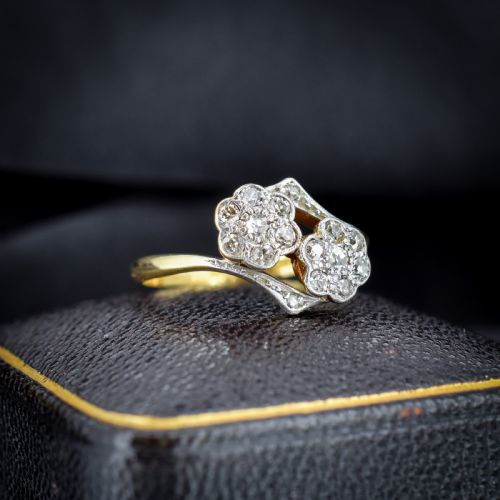
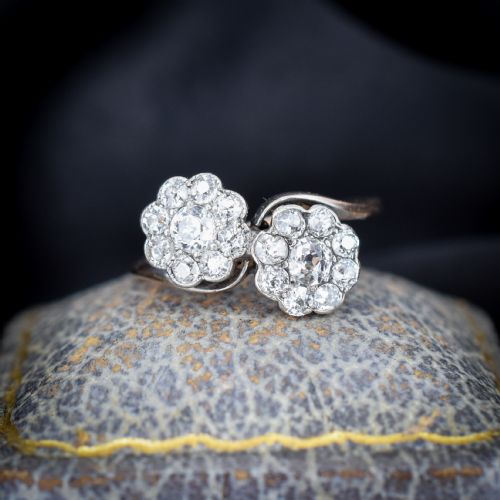


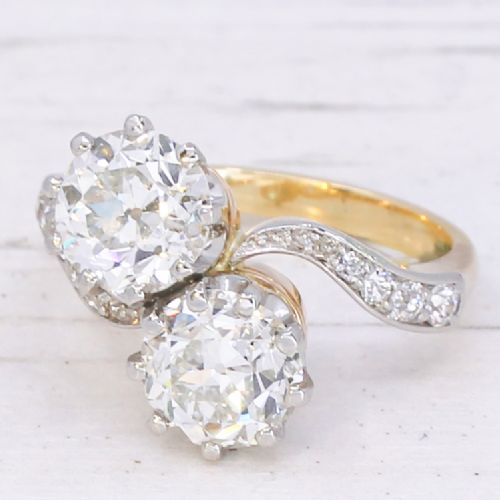


Vintage Diamond Crossover Ring
A vintage diamond crossover ring pairs two or more stones in a graceful twist, offering distinctive finger coverage and timeless romantic symbolism.
Vintage Diamond Crossover Ring
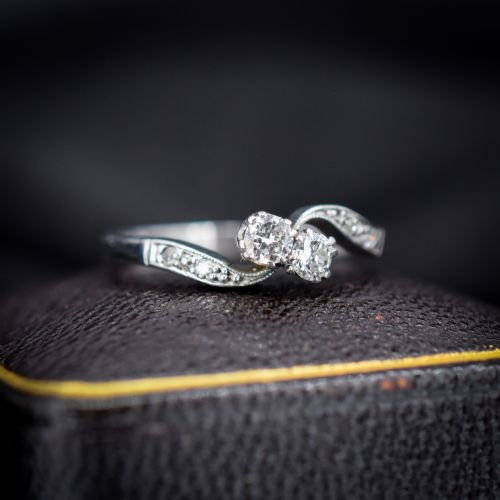
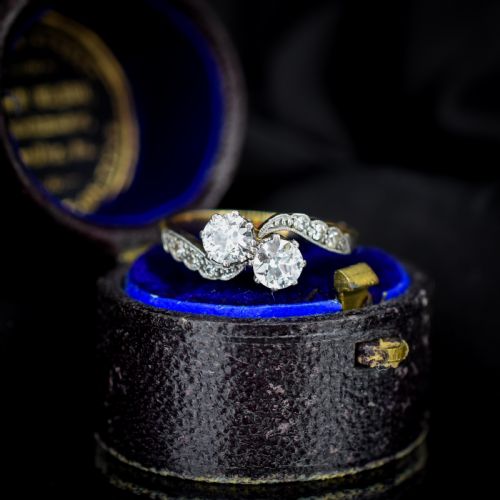
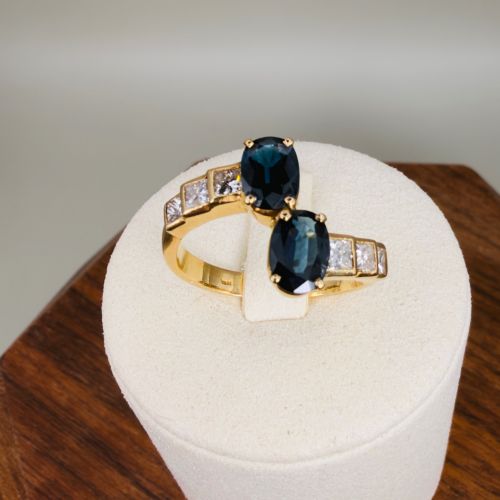
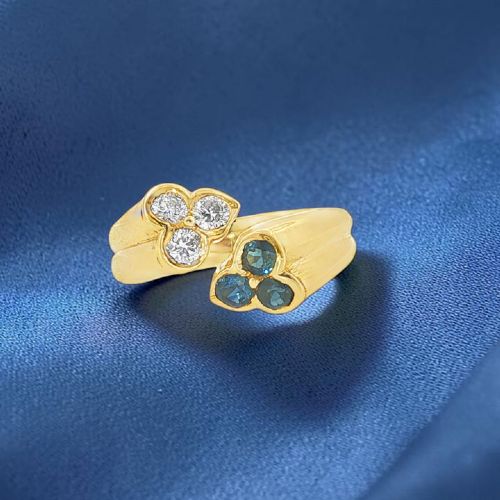
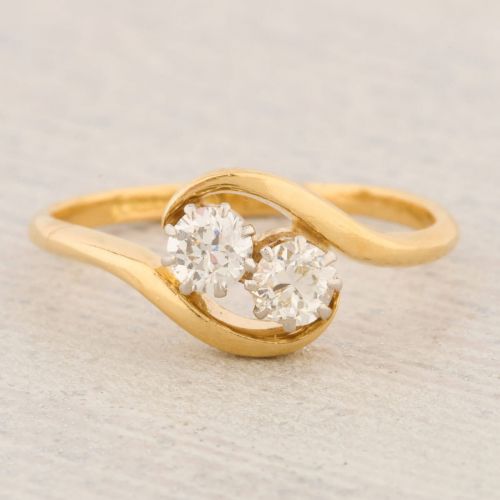
A vintage diamond crossover ring is defined by bands that sweep and cross over one another, frequently featuring twin principal stones in a toi et moi arrangement. These pieces span periods from the Edwardian era and Art Deco through the mid-twentieth century, showcasing the evolution of twist and bypass designs.
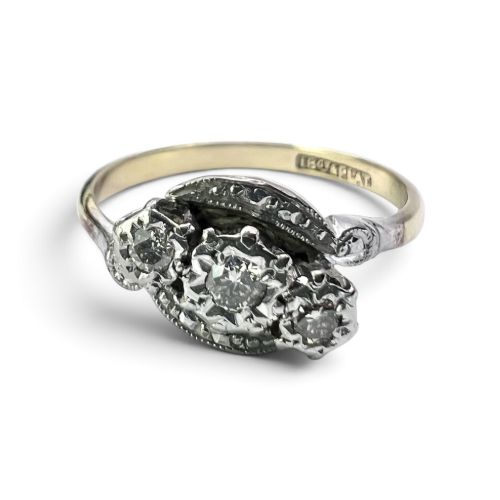
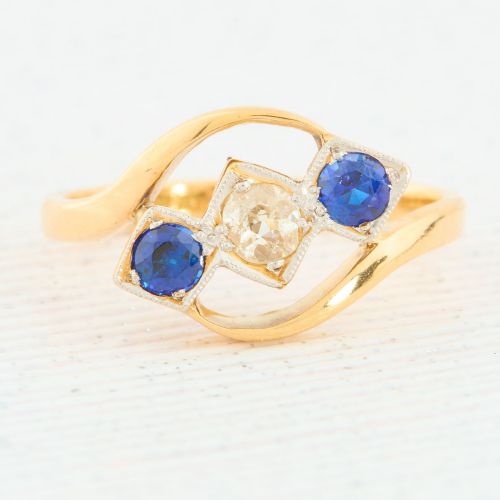
The version most commonly met on this page is an Edwardian or Art Deco piece pairing diamonds with gold and platinum, often incorporating old cut stones. Alongside standard two-stone configurations, variants include cluster combinations with sapphires, rubies, or pearls nestled within the swirling bands.
Makers and jewellers of these decades utilised the crossover motif to maximise the visual impact of central gems. The flowing lines provide a comfortable fit while maintaining the distinct architectural geometry characteristic of early twentieth-century jewellery.
How they were made
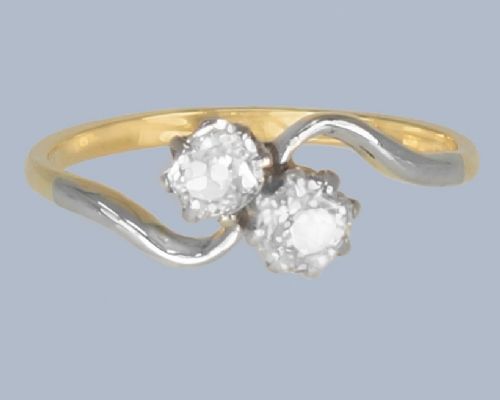
Construction typically combines 18ct yellow or white gold for the shank with platinum settings for the diamond heads. Platinum gained widespread favour for its strength, allowing jewellers to create delicate claws and secure bezels that held old European and old cut diamonds safely.
Techniques relied heavily on hand fabrication, where metal was drawn, shaped, and polished to form the characteristic asymmetrical twist or bypass. Stones were secured using grain setting, star setting, or traditional claw mounts designed to catch ambient light from multiple angles.
Vintage Diamond Crossover Ring Retail Price Guide 2026
Typical asking prices for vintage diamond crossover ring among the pieces listed under this phrase on Sellingantiques today, from the lower quarter to the upper quarter. They describe what is for sale here now, not the wider market.
Materials featured across the current selection include diamonds, rubies, sapphires, pearls, and turquoise set in 18ct gold and platinum.
What varies in quality
Quality in these rings is determined by the precision of the metalwork where the bands intersect and the symmetry of the overarching twist. Superior examples maintain structural thickness in the shank despite decades of wear, avoiding thinning near the shoulders.
Another factor is the matching and cut of the principal stones, whether old European diamonds, sapphires, or pearls. Finer pieces demonstrate careful selection of proportionate gems that complement the fluid lines of the setting without overpowering the design.
Kutchinsky
The Vintage Diamond Crossover Ring Glossary
- Crossover ring
- A ring design featuring bands that cross over each other, sometimes referred to as a twist or bypass ring. This style creates an organic flow across the finger.
- Toi et moi
- French for 'you and me', describing a ring featuring two principal gemstones set close together. The style symbolises the union of two souls.
- Old cut diamond
- A hand-faceted diamond cut prior to the standardisation of the modern brilliant cut in the early twentieth century. These stones typically feature smaller tables and higher crowns.
- Bypass ring
- A variation of the crossover where the ends of the shank pass each other rather than meeting in the centre. This creates an open, dynamic silhouette on the hand.
- Trilogy ring
- A ring set with three stones in a row, often integrated into twist or crossover shoulder frameworks. They frequently represent the past, present, and future.
Vintage Diamond Crossover Ring: Frequently Asked Questions
How do I date a crossover ring?
Dating relies on examining the metal combinations, gemstone cuts, and hallmarks stamped inside the shank. Edwardian and Art Deco examples often pair 18ct gold with platinum settings.
Old European cut diamonds and specific maker's marks or date letters further narrow down the decade of production. Stylistic cues like openwork filigree point towards the early twentieth century.
Are these rings suitable for daily wear?
These rings can be worn daily provided they receive proper care and routine checks by a jeweller. Platinum and 18ct gold provide robust foundations for antique stones.
It remains wise to remove the ring during heavy manual tasks or swimming to protect delicate claws and softer gem materials like pearls or opals.
What is the difference between twist and crossover?
Twist and crossover are largely interchangeable terms used to describe bands that curve and intersect over the finger. Both styles create movement and visual depth.
Some collectors use crossover specifically for bypass forms, while twist denotes a tighter interlacing of the metal shanks around the central stones.