



Vintage Demilune Hall Table
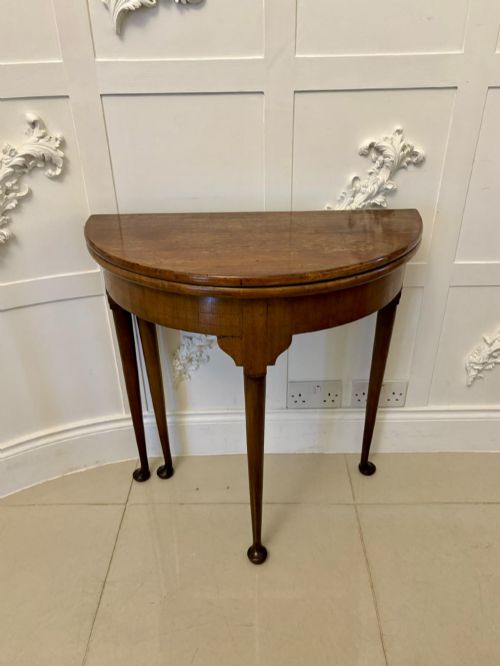
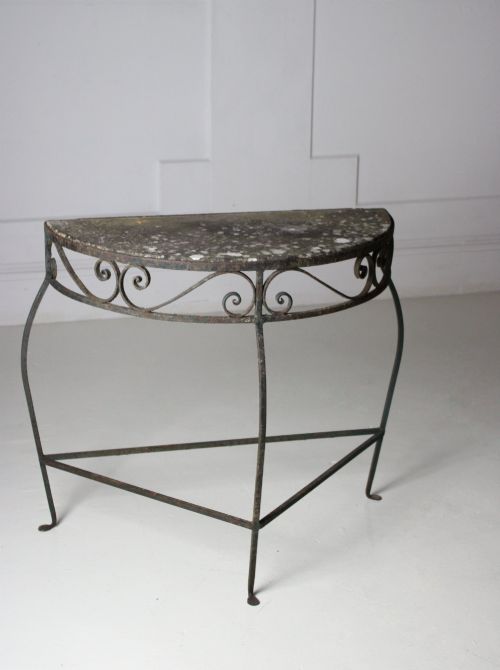
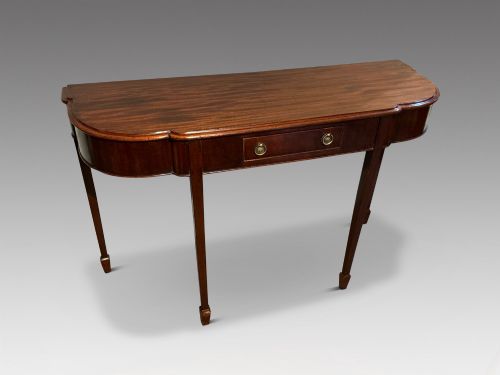
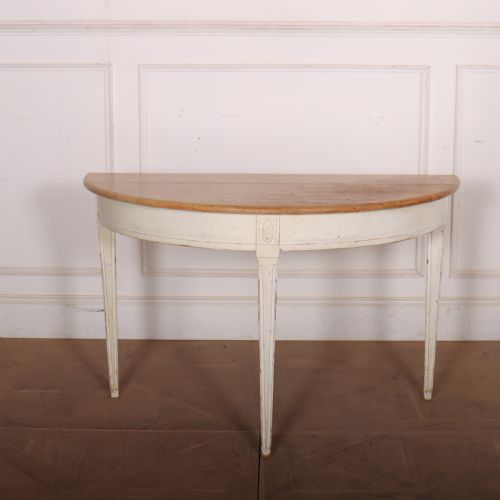
A vintage demilune hall table offers a flat-backed semi-circular silhouette designed to hug a narrow entrance wall.
Vintage Demilune Hall Table
A vintage demilune hall table provides a compact surface for narrow spaces by sitting flush against the wall with a curved front. These items appear across the eighteenth, nineteenth, and early twentieth centuries in console, side, and washstand forms.
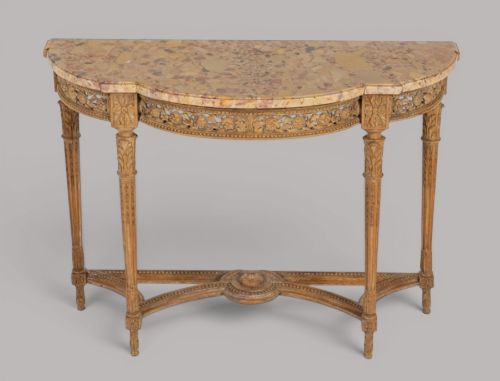
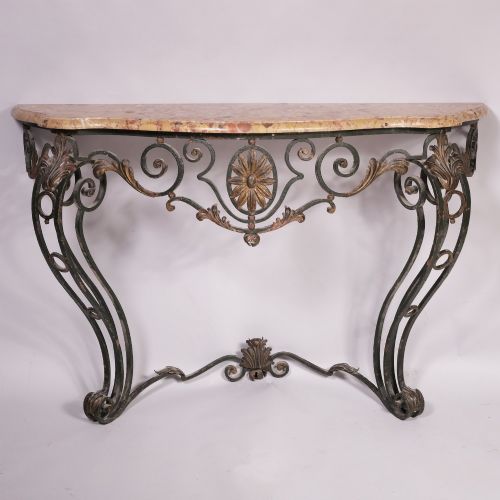
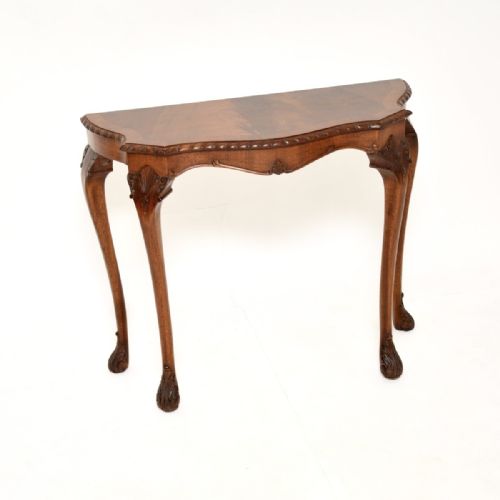
The selections span English mahogany and satinwood pieces alongside French and Swedish painted or gilded designs. Buyers frequently encounter console tables fitted with marble tops alongside wooden half-moon variations.
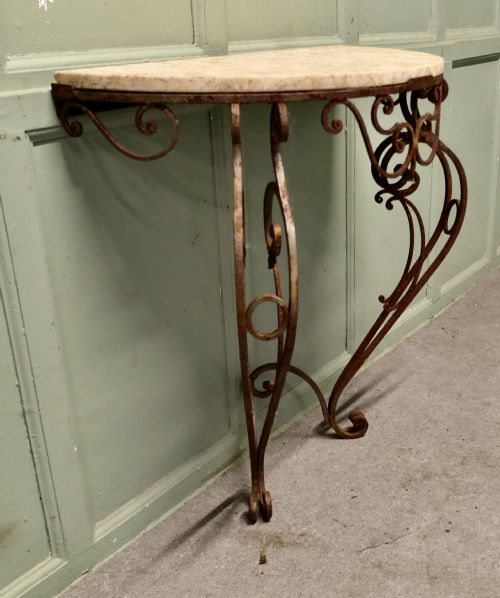
Georgian and Edwardian examples sit alongside French Rococo, Louis XVI, and Gustavian styles. The range includes inlaid woods, wrought iron structures, and walnut constructions.
What varies in quality
The grade of timber and precision of inlay work define the upper tier of these furnishings. Finely figured mahogany and delicate satinwood banding distinguish superior cabinetmaking from simpler utilitarian builds.
The integration of heavy marble tops with stable iron or carved wooden frames dictates the structural integrity. Intricately carved giltwood and hand-painted French or Swedish surfaces display higher artistic investment than plain alternatives.
Vintage Demilune Hall Table Retail Price Guide 2026
Typical asking prices for vintage demilune hall table among the pieces listed under this phrase on Sellingantiques today, from the lower quarter to the upper quarter. They describe what is for sale here now, not the wider market.
Thonet introduced bentwood console tables in the late nineteenth century, proving that even a hallway ledge can benefit from steam-bent innovation.
Thonet·Gillows
The Vintage Demilune Hall Table Glossary
- Demilune
- A half-moon shape used to describe tables with a flat rear edge and a curved front. This configuration allows the furniture to occupy minimal depth in a hallway.
- Console table
- A table designed to be fixed against a wall, frequently supported by ornamental brackets or legs at the front. These pieces often feature decorative marble tops.
- Satinwood
- A durable, lustrous yellowish-wood utilised for fine cabinetmaking and decorative veneer work. It provides a bright contrasting element in inlaid tabletops.
- Serpentine
- A wave-like curved shape featuring a convex centre flanked by concave sides. This contour adds visual movement to the front edge of a table.
- Gustavian
- The Swedish interpretation of French neoclassical design, characterised by pale painted finishes and restrained classical ornamentation.
Vintage Demilune Hall Table: Frequently Asked Questions
How do I style a hall table?
Place the straight edge firmly against the wall in an entranceway to anchor the narrow space. Pair the surface with a matching wall mirror or decorative lamp to complete the arrangement.
Keep items minimal to allow the curved wooden or marble top to remain visible. The shallow depth prevents the furniture from obstructing household traffic.
What periods do these tables span?
The available pieces originate from the eighteenth century through to the early twentieth century. Georgian, Victorian, and Edwardian eras represent the dominant British periods.
Continental pieces bring in French and Swedish aesthetics from the nineteenth and early twentieth centuries. Each period contributes distinct stylistic details like inlay work or painted finishes.
Are marble tops original?
Many console tables and washstands were manufactured with fitted marble slabs to handle functional daily use. These stone surfaces provide durability against water and wear in busy hallways.
Matching the stone type and edge profile to the period of the base helps determine authenticity. Wrought iron and wooden frames frequently paired with marble across the nineteenth century.