






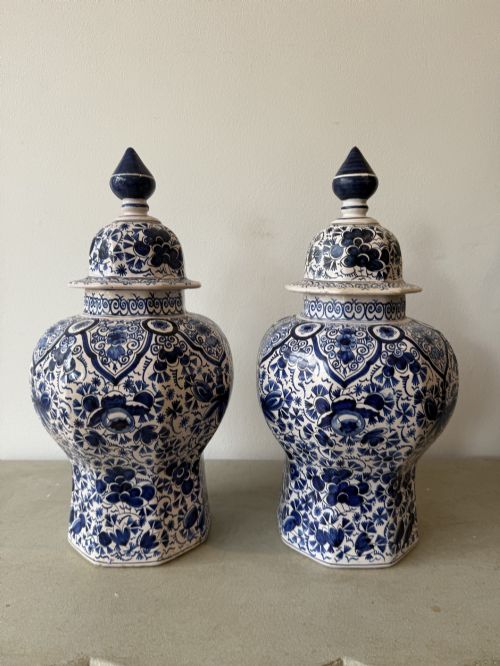


Vintage Delft Pottery
Vintage delft pottery brings tin-glazed earthenware into the home, offering blue and white chargers, vases, and pharmacy jugs rooted in centuries of tradition.
Vintage Delft Pottery
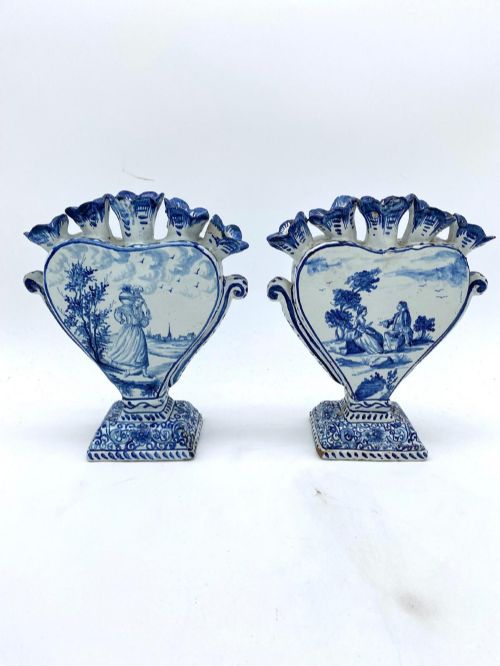
When someone searches for vintage delft pottery, they encounter a range of tin-glazed earthenware spanning from the seventeenth century through to the twentieth century. The selection on this page centres predominantly on eighteenth-century and nineteenth-century items, reflecting the enduring popularity of Dutch delftware and continental faience.
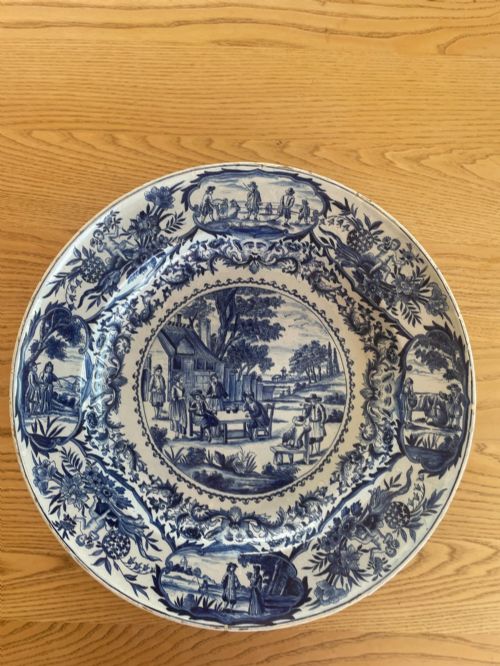
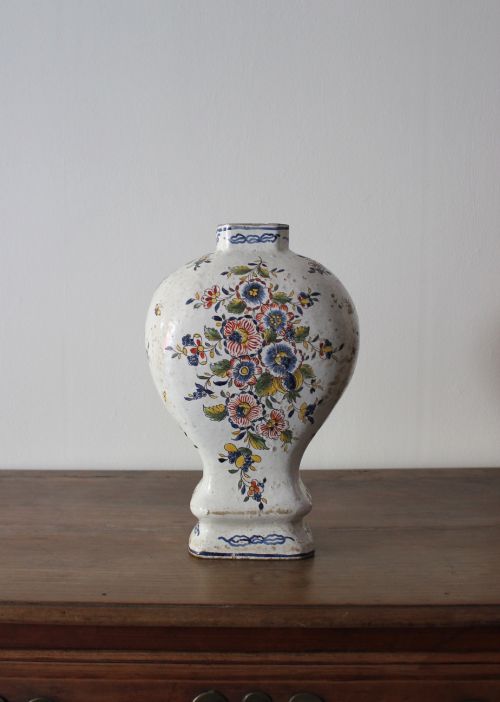
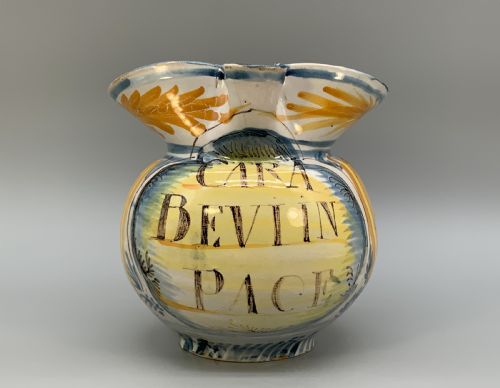
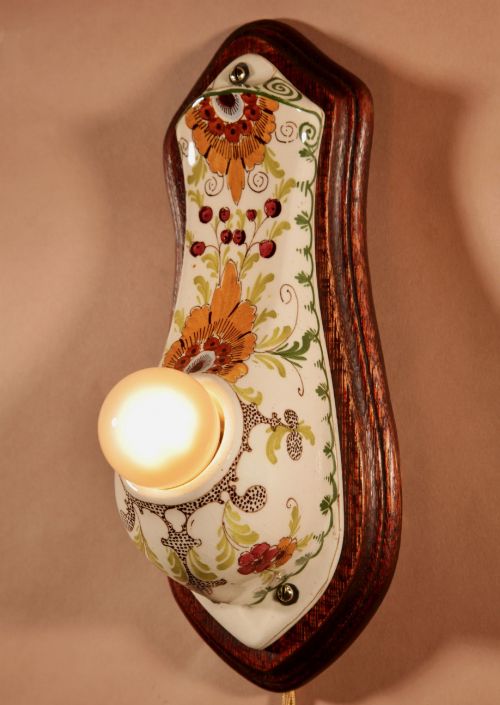
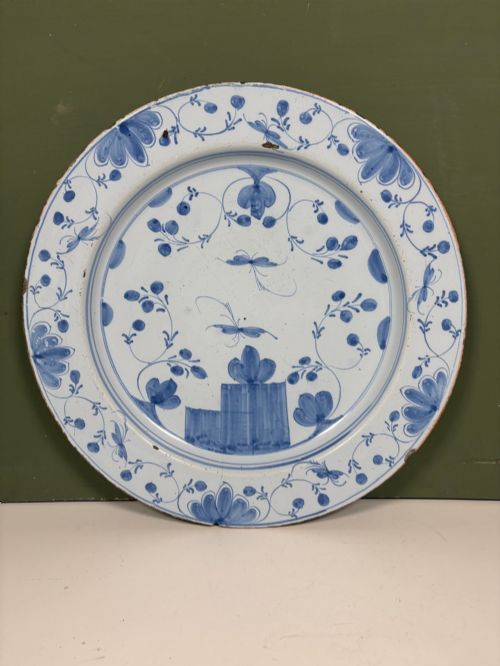
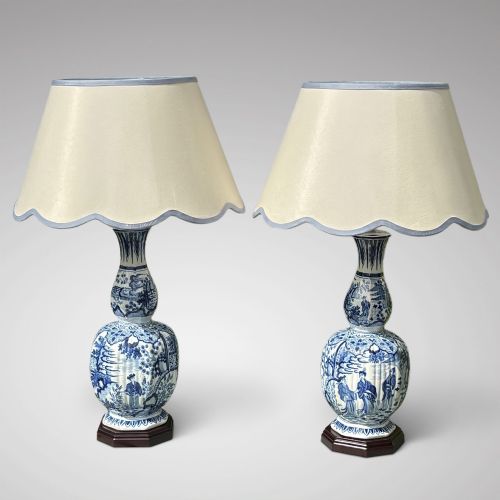
Buyers frequently find decorative chargers, wall plates, and large display vases alongside practical household objects such as inkstands, table lamps, apothecary jugs, and mantel clocks. Blue and white colour schemes dominate, though collectors also meet polychrome pieces featuring manganese, yellow, and green pigments.
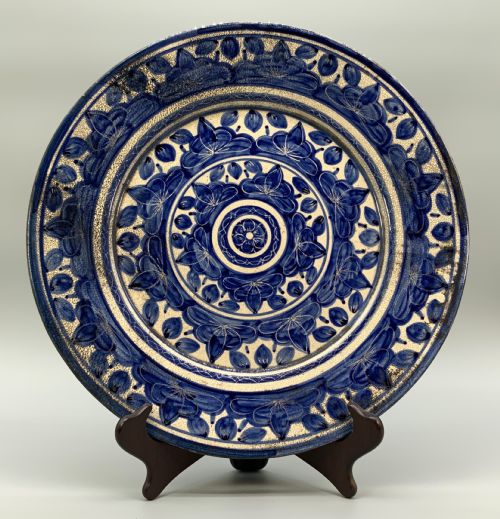
The objects originate primarily from Dutch workshops, alongside continental variations including Italian majolica and Moorish styles. Forms range from simple shallow bowls and tiles to elaborate figural groups like ceramic cows and Toby jugs.
How vintage delft pottery was made
Makers shaped ceramic and earthenware bodies before applying an opaque white tin glaze that created a smooth, pale canvas for painting. Artisans then brushed cobalt oxide and other metallic pigments directly onto the porous unfired glaze, a technique that required a steady hand because the pigment absorbed instantly.
Potters fired these pieces at high temperatures, known as grand feu, to fuse the glaze and pigments into a durable finish. Workshops often added secondary low-temperature firings for polychrome enamels, fixing manganese, yellow, and green hues onto the hardened white surface.
Vintage Delft Pottery Retail Price Guide 2026
Typical asking prices for vintage delft pottery among the pieces listed under this phrase on Sellingantiques today, from the lower quarter to the upper quarter. They describe what is for sale here now, not the wider market.
Materials recorded across the inventory include cobalt pigment, brass fittings, and tin-glazed earthenware bodies.
What varies in quality
Quality rests in the crispness of the hand-painted brushwork and the depth of the cobalt pigment against the opaque tin glaze. Superior examples display controlled lines and balanced compositions, whether depicting traditional floral arrangements or complex chinoiserie scenes.
The purity and consistency of the white tin glaze also separate finer pieces from simpler utilitarian wares. Smooth surfaces with minimal crawling or pooling indicate greater skill in the glazing and firing process.
The Vintage Delft Pottery Glossary
- Tin-Glazed Earthenware
- Pottery coated in a white glaze containing tin oxide, providing an opaque surface for painted decoration. This technique forms the foundation of traditional delftware production.
- Charger
- A large decorative plate intended for display on a wall or dresser rather than for dining. These large surfaces often showcase the most ambitious painting by the workshop.
- Grand Feu
- A high-temperature firing technique used to set cobalt blue pigments directly into the raw tin glaze. It creates a robust finish where the decoration sinks slightly into the glaze.
- Polychrome
- Decoration utilising multiple colours rather than the standard blue and white. Manganese, yellow, and green pigments frequently appear alongside cobalt on these multi-fired pieces.
- Albarello
- A cylindrical earthenware jar designed to hold apothecary drugs, ointments, or dried herbs. Pharmacies and dispensaries used these tall vessels extensively across Europe.
Vintage Delft Pottery: Frequently Asked Questions
How do I clean antique delft pottery?
Dust these ceramic pieces gently with a soft, dry cloth to prevent accumulation. Avoid submerging porous tin-glazed earthenware in water, as moisture can penetrate old glaze fractures.
Harsh chemical cleaners strip the historic surface and damage the fragile tin glaze. Professional conservation advice is best sought if deep cleaning becomes necessary.
Why do delft vases get converted to lamps?
Vessels like large nineteenth-century vases and apothecary jugs were often wired for electricity during the twentieth century to suit modern domestic lighting needs. This practice gave fragile ceramic pieces a practical second life in the home.
Collectors weigh the originality of an unaltered vase against the convenience of a period lamp fitting. Many converted pieces retain their original ceramic bodies intact beneath the wiring.
How do I tell eighteenth-century delft from later copies?
Examine the weight, glaze texture, and pigment interaction under natural light to understand the age of a piece. Earlier earthenware bodies often feel heavier and show subtle irregularities from hand-forming.
Tin glaze from earlier periods exhibits specific surface crazing and softness that twentieth-century reproductions struggle to replicate. Comparing brushstroke confidence helps distinguish period work from later decorative items.