

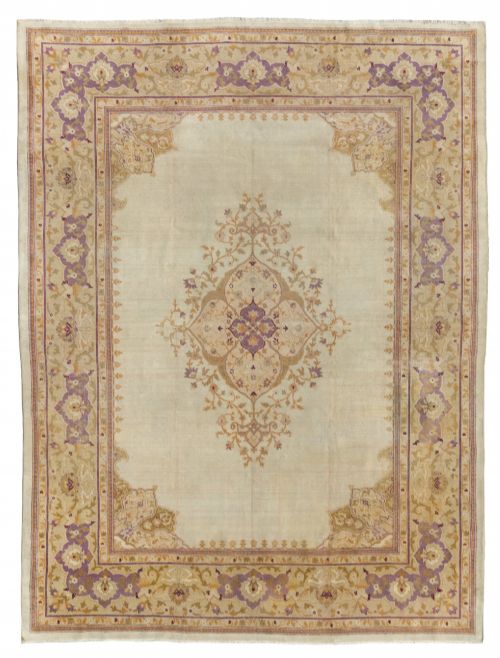


Vintage Decorative Carpet
A vintage decorative carpet brings warmth and grounded pattern to a room, offering room-sized presence or smaller tribal character.
Vintage Decorative Carpet
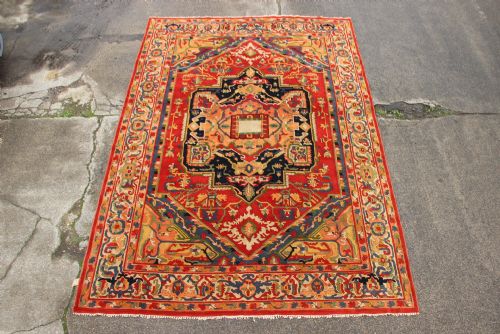
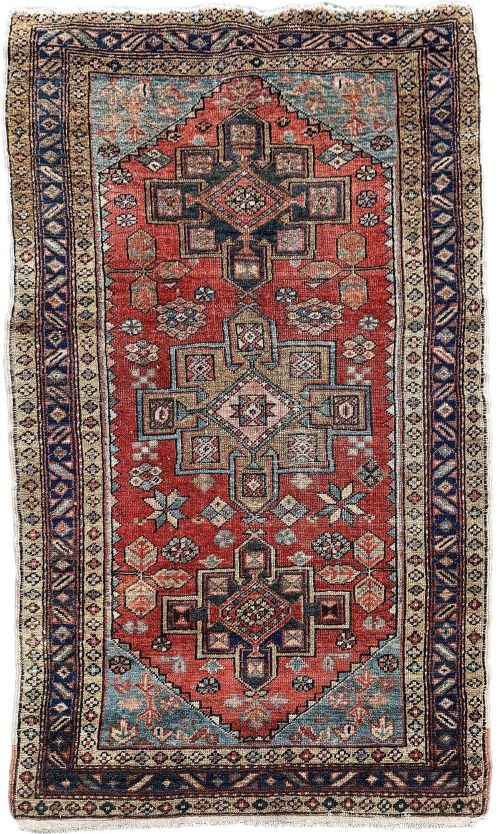
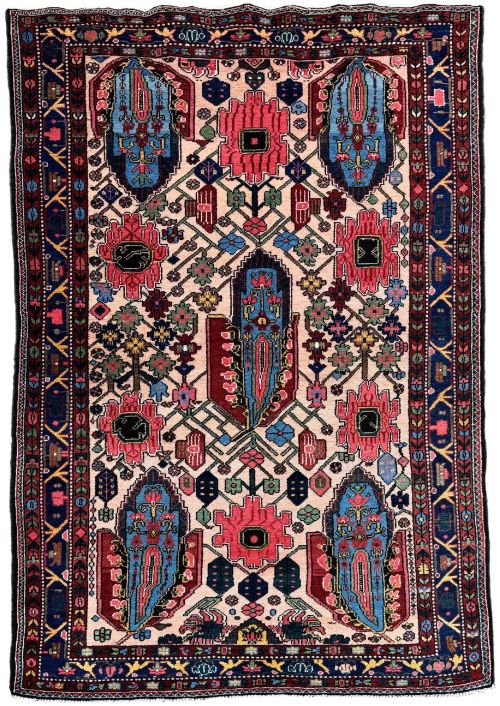
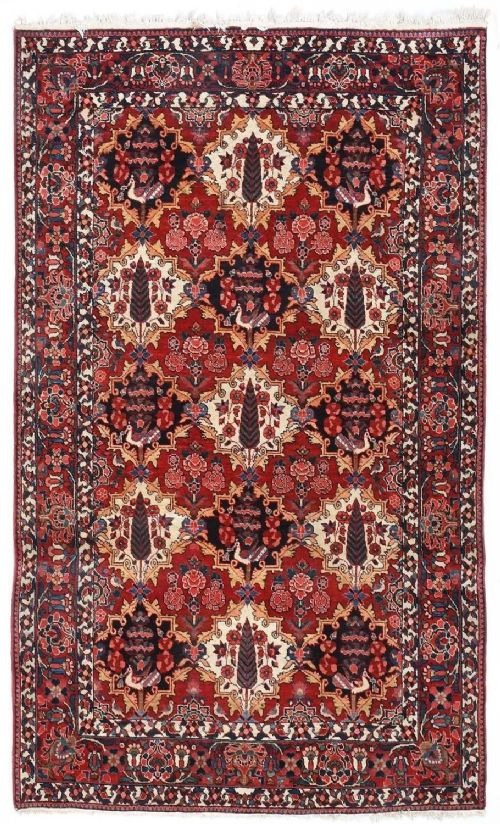
A vintage decorative carpet encompasses large room-sized floor coverings and smaller tribal rugs woven across Persia, Anatolia, and Eastern Europe. Buyers looking at this selection encounter pieces originating from the late nineteenth century through to the mid-twentieth century.
The most common formats on this page are Persian room-sized carpets such as Heriz, Mahal, and Ushak, alongside Bessarabian kilims and tribal weavings. These textiles range from grand formal medallions to geometric village and nomadic designs.
Objects span from large area carpets exceeding four metres to runner formats, wall hangings, bag faces, and tent bands. Each style reflects the specific regional weaving traditions of its origin, whether town workshop or nomadic camp.
Materials and construction
These carpets rely principally on wool and cotton foundations, utilising hand-spun wool for pile yarns to absorb natural dyes with depth and variation. Cotton typically forms the warp and weft threads in town-woven Persian pieces, providing structural stability.
Flatweaves such as Bessarabian kilims and Turkmen tent bands employ slit-weave and supplementary weft techniques without a cut pile. Pile rugs utilise hand-knotting methods executed on upright looms, varying in knot density according to regional workshop practices.
Vintage Decorative Carpet Retail Price Guide 2026
Typical asking prices for vintage decorative carpet among the pieces listed under this phrase on Sellingantiques today, from the lower quarter to the upper quarter. They describe what is for sale here now, not the wider market.
The listings span eight distinct decades of production, beginning with examples from the 1870s and extending through to the 1940s.
Judging quality and character
Quality in a vintage decorative carpet rests upon the integrity of the wool, the complexity of the dye palette, and the precision of the design execution. Superior examples display lustrous wool and harmonious colour interaction that deepens gracefully with age.
Structural preservation and originality of dye determine the standing of a piece within its type. Even when surface wear or distress is present, strong structural survival and crisp drawing distinguish finer workshop and tribal textiles.
The Vintage Decorative Carpet Glossary
- Warp
- The vertical foundation threads stretched tightly on the loom before weaving begins. All pile and horizontal weft threads build upon this structural grid.
- Weft
- The horizontal threads passed alternately over and under the warp threads to bind the knots in place. In many traditional carpets, these threads are dyed before insertion.
- Kilim
- A flatwoven textile produced without a pile by tightly interweaving warp and weft strands. These pieces function primarily as floor coverings or light covers.
- Medallion
- A large central ornamental design motif placed in the middle of the carpet field. This focal element often dominates Persian and Anatolian workshop compositions.
- Bag face
- The functional front panel of a nomadic storage sack removed and preserved as a small rug. These items showcase concentrated tribal iconography and fine weaving.
Vintage Decorative Carpet: Frequently Asked Questions
How do I clean a vintage decorative carpet?
Professional specialist cleaning is essential for older wool and cotton textiles to prevent dye migration and fibre damage. Regular gentle vacuuming without a beater bar removes surface dust safely.
Avoid household detergents and excess moisture, which compromise natural lanolin in the wool pile. Consult a specialist experienced in antique oriental carpets for seasonal maintenance.
Can I place these carpets in high traffic areas?
Many room-sized carpets possess sturdy wool pile and solid cotton foundations suited to everyday domestic use. Placing a quality underlay beneath the textile prevents slipping and cushions the fibres against floor friction.
Finer or more fragile flatweaves and older room carpets benefit from placement in lower traffic zones or wall mounting. Assessing the pile depth and foundation strength guides proper placement in the home.
How do I identify a Heriz carpet?
Heriz carpets typically feature bold geometric central medallions set against terracotta or brick-red fields. The robust wool and durable cotton foundations withstand heavy wear, distinguishing them from finer curvilinear city pieces.
Corner spandrels often display contrasting ivory or navy tones filled with stylised botanical motifs. The distinctive geometric drawing stems from village workshops in northwestern Persia.
What is the difference between a rug and a carpet?
Carpets generally refer to larger room-sized floor coverings designed to anchor an entire furniture arrangement. Rugs denote smaller formats such as area rugs, prayer rugs, or tribal scatter pieces.
Both categories share identical construction techniques using hand-knotted pile or flatweave structures. Size and intended architectural scale remain the primary distinguishing factors.