
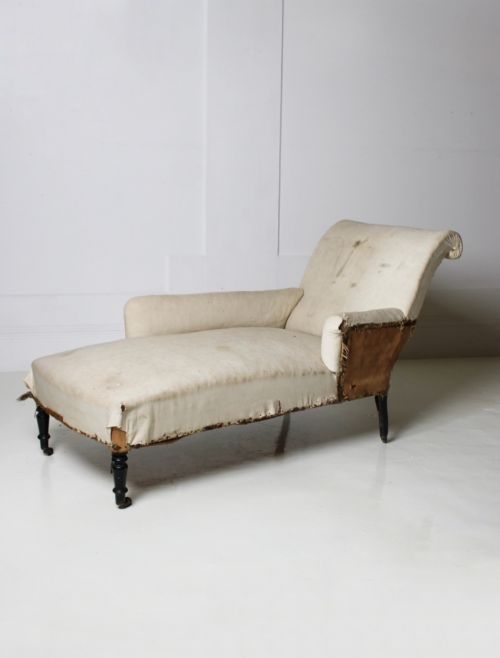


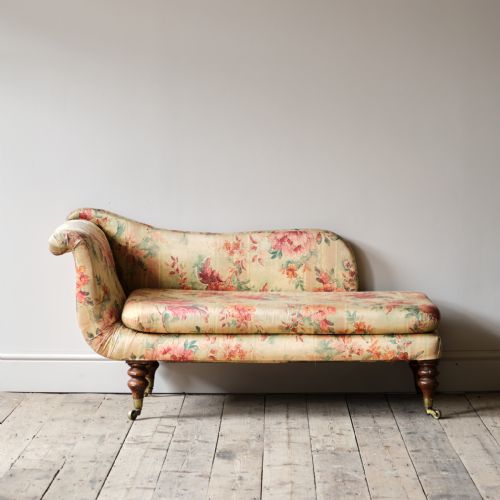


Vintage Day Bed
A vintage day bed offers practical daytime lounging and extra sleeping space, uniting traditional craftsmanship with versatile daily utility.
Vintage Day Bed
A vintage day bed bridges the gap between seating and sleeping, serving as a flexible piece for studies, bedrooms, and drawing rooms. These forms range from campaign styles and French painted frames to mahogany chaises and solid wood constructions.
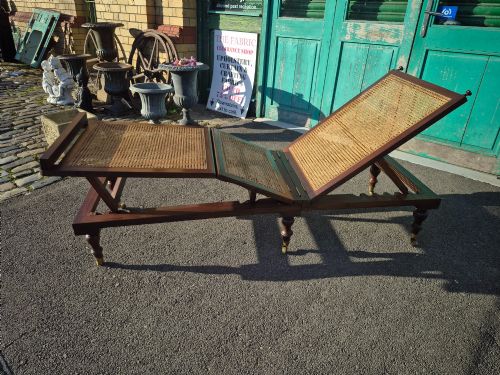
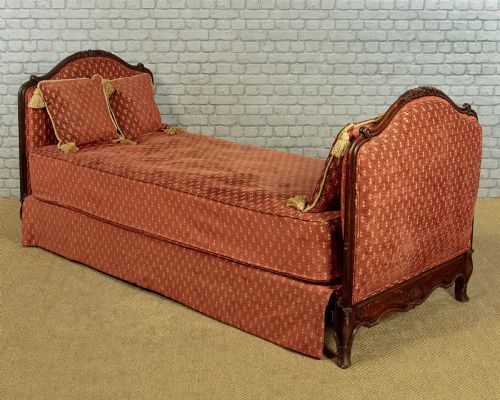
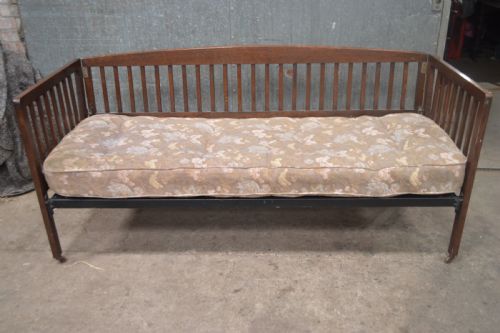
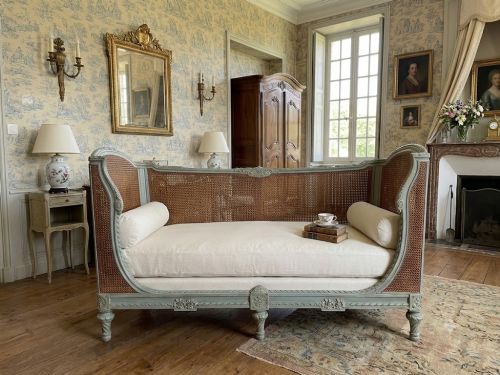
The pieces appearing on this page span the nineteenth and early twentieth centuries, incorporating Regency, Victorian, and Arts and Crafts influences alongside French provincial designs. Buyers encounter everything from mahogany frames with turned legs to cane panels and upholstered sleigh forms.
Origins stretch from English workshops to French provincial ateliers and Chinese cabinet makers, providing diverse architectural silhouettes. Whether selecting an ebonised long stool or a gilt decorated frame, each example brings distinct period character to contemporary interiors.
How they were made
Construction relies heavily on traditional timber framing using mahogany, beech, oak, and exotic hardwoods shaped by hand. Joinery techniques secure longevity, while applied elements like brass castors, gilt decoration, and turned legs complete the structural base.
Surface treatments involve ebonisation, paint finishes, and polished wood grains that highlight the natural material. Caning is woven intricately into open frames, while upholstery integrates linen, fabric, and traditional stuffing methods.
Listings feature eighteenth and nineteenth-century traditions including French provincial styles, Regency mahogany frames, and twentieth-century oak structures.
What varies in quality
The grade of timber and the precision of hand-carved details distinguish finer examples from standard production. Solid mahogany and finely turned bobbin legs show greater care than simpler secondary woods.
Integrity of structural joints and original hardware, such as brass castors and campaign fittings, elevates a piece. Preserved cane work and thoughtful proportions also indicate superior original manufacture.
Hampton and Sons·Gillows
The Vintage Day Bed Glossary
- Chaise Longue
- Literally a long chair, designed for reclining with support for the legs. Many nineteenth-century examples share categories with day beds due to their dual functionality.
- Ebonisation
- The process of treating lighter timber such as beech or fruitwood to resemble ebony. This finish gained popularity during the nineteenth century for dramatic contrast.
- Campaign Style
- Portable furniture made for military officers on the move, featuring robust construction and often dismantling parts. These pieces utilise sturdy timbers like mahogany with brass mounts.
- Bobbin Leg
- A turned leg shaped with a series of rounded wooden spheres resembling bobbins of thread. This decorative turning appears frequently on nineteenth-century seating.
Vintage Day Bed: Frequently Asked Questions
Where should I place a day bed?
A day bed fits well in a home office, guest room, or large hallway where it provides daytime seating and occasional sleeping quarters.
Position it against a solid wall to anchor the room layout, leaving sufficient clearance for reclining and accessing surrounding furniture.
How do I care for wooden frames?
Dust timber frames regularly with a dry cloth and nourish polished mahogany or oak periodically with appropriate beeswax. Avoid placing antique wood in direct sunlight or near heat sources to prevent warping.
Check turned legs and joints occasionally to ensure stability remains firm during daily use.
Can I use a day bed for sleeping daily?
Most vintage day beds accommodate standard cushions or mattresses suitable for resting, though historical dimensions can vary from modern mattress sizes. Verify internal dimensions before sourcing a replacement mattress.
Consider adding custom support bases if you intend to use the piece for frequent overnight sleeping.
How do I identify a Regency day bed?
Regency pieces often feature classical motifs, scroll ends, and rich mahogany grains inspired by ancient Greek and Roman designs. Look for sabre legs, brass mounts, and substantial timber frames.
Construction details and proportions typical of the early nineteenth century help distinguish these from later revival styles.