



Vintage Dark Green Glass
These vintage dark green glass pieces bring rich colour and deep historical character to any room.
Vintage Dark Green Glass
Vintage dark green glass encompasses utility vessels and decorative items originating from periods spanning the eighteenth century through to the mid-twentieth century. Buyers searching for vintage dark green glass will encounter heavy apothecary bottles, large wine bottles, pickling jars, and illuminated wall decorations.
The objects listed range from Georgian onion bottles and Scottish Alloa wine pieces to Art Deco engraved wall panels and French pickling jars. These items combine practical storage history with striking tones of forest and bottle green.
How they were made
Makers produced these items primarily through hand-blowing glass, creating thick walls with natural bubbles and irregular contours inherent to older manufacturing methods. Some later twentieth-century decorative pieces incorporate sandblasting and engraving techniques onto the glass surface.
Alongside the primary glass material, supporting elements in the inventory include wooden cabinetry frames, oil paint on canvas, paper, and brass components found in related lanterns and furniture.
Vintage Dark Green Glass Retail Price Guide 2026
Typical asking prices for vintage dark green glass among the pieces listed under this phrase on Sellingantiques today, from the lower quarter to the upper quarter. They describe what is for sale here now, not the wider market.
Some bottles have spent more time underwater or in cellars than most family trees have existed.
What varies in quality
Quality in these glass objects rests upon the depth of the green hue, the clarity of the hand-blown forms, and the preservation of the surface over centuries of handling. Early Georgian apothecary and wine bottles show distinct pontil marks and weighty substance that separate them from later commercial production.
Artistic execution dictates value in specialised pieces, such as the precision of sandblasting and engraving on Art Deco wall decorations compared to utilitarian storage jars.
W. Bishop
The Vintage Dark Green Glass Glossary
- Pontil mark
- The rough scar left on the base of hand-blown glass where the pontil rod was detached. This feature helps confirm traditional manufacturing methods on older bottles.
- Alloa
- A Scottish town known for historic bottle production, particularly dark green wine bottles made in the eighteenth and nineteenth centuries. These sturdy vessels were designed for cellaring.
- Onion bottle
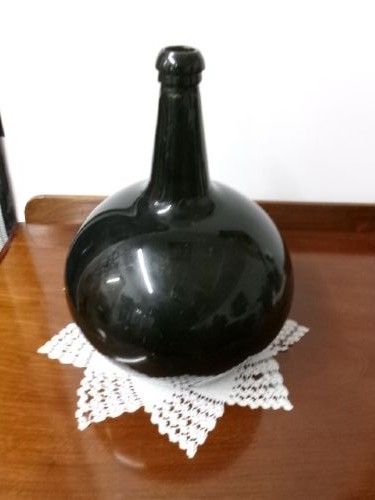
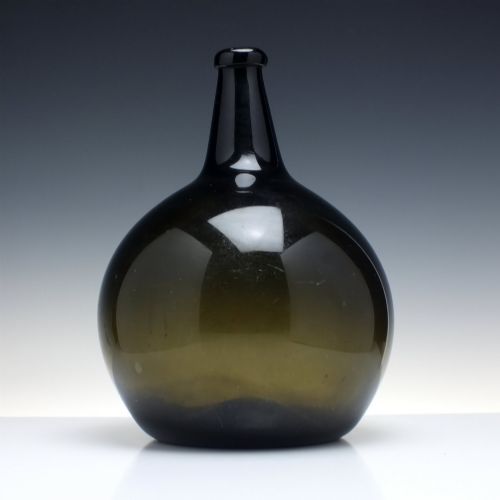
- An early form of glass wine bottle with a bulbous, rounded body and a short neck, popular during the Georgian era. Their heavy green glass protected contents from light.
- Sandblasting
- A technique utilising compressed air to drive abrasive material against glass, creating frosted designs or textured surfaces seen in twentieth-century decorative panels.
Vintage Dark Green Glass: Frequently Asked Questions
How old is dark green glass?
Dark green glass spans many centuries, with examples in this collection reaching back to the eighteenth century. Earlier pieces often display deeper hues and heavier walls due to historic batch mixtures and hand-blowing methods.
Later pieces extend into the twentieth century, shifting from utilitarian storage towards decorative and illuminated wall art.
What were glass onion bottles used for?
Onion bottles served as sturdy storage vessels for wine, spirits, and other liquids during the Georgian period. Their wide, heavy bases provided stability on rolling ships and uneven tavern tables.
The dark green glass protected the contents from sunlight, helping to preserve wine over longer periods.
How do I identify Scottish Alloa bottles?
Alloa bottles are heavy, dark green glass wine vessels produced in Scotland around the late eighteenth century. They typically feature robust walls and deep kick-ups in the base.
Collectors prize them for their distinct regional manufacturing history and substantial presence.
Are pickling jars waterproof?
Antique French pickling jars were originally manufactured using hand-blown glass to store preserved goods safely. Their thick glass construction was intended for everyday domestic utility.
Buyers should inspect individual pieces for historical hairline cracks before using them to hold liquids today.