


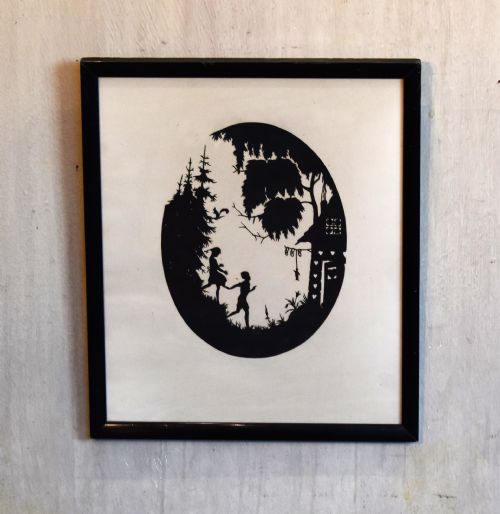


Vintage Cut Paper Art
Vintage cut paper art offers delicate silhouettes and intricate framed scenes that capture historic portraiture and folk charm for your walls.
Vintage Cut Paper Art
The pieces on this page span several distinct periods including Regency, Victorian, and William IV styles. Buyers frequently find framed silhouette portraits of gentlemen and children, alongside multi-figure compositions depicting people and animals.
Originating largely from British school traditions, these works combine precision papercutting with watercolour highlights and original wooden framing. Collectors select these items to introduce historic character and traditional craftsmanship into modern interiors.
How vintage cut paper art was made
Makers fashioned vintage cut paper art using fine scissors and specialised knives to slice intricate designs from dark paper or card. These delicate paper silhouettes were then mounted against contrasting backgrounds of card or watercolour paper.
Vintage Cut Paper Art Retail Price Guide 2026
Typical asking prices for vintage cut paper art among the pieces listed under this phrase on Sellingantiques today, from the lower quarter to the upper quarter. They describe what is for sale here now, not the wider market.
Some paper silhouettes whisper family secrets across two centuries, whilst others just advertise vintage cigarettes.
What varies in quality
The standard of vintage cut paper art rests upon the precision of the knife work and the fluidity of the silhouette lines. Superior examples display remarkable anatomical accuracy and fine detail without tearing the paper medium.
Context and provenance elevate certain pieces, particularly those attributed to recorded practitioners or bearing period signatures. The preservation of the original framing, glass, and mounting materials also contributes significantly to the integrity of the artwork.
Augustin Edouart·Alfred Darbyshire
The Vintage Cut Paper Art Glossary
- Silhouette
- A portrait or image represented as a solid shape of a single colour, usually black, showing the profile of a subject. This form relies entirely on outer contour for recognition.
- Regency
- An English historical period spanning the early nineteenth century characterised by specific neoclassical design traits. Pieces from this era often display refined elegance and precise detail.
- Gothic
- A style referencing medieval architecture and aesthetics, often featuring dramatic or dark narrative elements. In paper art, this translates to romanticized or theatrical scene settings.
- Folk art
- Artistic work produced from an indigenous cultural tradition or by untrained artisans using traditional methods. These pieces prioritize expressive charm over academic precision.
Vintage Cut Paper Art: Frequently Asked Questions
How should I hang these pieces?
Hang these framed artworks away from direct sunlight to prevent the paper and watercolour elements from fading over time. Stable indoor humidity protects the paper and original wooden frames.
Display them at eye level in groups or as standalone focal points to appreciate the fine detail of the silhouette work.
How do I identify a nineteenth-century piece?
Nineteenth-century examples often feature period framing materials like maple wood, alongside handwritten signatures or traditional mounting styles. The style of dress depicted in the portraits also indicates the era.
Examining the paper texture and the backing materials provides further clues regarding the age and origin of the artwork.
Are all silhouettes portraits?
While many pieces depict individual gentlemen, children, or family groups, some vintage cut paper art illustrates narrative scenes involving multiple people and animals. These story-based works draw on folklore and fairy tales.
Both portrait and narrative formats utilise the same fundamental technique of cut paper mounted against a contrasting background.