





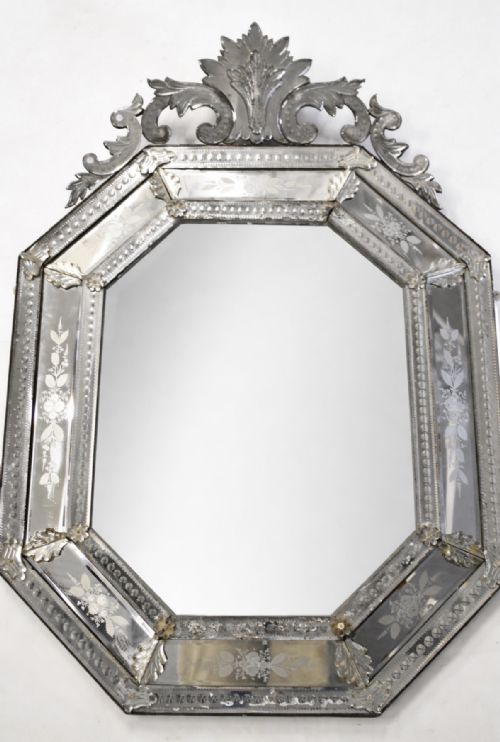


Vintage Cushion Mirror
A vintage cushion mirror brings tactile depth to a room through its curved, projecting frame.
Vintage Cushion Mirror
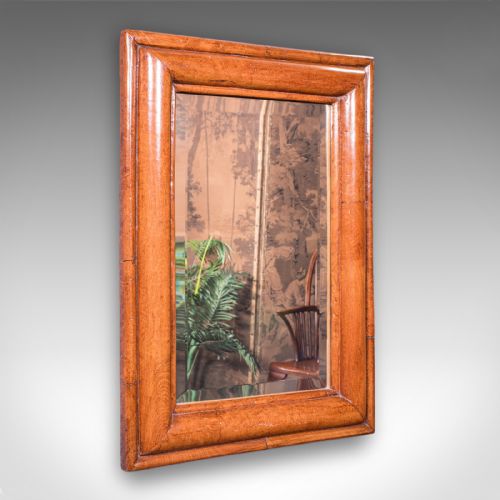
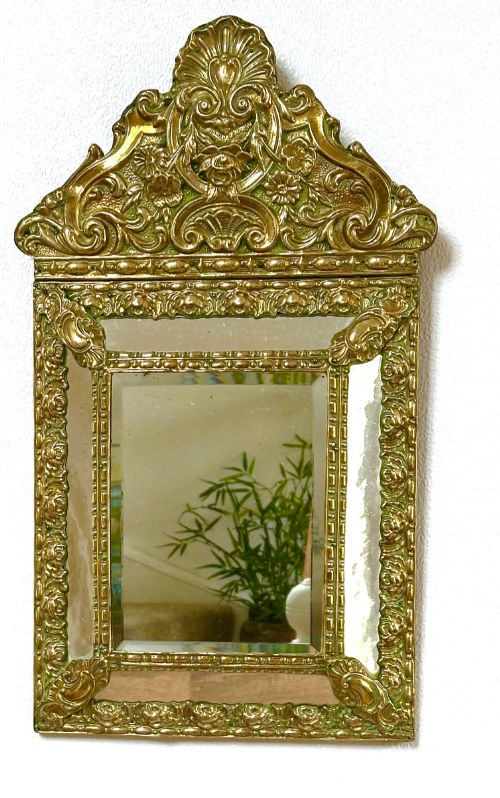
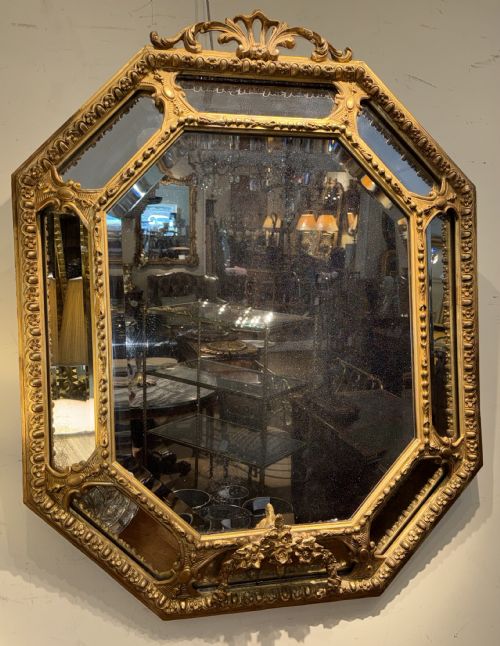
A vintage cushion mirror is defined by its rounded, convex frame profile that slopes outwards or inwards towards the central glass plate. When you search for a vintage cushion mirror, you encounter pieces spanning from the seventeenth century to the twentieth century, drawing on French, Venetian, and English stylistic traditions. The form creates a distinct sculptural presence on a wall, catching and refracting ambient light from multiple angles.
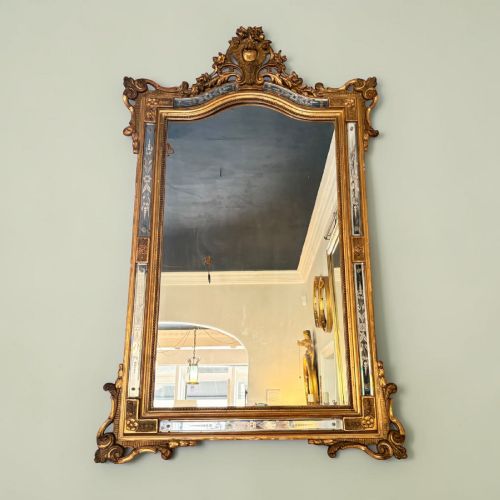
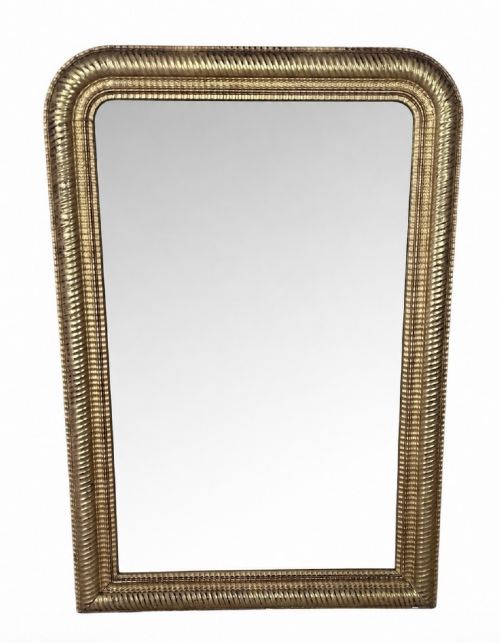
The selection ranges from restrained walnut and oak frames to elaborate giltwood and pressed brass constructions. French Louis Philippe examples and Venetian engraved designs appear frequently alongside heavier seventeenth-century oyster veneer and marquetry interpretations. These wall mirrors function equally well in reception halls, above mantles, or as standalone vanity pieces.
Materials and construction methods
Cabinet makers built these frames using foundational hardwoods such as walnut, oak, and maple, often applying decorative veneers or gesso layers to shape the characteristic rounded profile. Gilding was frequently applied over gesso to create reflective metallic surfaces on French and Italian pieces. Other workshops utilised sheet brass, metal mounts, and painted finishes to achieve distinct regional aesthetics.
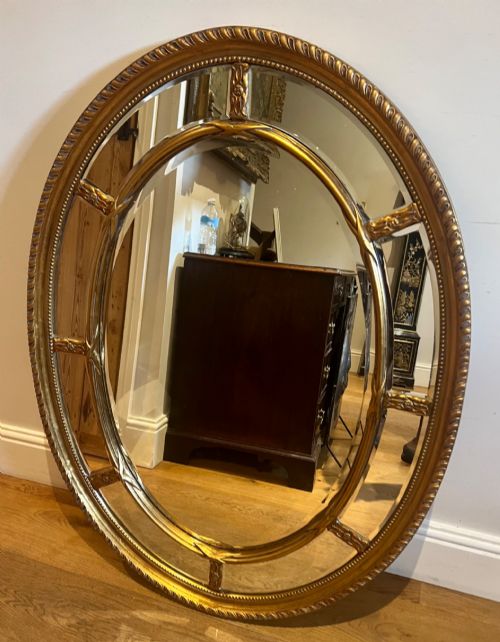
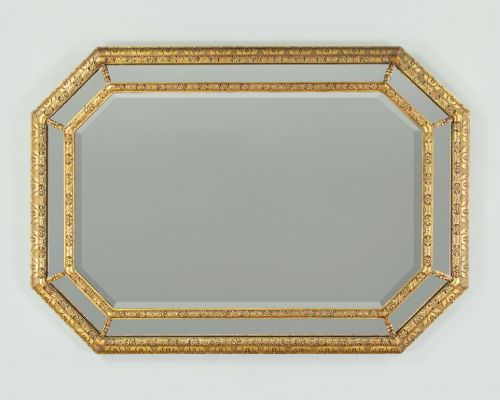
The glazing involved silvered mirror glass, occasionally bevelled at the edges or hand-engraved with floral and geometric motifs. Marginal mirrors incorporated smaller secondary glass plates held in place by narrow strips, requiring precise joinery. Backboards constructed from solid timber secured the fragile glass plates within the heavy projecting wooden or metal frames.
Vintage Cushion Mirror Retail Price Guide 2026
Typical asking prices for vintage cushion mirror among the pieces listed under this phrase on Sellingantiques today, from the lower quarter to the upper quarter. They describe what is for sale here now, not the wider market.
Distinguishing quality in cushion mirrors
The standard of carving and the handling of the gesso layer dictate the visual rhythm of the frame. Finer examples display crisp moulding and delicate hand-engraving on the mirror glass rather than uniform machine work. The integrity of the original gilding or surface finish significantly elevates a piece, particularly when age has softened the metallic sheen without obscuring the underlying detail.
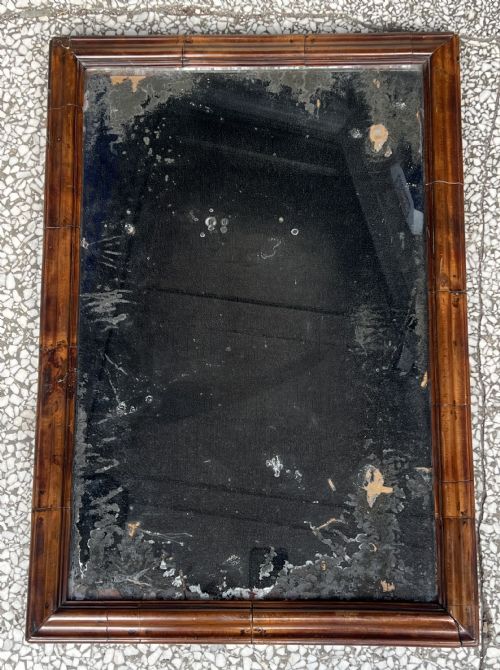
Construction depth and timber selection also separate standard workshop output from exceptional pieces. Burr walnut, oyster veneer, and marquetry demand advanced carpentry skills to wrap the curved cushion profiles without splitting. The weight and stability of the assembled frame indicate the structural thought invested during manufacture.
The Vintage Cushion Mirror Glossary
- Cushion mirror
- A wall mirror featuring a convex, rounded frame profile that slopes towards the glass plate. This volumetric shape creates strong shadows and reflects light across a wider arc than a flat frame.
- Giltwood
- Timber coated with a thin layer of gold leaf applied over a prepared gesso base. It provides a luminous, warm metallic finish common on continental European decorative frames.
- Oyster veneer
- Circular or oval slices of timber cut transversely from small branches to reveal concentric growth rings. This technique was favoured by seventeenth-century cabinet makers for patterned decorative surfaces.
- Marginal mirror
- A style featuring a large central glass plate surrounded by smaller border plates secured with decorative slips or mounts. The segmented glass edges catch the light independently.
- Gesso
- A plaster-like mixture applied to wood frames to create a smooth surface for gilding or painting. It allows craftsmen to model intricate relief details before the metallic leaf is laid.
Vintage Cushion Mirror: Frequently Asked Questions
How do I hang a heavy cushion mirror safely?
These frames carry substantial weight due to the dense timber and thick glass plates involved in their construction. Secure heavy-duty fixings directly into wall studs or utilise appropriate masonry anchors.
Distribute the load evenly across the frame structure rather than relying solely on single central rings. Professional mirror hangers often recommend French cleat systems for oversized antique wall mirrors.
Where should I place a cushion mirror in my home?
Reception halls and dining rooms benefit greatly from the light-amplifying qualities of a projecting frame. Position the piece opposite a window to draw natural daylight deeper into the space.
Ensure the mounting height aligns with eye level so the bevelled or engraved glass details can be appreciated up close.
How do I clean an antique mirror glass?
Apply a mild, non-ammonia cleaning solution to a soft microfibre cloth rather than spraying the glass directly. This prevents moisture from seeping behind the plate and damaging the original silvering or wooden backing.
Wipe gently across the surface, avoiding harsh circular scrubbing that might disturb aged silver or engraved lines.
What indicates a seventeenth-century mirror?
Early examples often display dense timber veneers such as oyster cut walnut or intricate marquetry patterns. The framing relies on heavier architectural proportions with hand-bevelled glass plates.
Construction details on the reverse, including hand-sawn boards and early fixings, help corroborate the period characteristics.