




Vintage Curved Office Desk
A vintage curved office desk brings distinctive character to a workspace, combining architectural form with practical timber construction.
Vintage Curved Office Desk
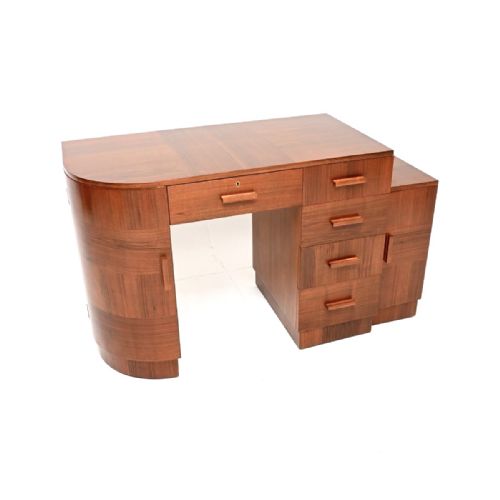
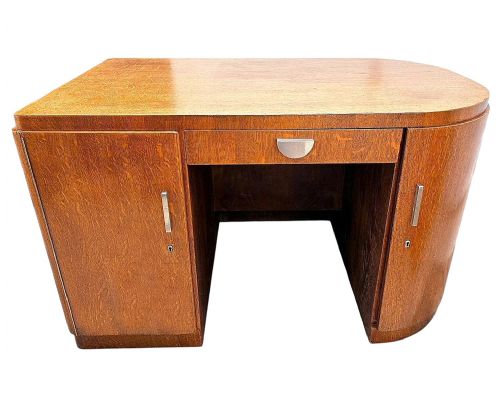
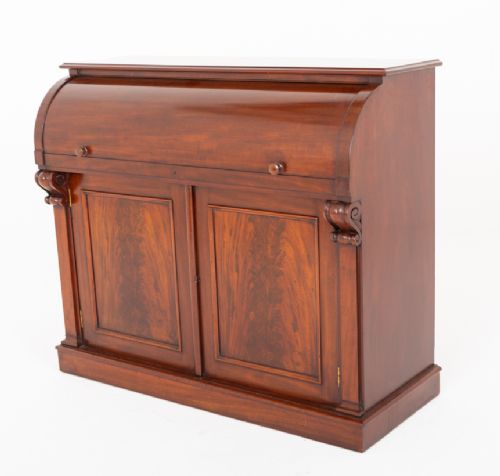
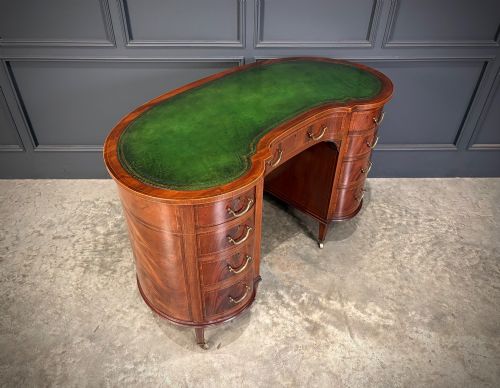
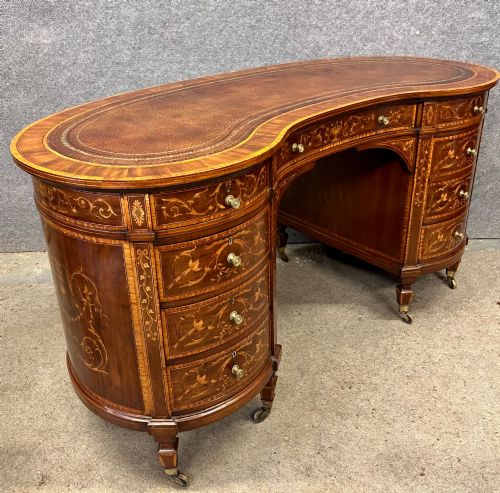
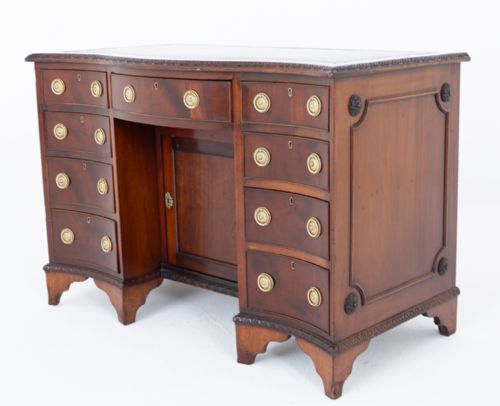
A vintage curved office desk encompasses forms such as kidney-shaped tables, serpentine kneehole desks, and cylinder desks designed for writing and administration. These pieces date from periods ranging from the Victorian era through Edwardian times and into the 1930s Art Deco period.
Buyers will encounter both twin pedestal formats and sweeping two-sided desks designed to sit centrally in a room. The curved profile softens the geometry of a traditional office space while offering generous surface area.
Materials and construction methods
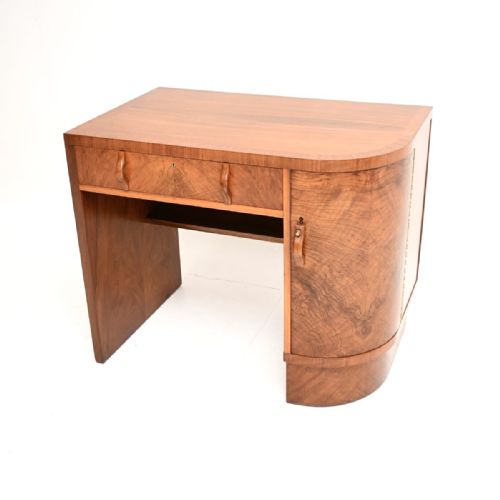
Cabinet makers utilised solid timbers such as mahogany, oak, and walnut, frequently applying walnut veneer or satinwood to curved surfaces to create striking grain patterns. Brass hardware, leather writing inserts, and turned wooden spindles appear consistently across the periods represented.
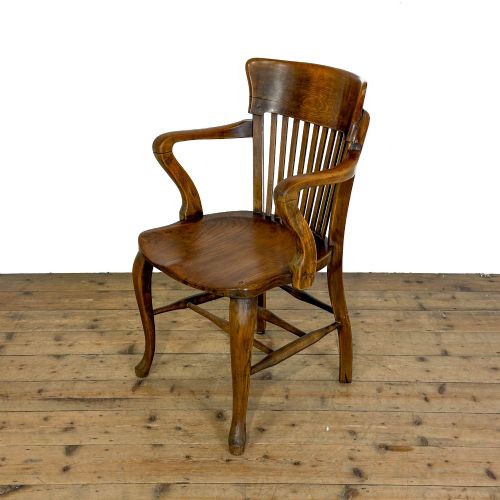
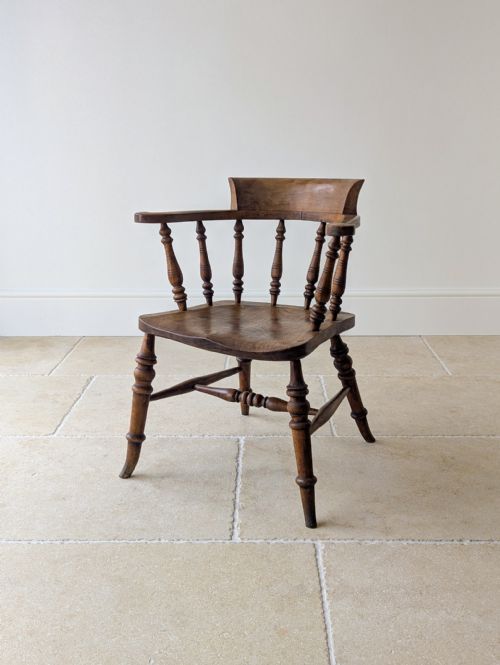
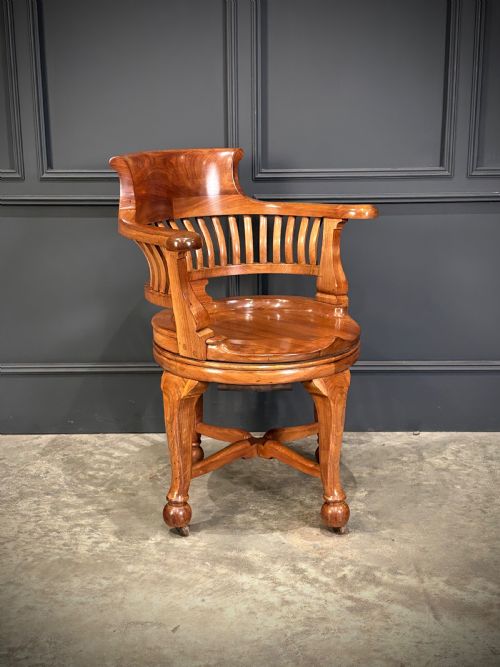
Curved elements in kidney-shaped and D-end desks required advanced bending and joining techniques, while swivel desk chairs relied on sturdy metal and timber mechanisms to support movement. Solid beech and elm formed the robust frames of office armchairs built for daily use.
Vintage Curved Office Desk Retail Price Guide 2026
Typical asking prices for vintage curved office desk among the pieces listed under this phrase on Sellingantiques today, from the lower quarter to the upper quarter. They describe what is for sale here now, not the wider market.
An office armchair with an oil cloth swab cushion has quietly survived a century of paperwork.
Factors that define quality
The grade of timber veneer and the precision of the curved joints distinguish finer pieces from standard utilitarian office furniture. Figured walnut and carefully matched mahogany veneers indicate a higher tier of design and craftsmanship.
Original mechanisms on swivel chairs and the retention of fitted leather writing surfaces contribute to the integrity of a desk. Maker attribution and the harmony of proportion between the desk and its companion seating further elevate the standing of a piece.
Wolfe and Hollander·Maurice Adams·E Cole·Thonet·Edward William Godwin
The Vintage Curved Office Desk Glossary
- Kidney-shaped desk
- A writing table with a concave front curve that wraps around the user. This form gained popularity during the late Victorian and Edwardian periods.
- Cylinder desk
- A desk featuring a rolling curved wooden shutter that conceals the writing surface and interior pigeonholes. Victorian examples showcase fine mahogany joinery.
- Pedestal desk
- A heavy freestanding desk supported by two banks of drawers beneath the main top. These pieces often feature inset leather writing surfaces.
- Swivel desk chair
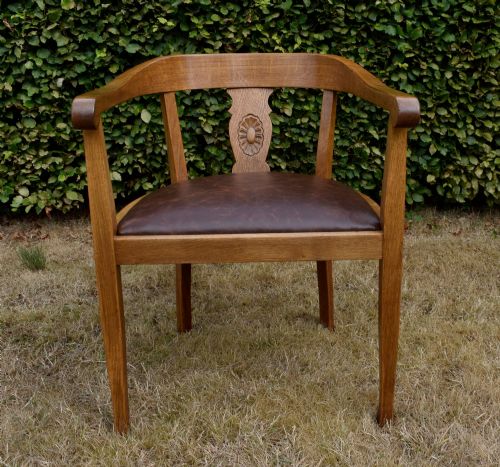
- An office seat mounted on a rotating spindle base, frequently constructed in oak or walnut with steam-bent arms.
Vintage Curved Office Desk: Frequently Asked Questions
How do I style a curved office desk?
A curved desk works well positioned in the centre of a room rather than flat against a wall, as many designs are finished on both sides.
Pairing the desk with a matching swivel armchair or an upholstered desk chair from the same period completes the traditional study layout.
What woods were used for these desks?
Cabinet makers predominantly used mahogany, walnut, and oak, often applying figured walnut veneer to curved surfaces for decorative effect.
Secondary woods like beech and elm appear in the frames of associated office armchairs and swivel chairs.
How do I identify an Art Deco desk?
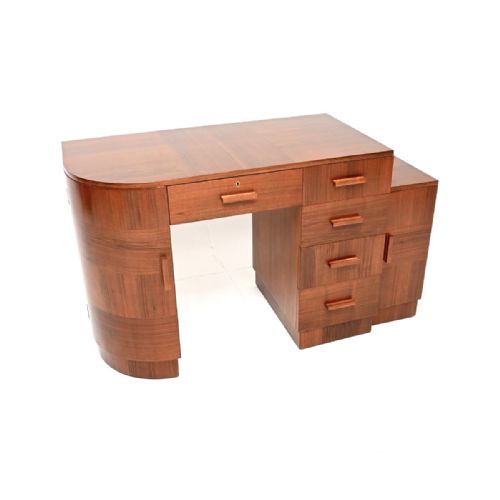
Art Deco desks from the 1930s generally display symmetrical figured walnut veneers, streamlined silhouettes, and modernist proportions.
These pieces often avoid traditional ornamentation in favour of clean geometric curves and polished timber surfaces.