



Vintage Curved Desk
A vintage curved desk offers a sweeping workspace that brings architectural rhythm to a room.
Vintage Curved Desk
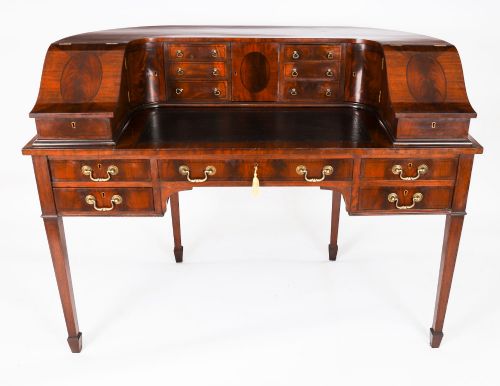
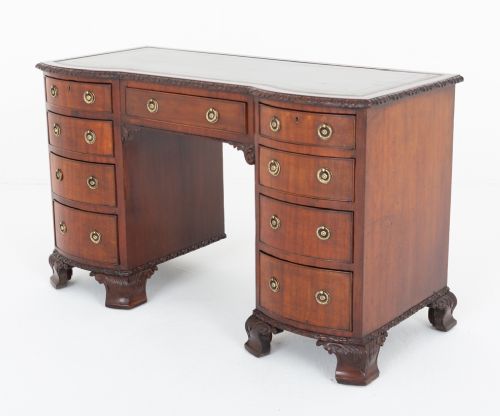
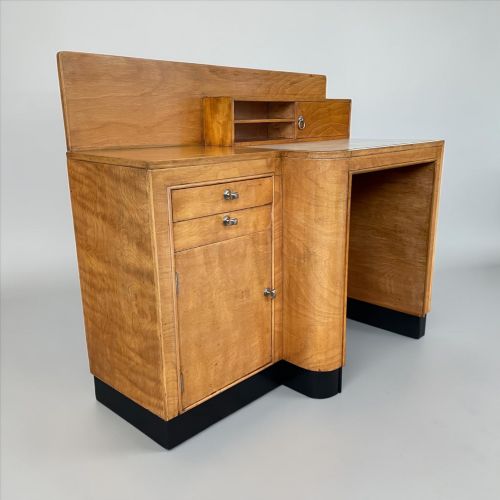
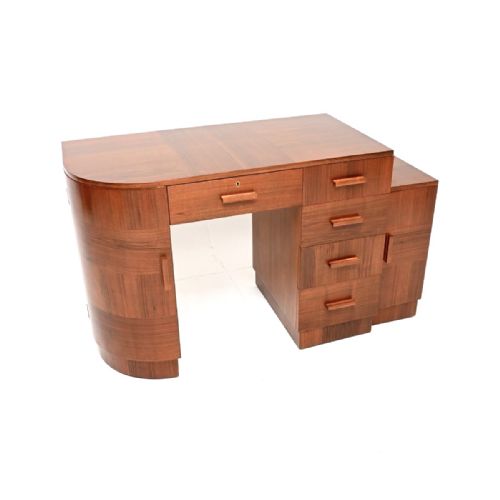
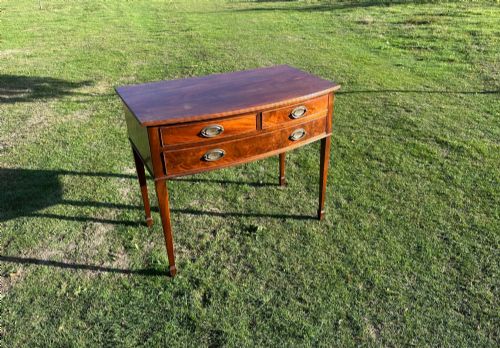
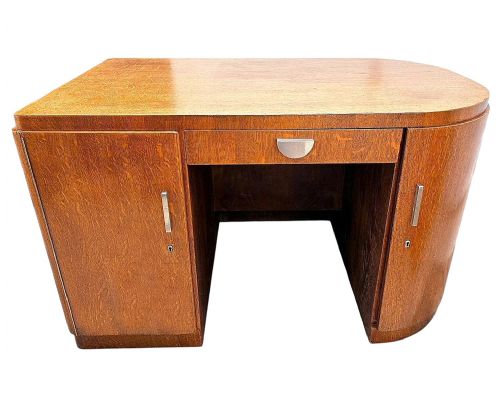
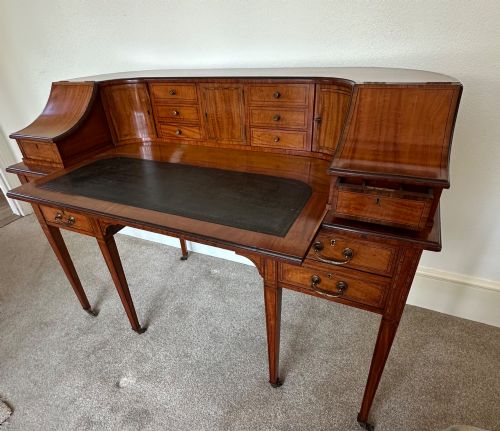
A vintage curved desk brings distinct architectural flow to a room, moving away from rigid corners into sweeping kidney shapes, bow fronts, and D-end configurations. These workspaces span the late nineteenth century through the Art Deco era, appearing in varied iterations from Edwardian satinwood to bold modernist walnut.
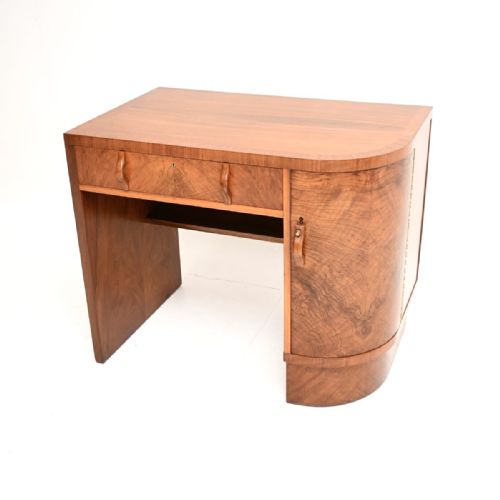
Buyers are most likely to encounter Edwardian kidney desks alongside striking Art Deco designs in figured walnut, maple, or birds-eye maple. Pieces range from grand twin-pedestal writing tables to refined partners desks finished with leather writing surfaces.
The form encompasses revivalist movements such as Sheraton and Queen Anne alongside functional office variants. Each piece utilises its curved silhouette to soften the interior layout while providing a practical surface for daily writing or study.
Materials and construction methods
Makers utilised rich hardwoods such as mahogany, walnut, oak, and satinwood, often selecting figured veneers like birds-eye maple to accentuate the sweeping contours of the frame. Brass fittings, handles, and gallery rails provide structural accents against the timber.
Writing surfaces are typically inset with contrasting leather panels, frequently tooled with gilt borders to frame the central workspace. Construction relies on traditional joinery techniques adapted to curved rails, bow fronts, and serpentine pedestals.
Vintage Curved Desk Retail Price Guide 2026
Typical asking prices for vintage curved desk among the pieces listed under this phrase on Sellingantiques today, from the lower quarter to the upper quarter. They describe what is for sale here now, not the wider market.
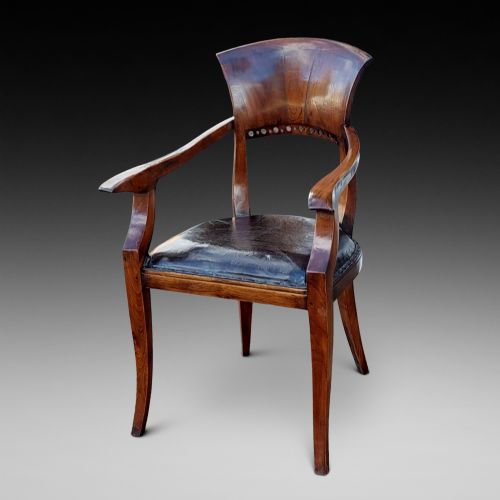
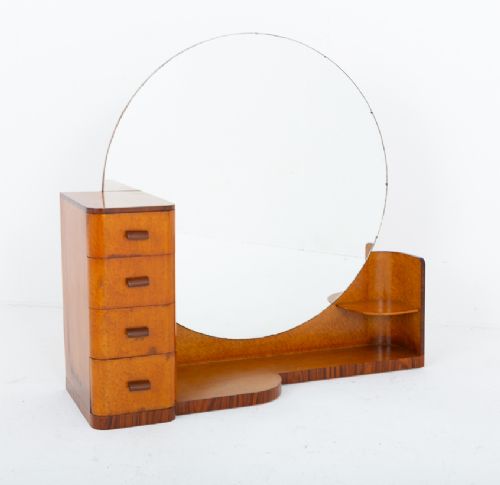
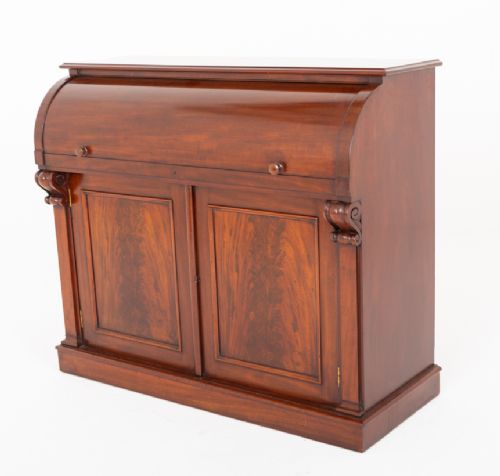
Pieces range from Victorian cylinder desks to streamline Art Deco dressing tables and writing desks.
Judging quality and execution
Quality rests in the precision of the curved veneer work and the integrity of the underlying timber framework. Superior examples display seamless matching of grain across serpentine drawers and bow fronts.
The refinement of internal drawer construction, original brass hardware, and the preservation of inset leather surfaces distinguish finer pieces. Structural harmony across complex curves determines the overall execution.
Wolfe and Hollander
The Vintage Curved Desk Glossary
- Kidney desk
- A writing table featuring a top shaped like a kidney bean, designed to wrap partially around the seated user. This distinctive outline defines many Edwardian and revivalist pieces.
- Carlton house desk
- A fitted writing desk with a curved superstructure of small drawers and compartments surrounding the main writing surface. Originating in the eighteenth century, the form continued into Edwardian production.
- Veneer
- A thin layer of figured timber applied over a secondary wood base to create decorative patterns. Figured walnut and birds-eye maple are common on Art Deco variations.
- Serpentine
- A curved line that curves outward at the centre and inward at the sides. This contour adds movement to drawer fronts and tabletops.
- D-end
- A table configuration featuring semicircular ends joined to a central section. This shape often forms modular or extended double-sided desks.
Vintage Curved Desk: Frequently Asked Questions
How do I care for leather desk tops?
Leather writing surfaces benefit from regular dusting and occasional treatment with specialist leather balms to prevent drying. Avoid placing excessive moisture or unsealed hot cups directly on the hide.
Preserving the original leather maintains the character and historic integrity of antique writing furniture.
Where should a curved desk be placed?
Curved and D-end desks often suit placement in the centre of a room rather than flat against a wall. Their finished backs and flowing lines allow them to anchor a study layout.
Two-sided partners variations work particularly well as freestanding architectural centrepieces.
How do I date a wooden desk?
Dating relies on secondary timbers, construction methods, and stylistic cues such as inlay patterns and hardware. Edwardian pieces often display lighter satinwood, while Art Deco items feature bold geometric veneers.
Comparing drawer linings and joinery helps distinguish nineteenth-century production from later revivals.