



Vintage Cubist Art
Vintage cubist art gathers modernist paintings, glass vases and bronze figures from the early to mid-twentieth century.
Vintage Cubist Art
Vintage cubist art encompasses paintings, oil paintings, framed art prints, vases, table lamps, and sculptures created across several decades. Buyers searching this phrase encounter works ranging from early twentieth-century avant-garde drawings to mid-century abstract oil paintings.
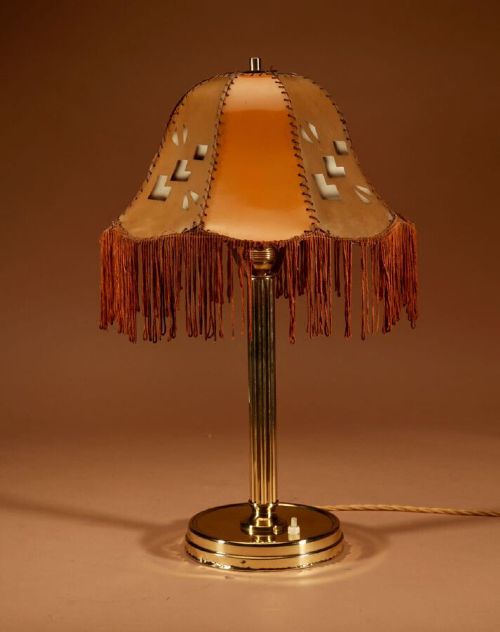
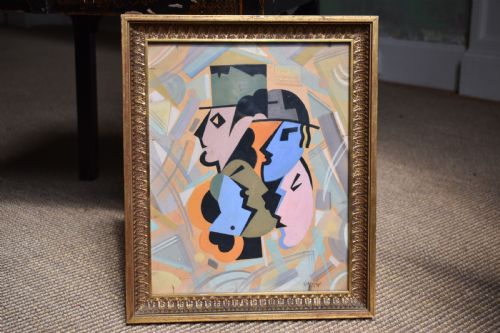
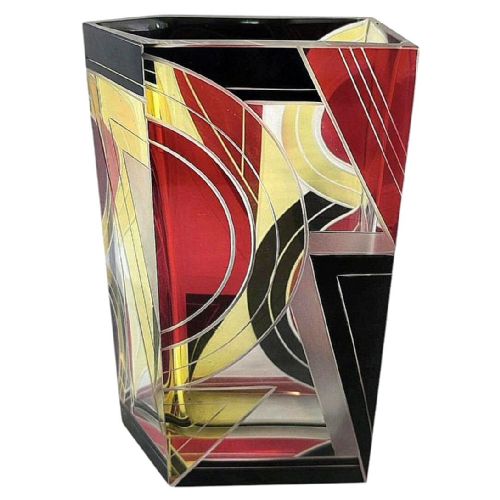
The selection on this page leans heavily towards mid-century modern interpretations and Art Deco pieces. Table lamps, geometric enamel-decorated glass vases, and oil paintings on canvas dominate the forms available.
Origins span across British, French, and other European workshops, reflecting diverse approaches to modernist and abstract design. Pieces date from the Georgian and Victorian eras up through the 1960s, though the core aesthetic remains firmly rooted in twentieth-century modernism.
Materials and technique
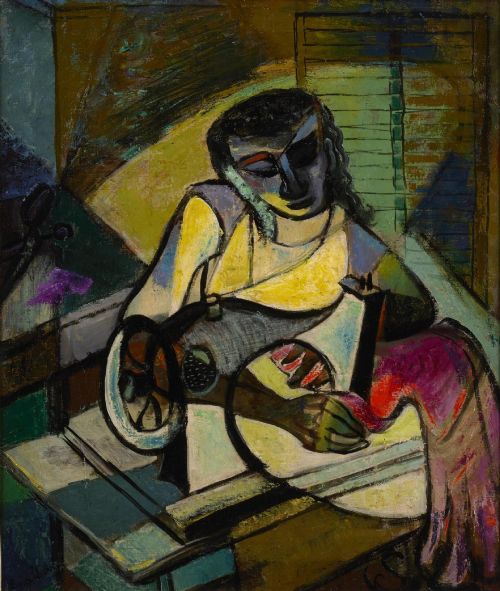
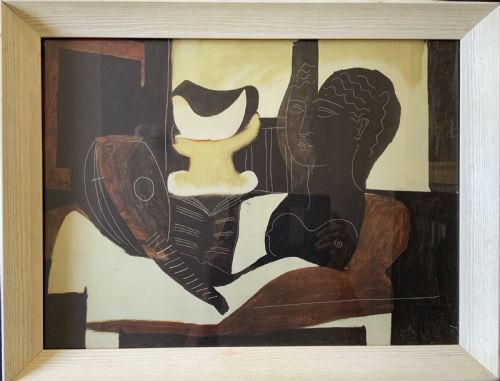
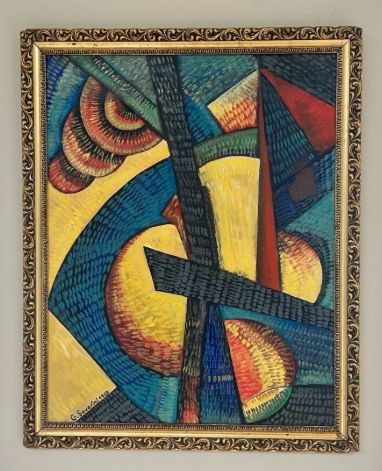
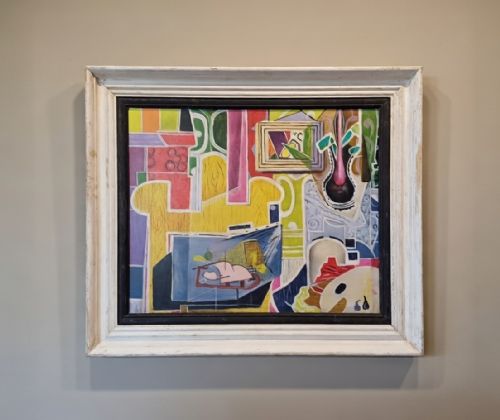
Canvas, paper, and board serve as the primary supports for paintings, executed using oil paint or watercolour. Artists build these compositions through planar abstraction and geometric reduction of form.
Glass and enamel define the decorative objects, where makers apply surface decoration to moulded vessels. Bronze and brass form sculptural and lighting elements, shaping rigid lines and stylized figures.
Wood appears in occasional tables constructed from blonde oak, aligning with modernist furniture design. Silver plate shapes functional vessels such as coffee and tea sets through geometric metalwork.
Materials utilised across the collection include canvas, wood, glass, oil paint, paper, enamel, brass, and leather.
What varies in quality
Quality rests upon the strength of the compositional geometry and the surety of the maker's brushwork or form. Superior works maintain tension across the picture plane, whereas lesser pieces rely on formulaic repetition of angles.
Materials dictate upper tiers of execution, seen in crisp enamel application on glass vases and precise casting in bronze figures. Finer paintings demonstrate deliberate handling of oil paint on canvas or paper rather than flat, unconsidered washes.
Provenance and attribution elevate certain objects, separating anonymous workshop productions from signed works by documented artists and designers. The clarity of period aesthetic integration determines the overall success of each piece.
Sibylle May·Gino Severini·Karl Palda·Pablo Picasso·Demetrios Galanis·Lena Gurr·Edward Carter Preston·Jean Hippolyte Marchand·Burr Singer
The Vintage Cubist Art Glossary
- Cubism
- An early twentieth-century avant-garde art movement that revolutionised European painting and sculpture by breaking subjects down into multi-angled geometric planes. This approach discards traditional perspective in favour of abstract spatial arrangements.
- Art Deco
- A design style that first appeared in France just before the First World War, characterised by sleek geometric shapes, streamlined forms, and vibrant colours. It heavily influences the lamps, glassware, and furniture found in this category.
- Avant-garde
- New and experimental ideas in the arts, pushing the boundaries of traditional forms and cultural norms. Pieces described this way often date from the radical artistic shifts of the early twentieth century.
- Oil paint
- A slow-drying paint made by mixing pigments with a medium of drying oil, typically linseed. It allows for rich blending and textured applications on canvas or board.
- Enamel
- A decorative glassy substance applied to metal or glass surfaces through firing. It creates vibrant, durable geometric patterns on vases and decorative objects.
Vintage Cubist Art: Frequently Asked Questions
What defines vintage cubist art?
Vintage cubist art comprises paintings, prints, and decorative objects that adopt the fragmented, multi-perspective geometry pioneered in the early twentieth century. These works use abstracted forms and flattened planes to represent subjects in unconventional ways.
Items range from oil paintings on canvas to enamel-decorated glass vases and bronze sculptures created across several decades.
How do I date these pieces?
Dating relies on stylistic markers, materials, and period signatures recorded in the physical construction of each object. Art Deco items often feature bold geometric lines typical of the interwar period, while mid-century pieces lean towards abstract expressionism.
Comparing the support medium, such as canvas, paper, or board, helps place the object within its historical decade.
Where were these items made?
Production centres largely across European studios and workshops, with significant contributions from British and French artists and makers. Glassware and decorative objects frequently originate from specialised continental factories.
Paintings and drawings reflect the broader modernist movements circulating through major artistic hubs during the twentieth century.
How should I display a cubist painting?
Cubist paintings suit spaces with clean architectural lines where their strong geometric compositions can act as a visual focal point. Neutral walls allow the dynamic planes and colours of the oil paint or canvas to stand out without distraction.
Pairing them with period lighting or complementary mid-century furniture creates a cohesive historical context in a room.