
Vintage Crystal Wine Carafe
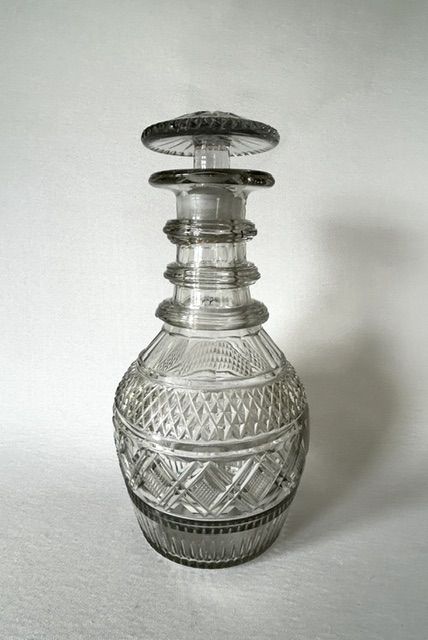
A vintage crystal wine carafe brings heavy lead crystal and bright cut glass to the table, holding wine with historic weight.
Vintage Crystal Wine Carafe
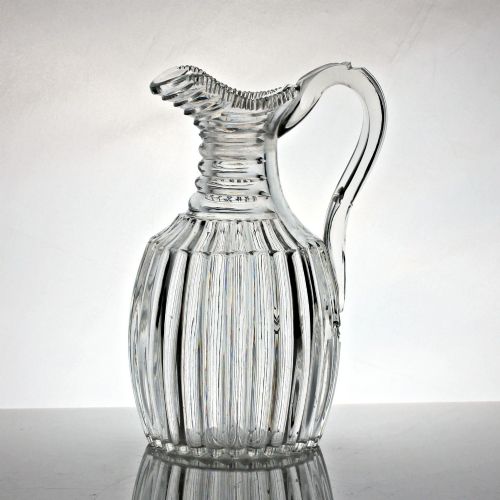
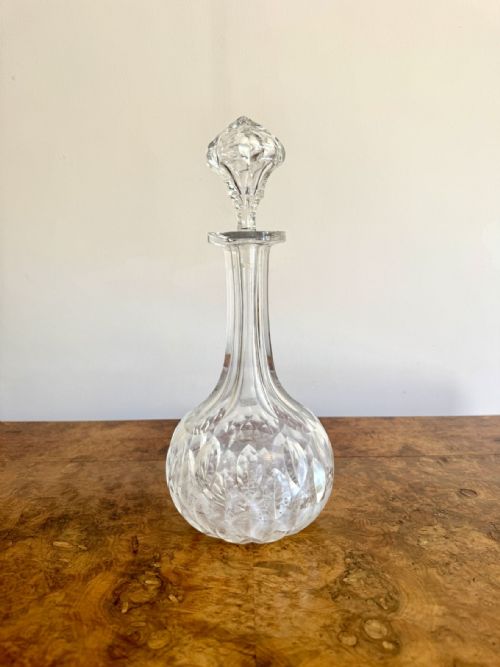
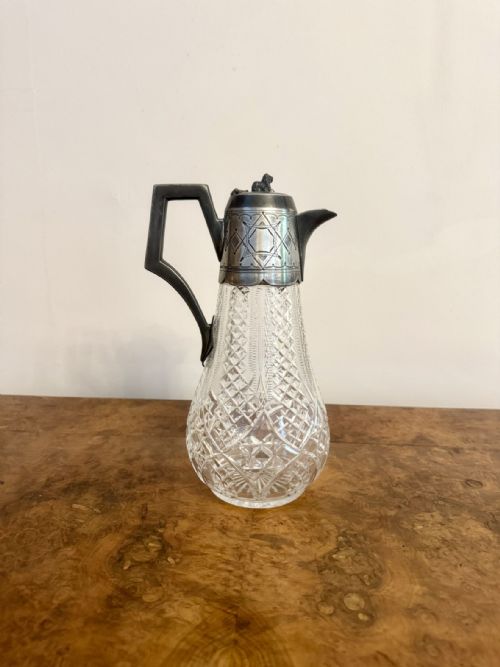
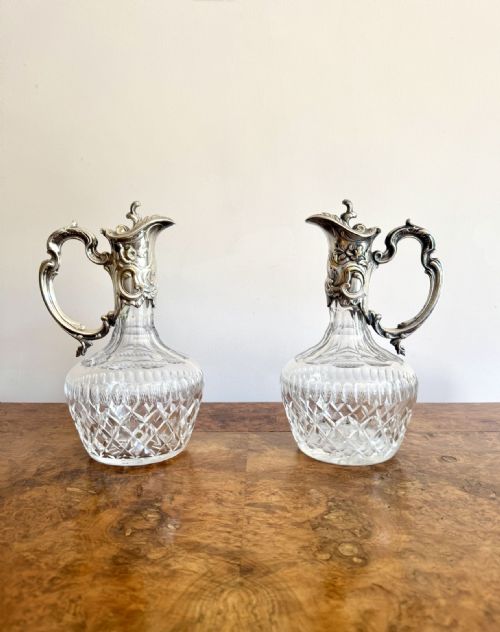
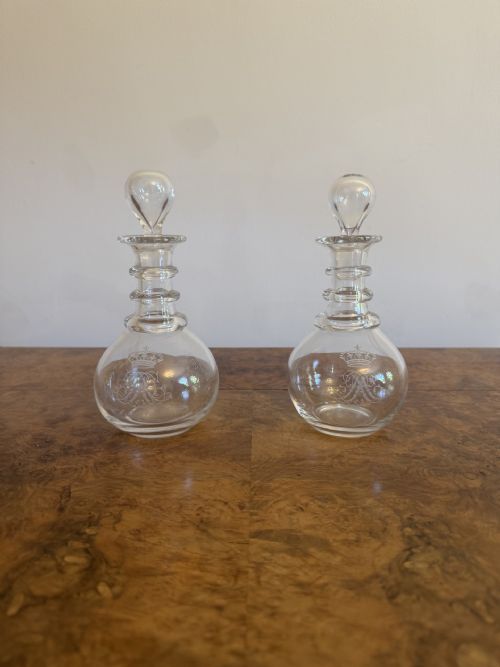
When searching for a vintage crystal wine carafe, buyers encounter a range of forms including decanters, claret jugs, ewers, and pitchers. These pieces primarily date from the Victorian and Edwardian eras, spanning the nineteenth and early twentieth centuries.
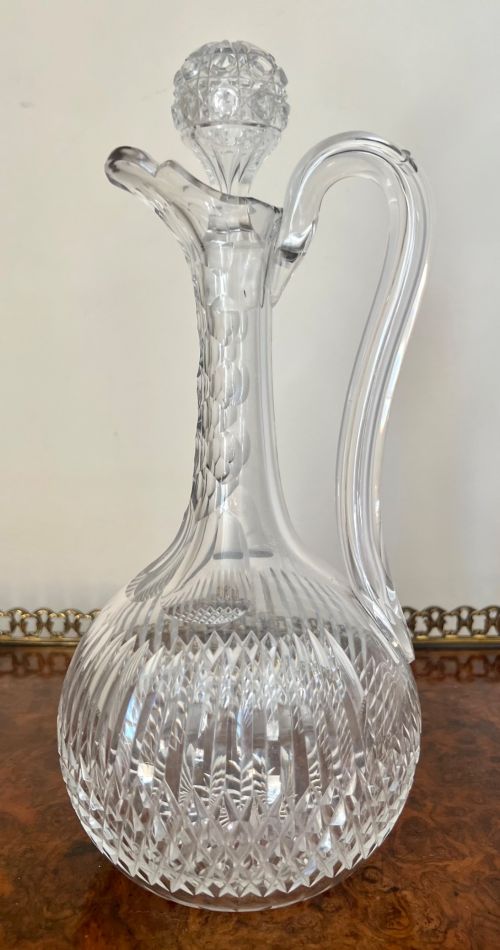
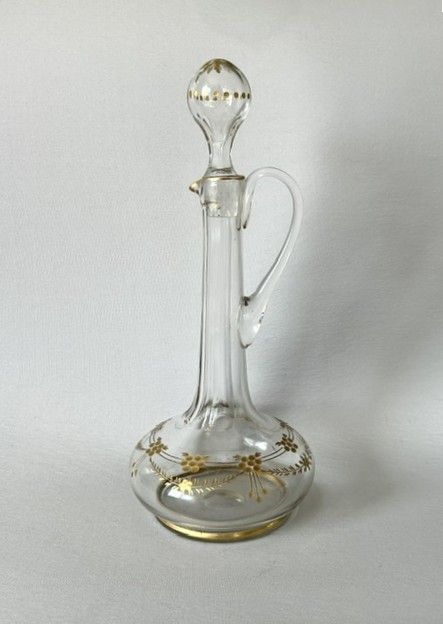
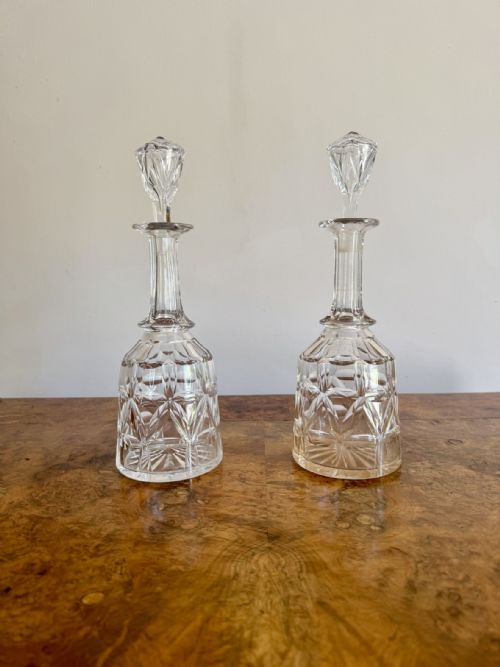
The Edwardian period dominates the selection, frequently appearing alongside Victorian examples. Forms vary from bell shapes and shaft and globe designs to slender ewers fitted with metal mounts.
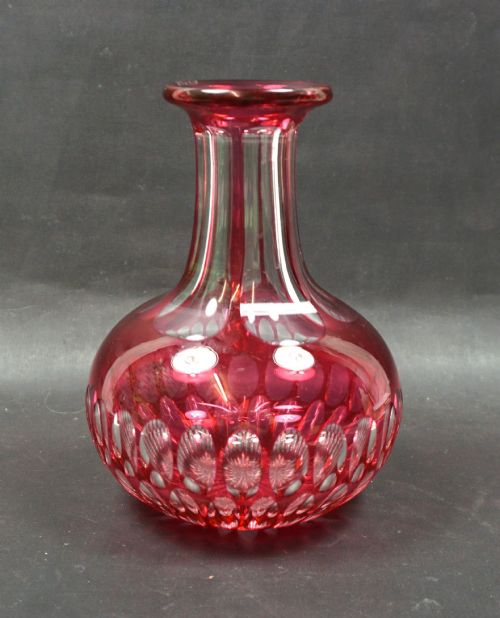
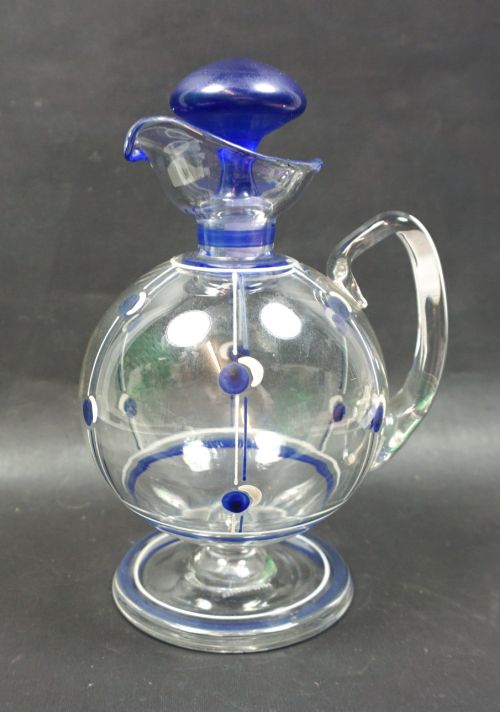
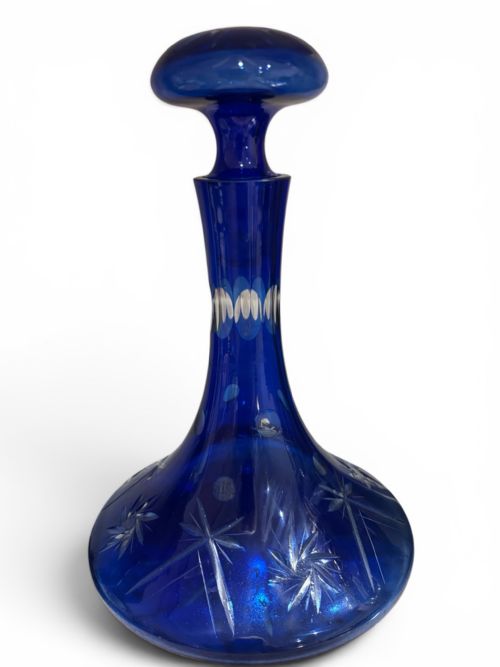
Origins include English, Irish, and Bohemian workshops, reflecting distinct regional traditions in heavy table glass. The category encompasses simple clear vessels as well as coloured over-lay glass and decorated surfaces.
How they were made
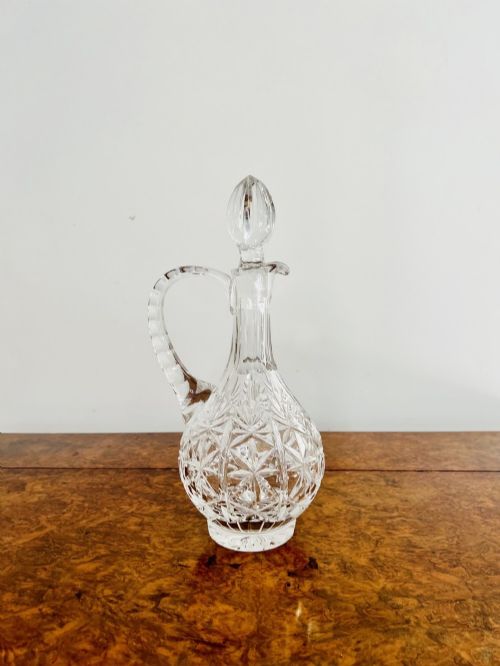
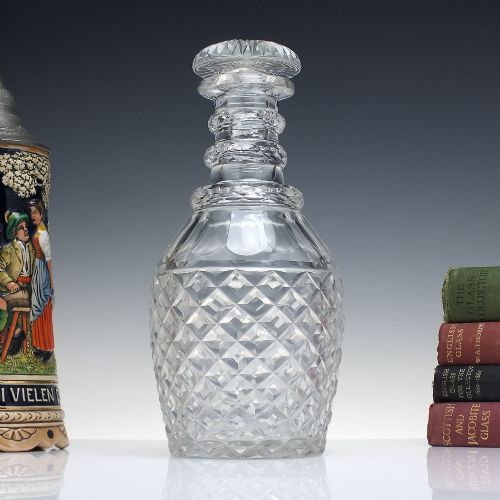
Makers shaped lead crystal and clear glass through blowing and heavy cutting, producing deep facets, pillar cuts, and prism patterns that catch the light. Engraved decoration and blue enamel details appear on specific Bohemian and Edwardian pieces.
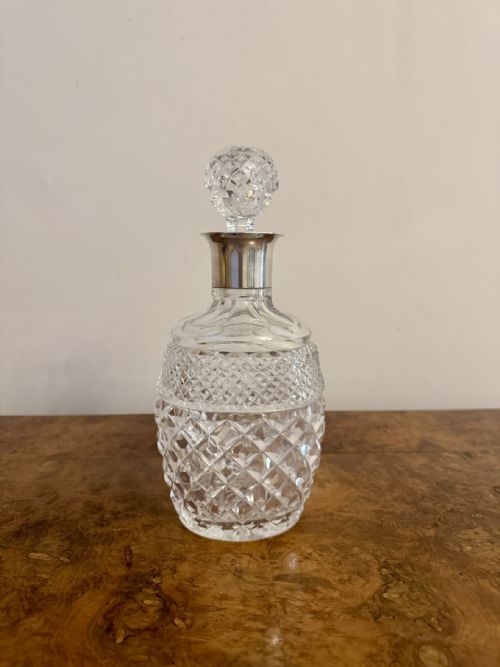
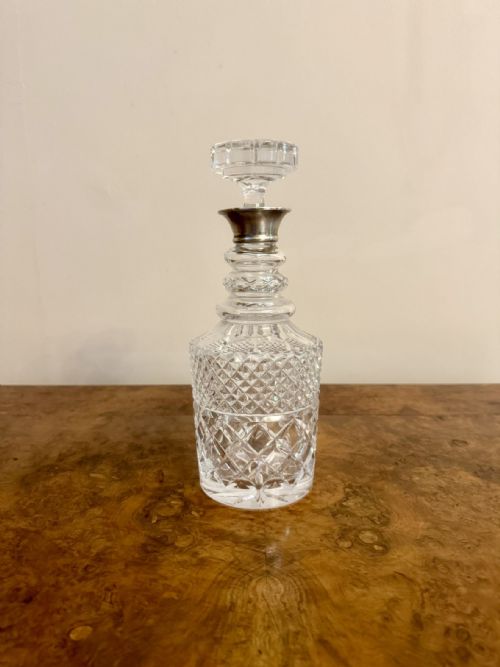
Many vessels incorporate functional mounts made from sterling silver or silver plate, forming collars and handles secured directly to the glass neck.
Some Edwardian decanters arrive in matching pairs, ready to host an argument between red and white.
What varies in quality
Quality rests in the crispness of the glass cutting and the weight of the lead crystal. Deep, sharp facets create distinct light refraction, whereas softer or shallower cuts lack the same visual depth.
The integration of metal elements also marks out finer items. Sterling silver collars and sturdy silver plated mounts fit cleanly to the glass, distinguishing well-finished vessels from standard production pieces.
The Vintage Crystal Wine Carafe Glossary
- Lead crystal
- Glass containing metal oxides that increase weight, clarity, and brilliance. This heavy material allows for deep, sharp cutting.
- Claret jug
- A specialised pouring vessel designed for red wine, frequently fitted with a hinged metal lid and handle.
- Ewer
- A large jug with a wide spout and an arched handle, often taking an ornate decorative form.
- Silver collar
- A metal band fitted around the neck of a decanter, sometimes bearing hallmarks indicating the metal standard and maker.
Vintage Crystal Wine Carafe: Frequently Asked Questions
How do I date a decanter?
Dating relies on stylistic clues, glass colour, and cutting patterns associated with periods like the Victorian and Edwardian eras. Shape variations, such as bell forms or shaft and globe profiles, also point to specific decades.
Silver collars often carry hallmarks that provide precise manufacturing years. Comparing the depth of the glass cut and the presence of engraving helps narrow down the origin.
Are these suitable for daily use?
These pieces function well for serving wine at the dining table, provided they receive careful handling. Their heavy lead crystal construction offers robust durability for regular pouring.
Hand washing remains essential to protect delicate glass surfaces and metal collars. Avoiding sudden temperature changes prevents thermal shock to antique glass.
Where were these pieces made?
Production centred on major European glassmaking regions, with significant contributions from English, Irish, and Bohemian workshops. Each region developed distinct cutting styles and colour applications.
Bohemian pieces frequently showcase coloured crystal and gilding. Irish and English makers tended to focus on heavy, deep-cut lead crystal.