


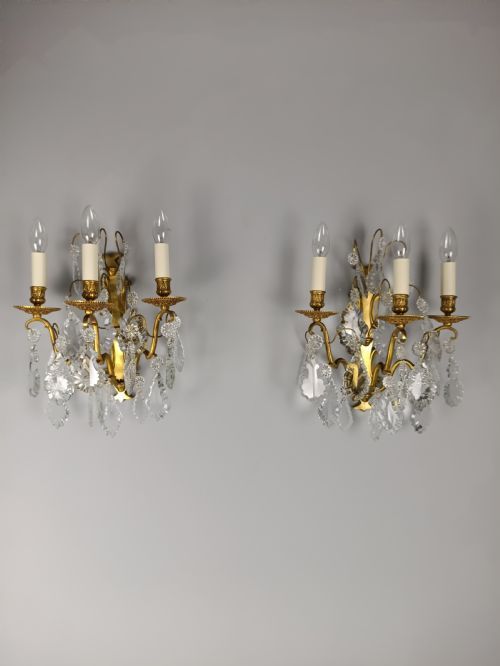


Vintage Crystal Wall Lighting
Vintage crystal wall lighting brings dramatic sparkle and refined historic character to any room.
Vintage Crystal Wall Lighting
Vintage crystal wall lighting encompasses decorative fixtures designed to mount directly onto vertical surfaces while projecting illumination through prismatic glass elements. Pieces meeting this description typically date from the nineteenth century through the 1930s, incorporating distinct regional aesthetics such as French chateau, Italian Florentine, and Regency styles.
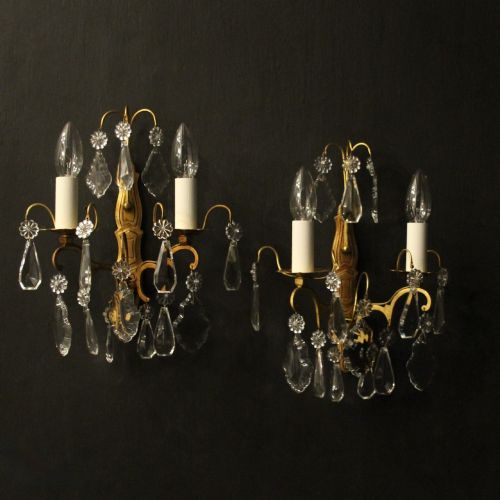
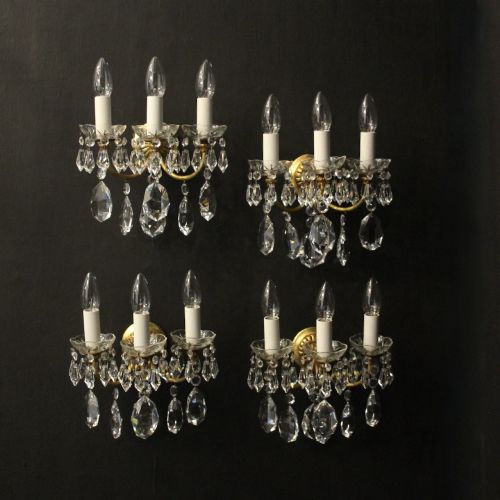
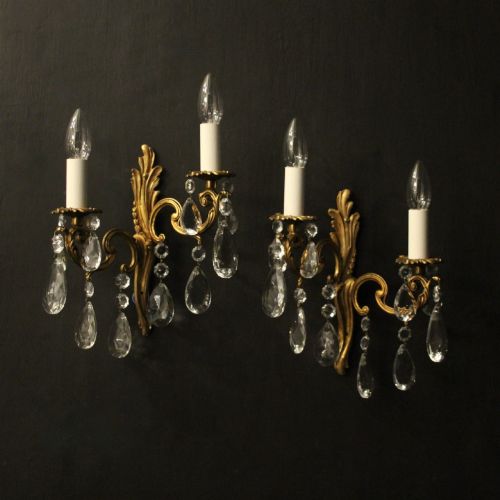
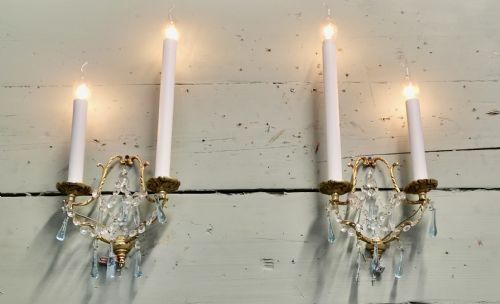
Buyers browsing this selection frequently encounter pairs of twin or triple arm wall sconces and girandoles originating from French workshops. These items combine structural metal frames with suspended glass pendants, drops, and bead chains intended to refract bulb or candlelight across an interior space.
Materials and construction methods
Workshops constructed the foundational backplates and arms using cast brass, gilded bronze, or ormolu, often applying gilt finishes to enhance visual warmth. Artisans then integrated cut crystal and moulded glass elements, securing the prismatic drops to the metal frames with fine wire pins.
Decorative variations relied on secondary materials including wrought iron, carved giltwood, and painted toleware to achieve specific regional aesthetics like Italian Florentine leaf motifs or French rococo curves.
Several charming wall lights feature miniature sculpted cherubs keeping silent watch over the flickering crystal drops.
Assessing quality in period fixtures
Superior examples demonstrate precision in metal casting and hand-cutting of the crystal prisms, where sharper facets yield superior light refraction. The weight and rigidity of the foundational bronze or brass armature also distinguish masterwork pieces from standard commercial production.
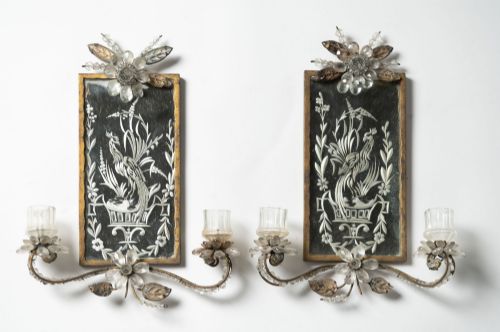
The integration of decorative components such as moulded cherubs, mirror backs, or elaborate gilt frames dictates the overall sculptural merit of an individual sconce or chandelier.
Maison Baguès·F. & C. Osler·Baccarat
The Vintage Crystal Wall Lighting Glossary
- Girandole
- An ornamental wall candelabrum featuring a reflective backplate or mirrored surface designed to multiply the emitted light. These fixtures often incorporate numerous crystal drops hanging from the structural arms.
- Ormolu
- A technique of applying finely ground high-carat gold to a bronze object, creating a rich golden surface finish. This treatment protects the underlying metal while providing a luxurious decorative appearance.
- Bag wall light
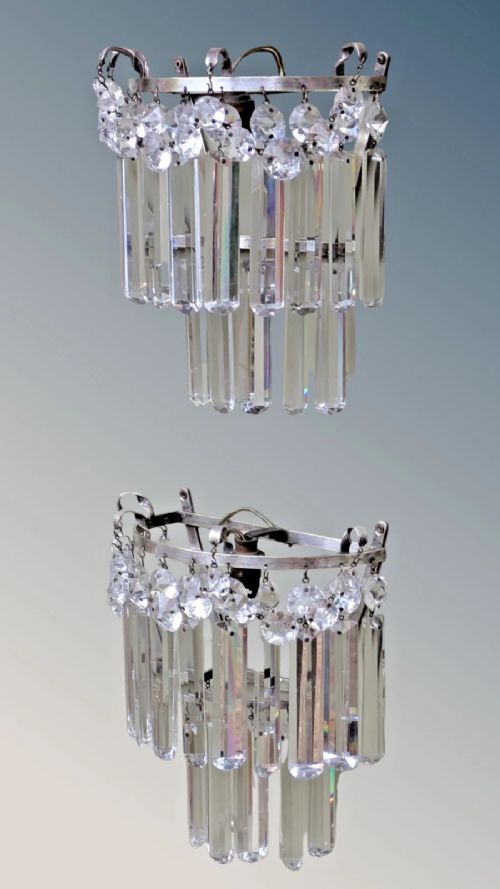
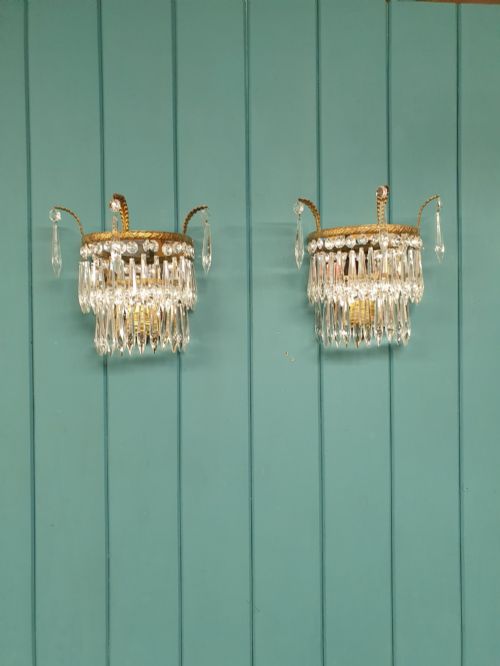
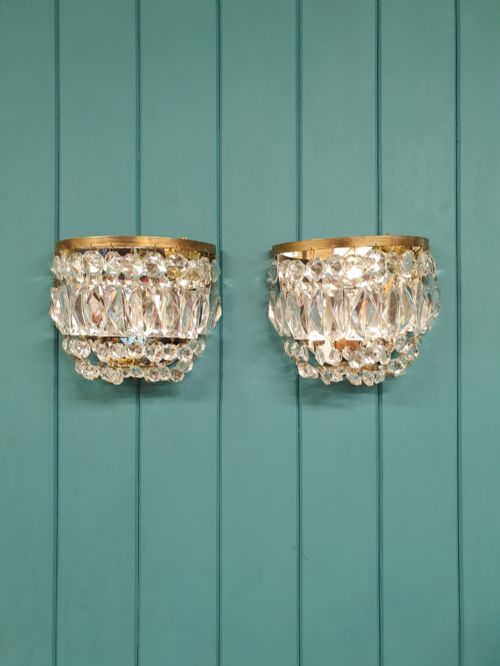
- A specific lighting form featuring a tiered arrangement of crystal drops gathered in a tapered bag shape beneath the arms. This silhouette concentrates the prismatic glass elements close to the wall plate.
- Toleware
- Painted sheet metal objects produced to mimic various decorative finishes and naturalistic motifs. In lighting, these components provide colourful floral or leafy accents to the metal armature.
Vintage Crystal Wall Lighting: Frequently Asked Questions
How do I install antique wall lights?
Professional installation by a qualified electrician is strongly recommended to ensure the vintage wiring safely connects to your household electrical supply. Many period pieces are adapted for modern electrical standards while preserving their original exterior metalwork.
Secure mounting blocks should be utilised to support the combined weight of the metal armature and dense crystal drops.
Can these sconces use modern LED bulbs?
Warm white LED bulbs are suitable for period fixtures because they generate minimal heat, which protects fragile vintage crystal and historical gilt finishes from thermal damage. Selecting lower lumen outputs helps replicate the softer ambiance of historic candle or early incandescent lighting.
Choose bulb shapes that remain concealed behind the crystal drops to maintain the authentic visual aesthetic.
How do I identify Edwardian crystal wall lights?
Edwardian lighting typically exhibits lighter proportions and refined neoclassical or revival decorative details compared to heavier Victorian counterparts. Pieces from this period frequently utilise brass or gilt metal frames paired with delicate cut glass pendants.
Construction markers often include specific pin attachments and casting techniques characteristic of early twentieth-century manufacturing methods.