




Vintage Crystal Coupes
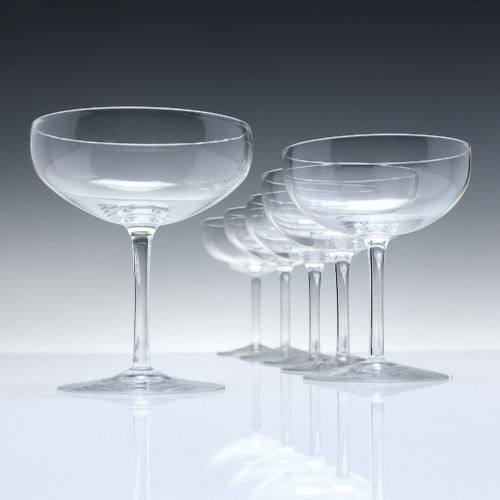
These vintage crystal coupes bring distinct period character and low, wide bowls to the table, making every toast feel substantial.
Vintage Crystal Coupes
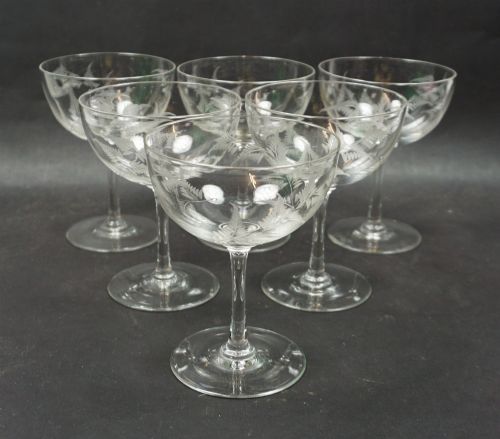
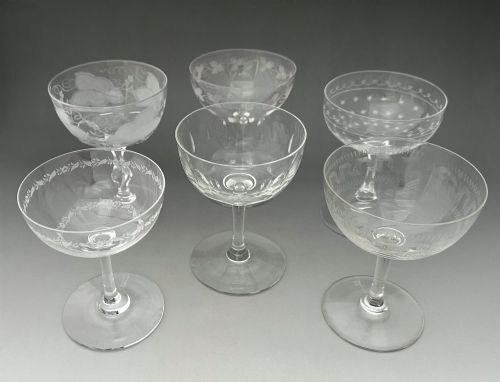
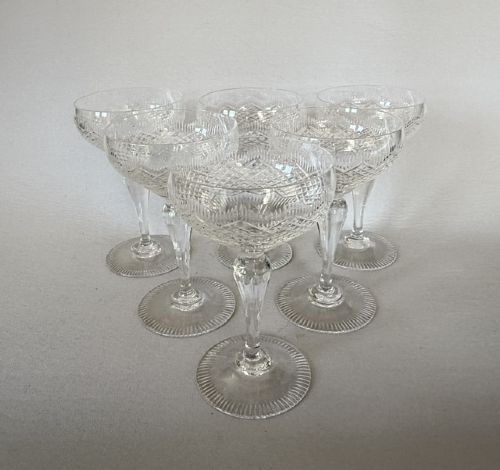
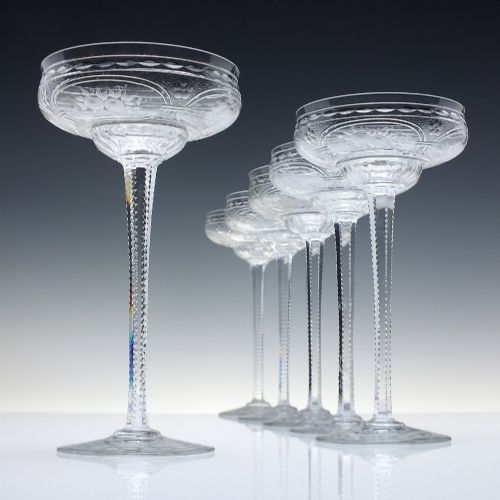
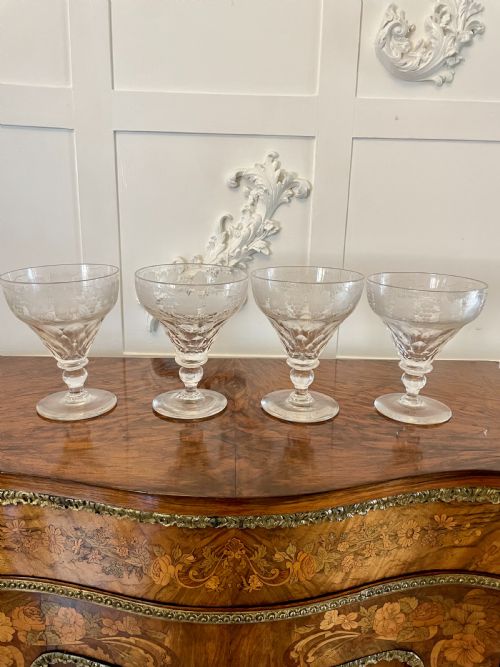
Vintage crystal coupes comprise low, wide bowls designed specifically for sparkling wine and champagne, appearing across the Victorian, Edwardian, and Art Deco periods. Buyers looking for vintage crystal coupes will find matching sets of six alongside smaller groupings of pairs and larger gatherings of sixteen.
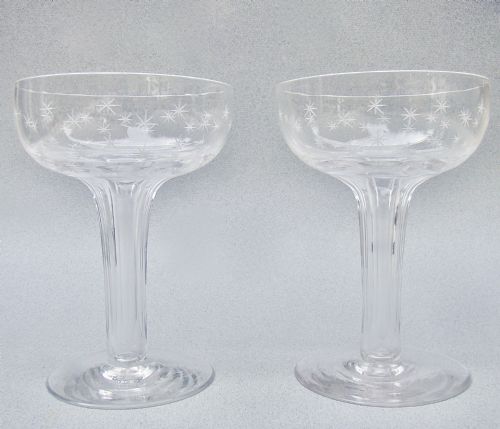
The forms range from traditional champagne glasses and champagne bowls to hollow stem champagne glasses and decorative centrepiece bowls. Origins span English houses alongside French production, notably featuring work attributed to Baccarat.
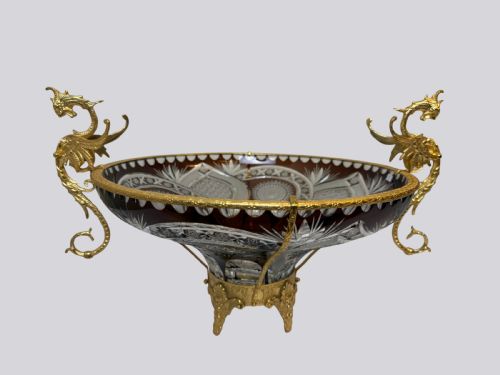
Materials extend beyond clear lead crystal to include striking overlaid glass in cranberry, green, and red, frequently accented with gilt bronze mounts. These pieces bridge functional glassware and decorative display items for the modern table.
How they were made
Makers shaped lead crystal and heavy glass through blowing and pressing before finishing the surface with wheel-cutting and detailed engraving. Common decorative motifs include star-etching, convolvulus flowers, and detailed fruiting vines encircling the bowl and foot.
Overlay techniques involved casing coloured glass over a clear crystal base, allowing artisans to cut away the top layer and reveal sparkling contrast underneath. Metal mounts in gilt bronze were occasionally added to form elaborate centrepiece bowls.
Vintage Crystal Coupes Retail Price Guide 2026
Typical asking prices for vintage crystal coupes among the pieces listed under this phrase on Sellingantiques today, from the lower quarter to the upper quarter. They describe what is for sale here now, not the wider market.
Materials represented include lead crystal, cranberry glass, green overlay glass, and gilt bronze.
What varies in quality
Quality rests in the crispness of the wheel-cut facets and the depth of the hand-engraved motifs, where finer examples show exceptional clarity and precision. The weight of the lead crystal and the uniform thinness of the bowl walls further distinguish superior production.
Completeness of a matched set significantly influences the standing of the glassware, particularly larger sets of six or sixteen. The sophistication of the overlay work, especially in cranberry and green glass, separates standard vessels from finer decorative pieces.
Baccarat
The Vintage Crystal Coupes Glossary
- Coupe
- A shallow, broad-bowled glass traditionally used for champagne. It allows the aromas of the wine to disperse quickly.
- Lead crystal
- Glass containing metal oxide that increases weight, refractive index, and clarity. This material rings clearly when struck.
- Overlay glass
- A technique where a layer of coloured glass is fused over clear crystal. Artisans cut through the outer layer to create contrasting patterns.
- Star-etched
- A decorative pattern incised into the glass surface resembling a star. This method was widely favoured in Victorian glassware.
- Centrepiece bowl
- A large decorative vessel placed in the middle of a table. These often incorporate metal mounts or gilt bronze.
Vintage Crystal Coupes: Frequently Asked Questions
What are vintage crystal coupes used for?
These glassware pieces serve sparkling wine, champagne, and celebratory toasts at the table. Their wide, shallow bowls were originally designed to let bubbles dissipate.
Beyond beverages, collectors utilise smaller coupes for serving desserts, sorbets, or appetisers during formal dinner parties.
How do I clean vintage crystal?
Wash each piece gently by hand using warm water and mild detergent. Avoid sudden temperature changes to prevent cracking the old material.
Dry them immediately with a lint-free cloth to maintain the clarity and brilliance of the cut crystal.
How do I date these glasses?
Examine the weight, cutting style, and silhouette to determine the likely era of manufacture. Victorian pieces often feature heavy star-etching and thick stems.
Edwardian and Art Nouveau examples typically showcase lighter proportions or stylised floral engraving consistent with early twentieth-century design.
Can I use them daily?
Daily use is entirely possible if handled with care and washed by hand. The robust lead crystal of the nineteenth and early twentieth centuries is durable.
Many buyers prefer to reserve larger matching sets for special occasions while displaying individual pieces on sideboards.