




Vintage Crystal Coupe Glasses
These vintage crystal coupe glasses bring distinct period style and generous shallow bowls to the table, making them sought after for serving champagne.
Vintage Crystal Coupe Glasses
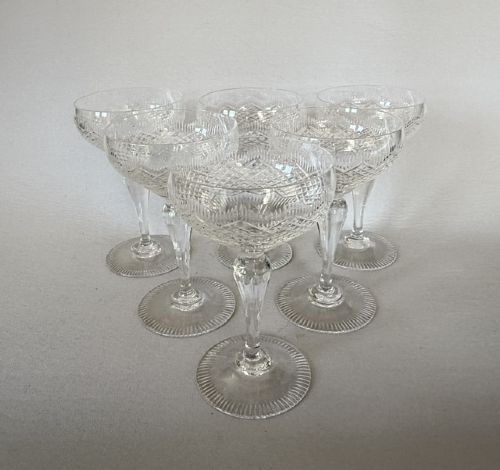
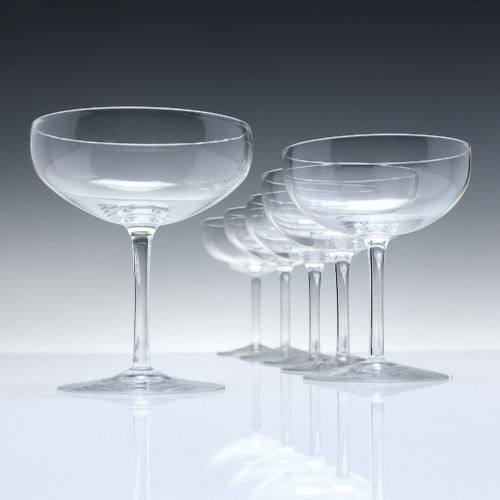
Buyers seeking vintage crystal coupe glasses encounter shallow champagne bowls and hollow stem glasses originating from the Victorian era, Edwardian period, and early twentieth century. Sets frequently comprise matched groups of six or pairs, taking the form of champagne coupes, champagne glasses, and cut glass champagne bowls.
The selection ranges from clear lead crystal and cut crystal to coloured glass variants including cranberry over crystal, green over crystal, and red over crystal. English origins dominate, alongside French manufacture represented by makers from the early twentieth century.
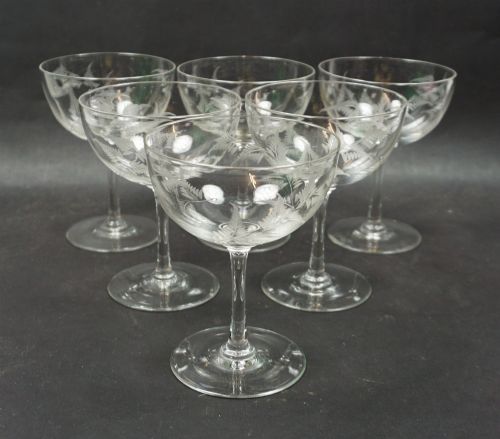
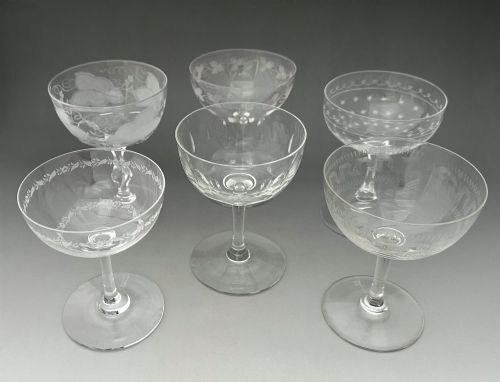
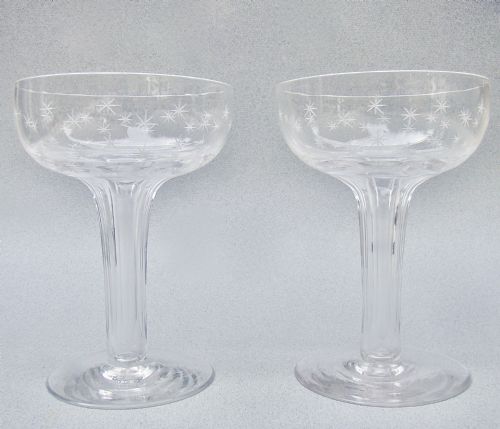
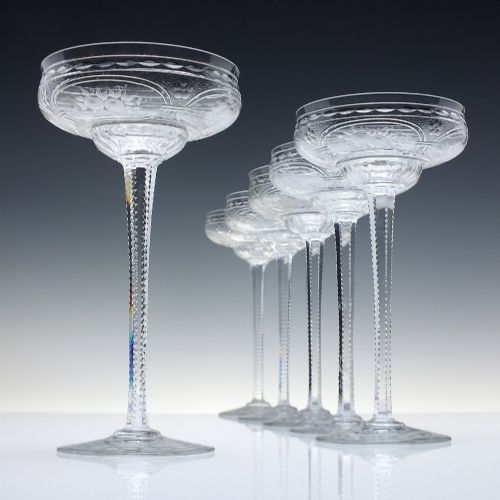
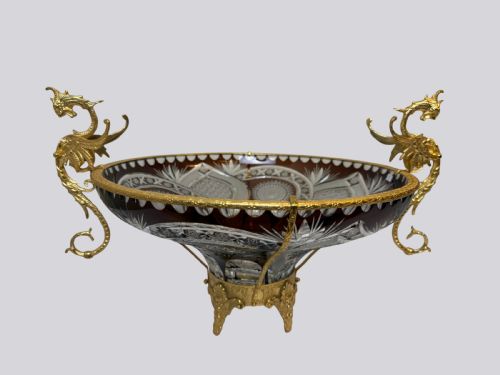
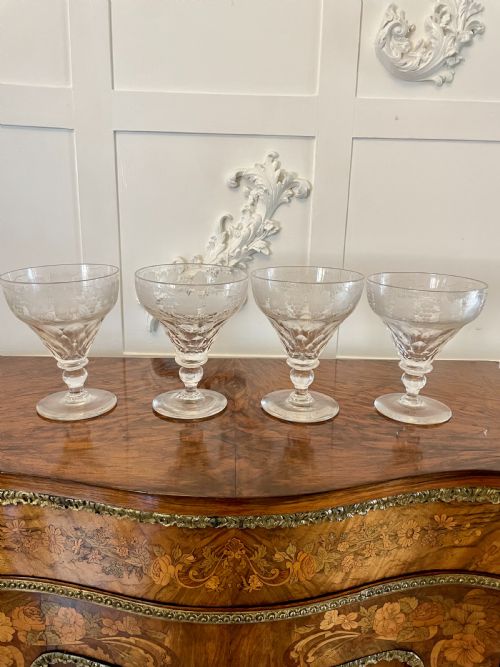
Decorative treatments on these pieces vary from engraved ferns and convolvulus to fruiting vines and star-etched bowl designs. Alongside standard stemware, related forms such as centrepiece bowls occasionally appear within the broader glassware category.
How they were made
Production relies heavily on lead crystal and clear glass blown and shaped into shallow coupe forms, sometimes featuring hollow stems. Master glassmakers utilised cutting techniques to carve geometric and linear patterns directly into the crystal surface.
Surface ornamentation was achieved through wheel engraving and etching, rendering delicate botanical motifs such as ferns, convolvulus, and fruiting vines. Coloured examples were created using layered glass techniques, fusing cranberry, green, or red glass over a clear crystal base.
Mounts and structural elements on associated centrepieces occasionally incorporated gilt bronze alongside the primary glass components.
Vintage Crystal Coupe Glasses Retail Price Guide 2026
Typical asking prices for vintage crystal coupe glasses among the pieces listed under this phrase on Sellingantiques today, from the lower quarter to the upper quarter. They describe what is for sale here now, not the wider market.
Some Victorian glasses sport hollow stems, an ingenious design feature intended to watch bubbles travel upward from the base.
What varies in quality
The standard of cutting and engraving distinguishes simpler wares from finer examples, with hand-engraved botanical details and crisp wheel-cut facets showing greater artisan control. Depth and clarity in coloured overlay glass, where clear crystal is exposed beneath a vibrant outer layer of cranberry, green, or red, dictate visual impact.
Completeness and consistency within a harlequin or matched set significantly influence desirability, particularly when dealing with larger sets of six or sixteen pieces. The weight and purity of the lead crystal itself, combined with the delicacy of the blown bowl and stem proportions, mark the division between standard production and top-tier workshop output.
Baccarat
The Vintage Crystal Coupe Glasses Glossary
- Coupe
- A shallow, broad-bowled glass traditionally used for champagne. Its wide opening allows the aromas of the wine to develop quickly.
- Lead crystal
- Glass containing a significant proportion of lead oxide, which increases weight, clarity, and the capacity for deep facet cutting.
- Cranberry glass
- A rich red-pink transparent glass coloured with gold chloride during production. It is frequently seen layered over clear crystal.
- Overlay
- A technique involving a layer of coloured glass cased over a core of clear crystal. Cutting through the outer layer reveals the contrasting crystal beneath.
- Wheel engraving
- A method of decorating glass by holding the vessel against a small rotating abrasive wheel. This creates detailed motifs like vines, ferns, and florals.
Vintage Crystal Coupe Glasses: Frequently Asked Questions
What are vintage crystal coupe glasses used for?
These shallow vessels are primarily designed for serving champagne and sparkling wines, though their broad bowls suit modern cocktail presentation. Their antique form brings historic character to formal dining and celebratory toasts.
Beyond beverages, collectors often utilise smaller matched sets for serving desserts or as decorative display pieces on sideboards and dining tables.
How do I care for antique crystal?
Hand washing in lukewarm water with a mild detergent is essential for preserving delicate engraved surfaces and gilt details. Avoid sudden temperature changes to prevent thermal shock in old lead crystal.
Dry each piece promptly with a lint-free cloth to maintain clarity and prevent water spots from forming on the cut facets.
How can I date my champagne coupes?
Dating relies on examining the manufacturing style, cutting depth, and decorative motifs present on the bowl or stem. Victorian examples often feature heavy star-etching and robust proportions, whereas Edwardian and early twentieth-century pieces can display lighter engraved botanical patterns.
Matching the glassware form and colour palette to documented periods helps narrow down the decade of production.
What is a harlequin set?
A harlequin set consists of individual glasses that share a similar period, size, or form but possess subtle variations in their cut or etched decoration. These collections are assembled to offer a charmingly diverse table setting rather than strict uniformity.
Such sets are common among antique glassware, reflecting how historic collections were used and replenished over time.