



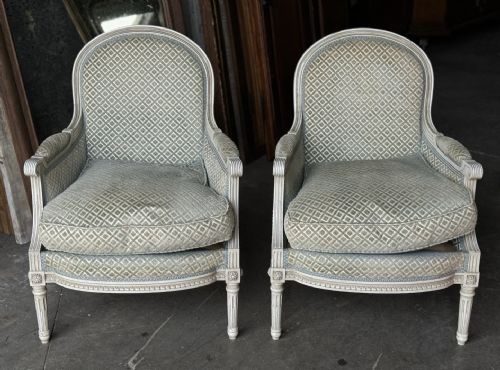


Vintage Cream Bergere Chair
A vintage cream bergere chair brings relaxed French style and woven cane panels to a room, offering both character and deep comfort.
Vintage Cream Bergere Chair
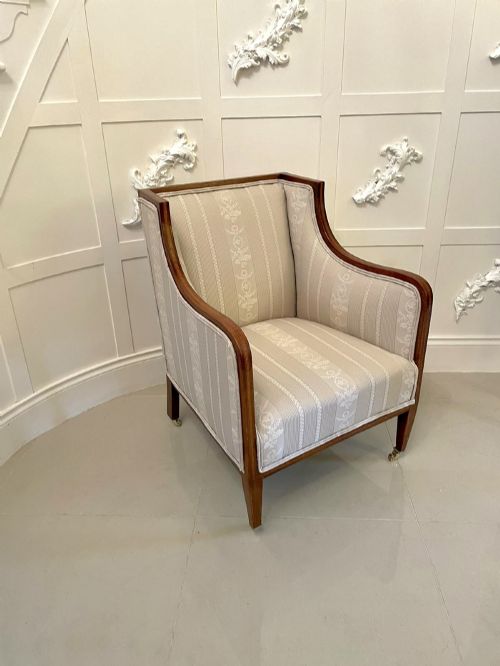
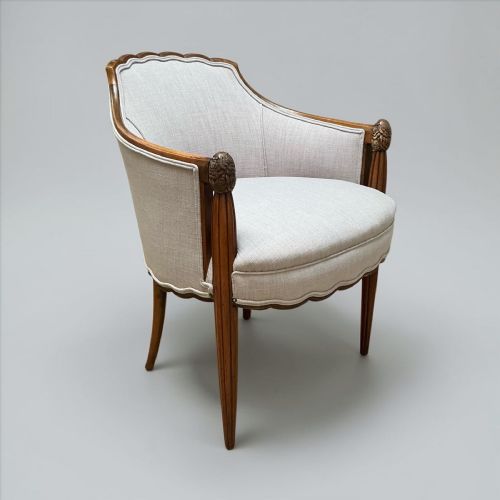
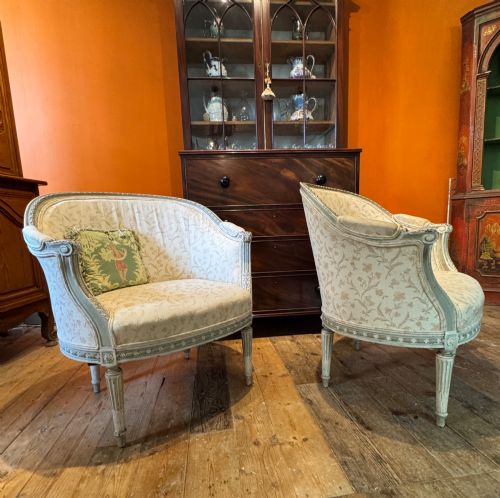
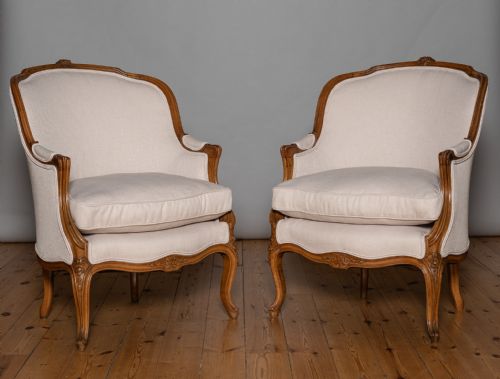
When you search for a vintage cream bergere chair, you encounter French and continental armchairs defined by upholstered seats and exposed wooden frames. The versions meeting you here span the nineteenth century through the mid-twentieth century, drawing heavily on Louis XV and Louis XVI revivals alongside neoclassical and Edwardian tastes.
Most examples found on this page feature painted wood finishes in cream, off-white, or distressed hues that complement the woven cane backrests and sides. These upholstered armchairs often appear singly or as matched pairs, sometimes accompanied by matching footstools for a complete seating arrangement.
The underlying timber structures rely predominantly on beech, walnut, or mahogany beneath their painted surfaces, paired with linen and other traditional fabrics. These seating pieces function successfully in sitting rooms, studies, and bedrooms where historic texture and neutral tones anchor the interior scheme.
How they were made
The construction of these chairs depends on traditional cabinetmaking techniques, employing solid timbers like beech, walnut, and mahogany for the structural frames. Carved details and exposed wooden elements are frequently finished with layered paint or hand-applied decoration.
Cane panels are meticulously woven by hand into the pierced wooden frames of the backrests and sides to create a supportive yet flexible enclosure. Upholstered drop-in or fixed cushions in linen and heavy textiles complete the seat, resting over traditional springing or webbing.
Vintage Cream Bergere Chair Retail Price Guide 2026
Typical asking prices for vintage cream bergere chair among the pieces listed under this phrase on Sellingantiques today, from the lower quarter to the upper quarter. They describe what is for sale here now, not the wider market.
Some nineteenth-century armchairs arrive with stubborn traces of old French polish hiding quietly beneath layers of cheerful cream paint.
What varies in quality
The distinction between ordinary and exceptional examples lies largely in the crispness of the wood carving and the integrity of the woven cane. Finer pieces display deeply sculpted floral or neoclassical motifs executed by skilled hands rather than mechanical routers.
Original paint surfaces and untouched patination hold greater appeal than later, heavy-handed repainting that obscures underlying detail. Furthermore, the structural rigidity of the joined frame and the tightness of the cane work determine the enduring strength of the armchair.
The Vintage Cream Bergere Chair Glossary
- Bergere
- An enclosed upholstered armchair with a wooden frame, typically featuring woven cane panels on the back and sides. This French seating form dates back to the early eighteenth century.
- Cane
- Strips of rattan woven into an open mesh pattern to form flexible backrests and side panels. This material lightens the visual weight of heavy wooden armchairs.
- Neoclassical
- A design style inspired by classical Greece and Rome that emphasises straight lines, symmetry, and restrained ornamentation. It frequently appears in late eighteenth-century and revival furniture.
- Louis XV Style
- A decorative aesthetic characterised by asymmetric curves, cabriole legs, and naturalistic scrollwork. This style heavily influences many nineteenth-century French armchairs.
- Patina
- The surface sheen and softening of colour developed through age, handling, and use. It serves as an indicator of authenticity and history.
Vintage Cream Bergere Chair: Frequently Asked Questions
What is a bergere chair?
A bergere chair is a traditional French upholstered armchair featuring enclosed sides and a low seat, designed for relaxed indoor lounging.
These pieces typically incorporate exposed wooden frames and woven cane panels, distinguishing them from fully upholstered armchairs of later periods.
How do I identify a Louis XV style chair?
Louis XV style chairs are recognised by their curved lines, cabriole legs, and carved floral motifs that avoid symmetry.
Revival versions produced in later centuries maintain these characteristic sweeping contours and elaborate wooden frames.
Where should I place a vintage armchair?
These armchairs suit sitting rooms, bedrooms, and quiet reading corners where their neutral cream tones and textured cane work complement existing decor.
Pairs often work well flanking a fireplace or positioned opposite a sofa to create a balanced seating group.
Are these chairs comfortable for daily use?
The combination of a wide upholstered seat and a supportive raked backrest provides a comfortable seating posture for reading or resting.
Cushion depth and firmness vary across individual pieces depending on the specific period and upholstery methods used.
How do I care for cane panels?
Cane panels require gentle dusting and occasional light moisture to prevent the natural rattan material from becoming brittle over time.
Avoiding direct heat sources and heavy pressure protects the woven mesh from sagging or splitting.