






Rococo Painted Armchair
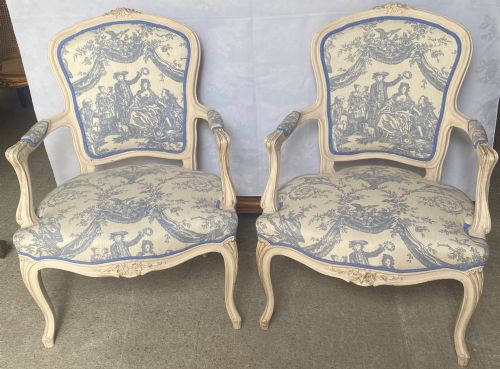
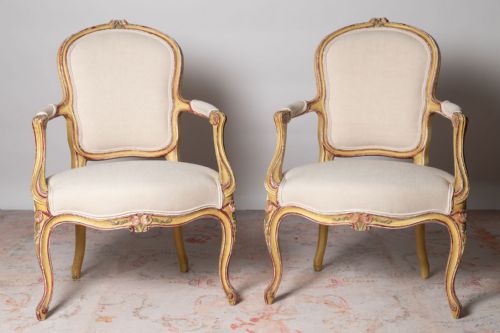
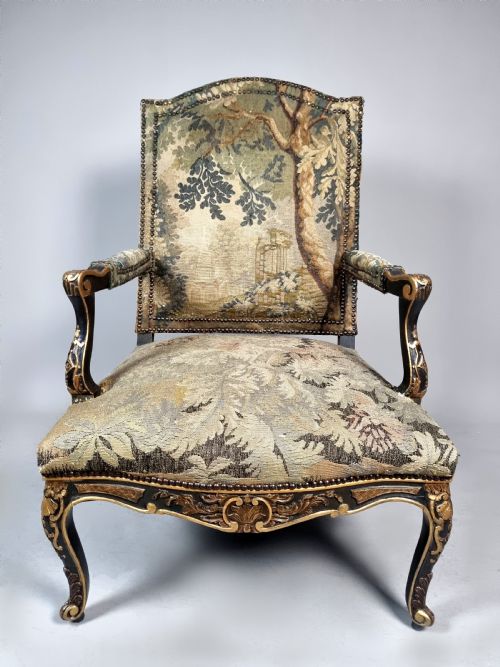
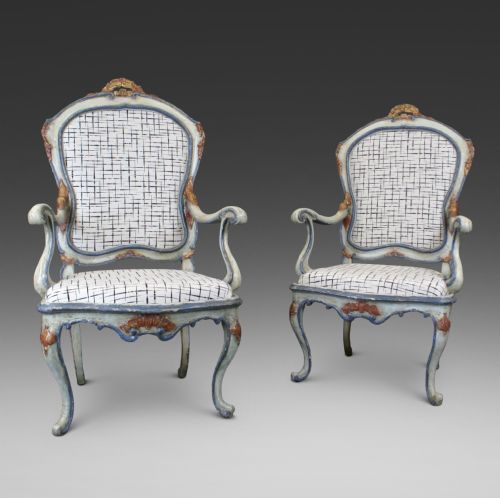
A rococo painted armchair brings fluid curves and decorated wood surfaces into a room, offering both decorative presence and comfortable seating.
Rococo Painted Armchair
When you search for a rococo painted armchair, you encounter seating derived from eighteenth-century designs, featuring carved wooden frames finished with paint and sometimes gilding. These pieces encompass Continental forms such as French fauteuils and bergères, alongside Italian, English, and Swedish interpretations produced across the eighteenth, nineteenth, and twentieth centuries.
The versions most frequently met on this page date from the nineteenth and twentieth centuries, often adopting the Louis XV style or regional revivals like Venetian and Italian rococo. Alongside full-sized chairs, the selection includes related seating such as settees and salon chairs, together with occasional decorative porcelain figurines depicting figures in chairs.
How they were made
Makers shaped solid timber through carving to create the characteristic asymmetrical curves, cabriole legs, and scrollwork of the style. This carved wood served as the foundation for decorative surface treatments involving layers of paint, gesso, and gold or silver leaf.
Upholstery formed an essential part of construction, utilising materials like fabric, linen, and needlework to cover padded seats and backs. Bergère and tub chair variants employed enclosed upholstered sides, while open-arm fauteuils exposed more of the painted and carved wooden framework.
Rococo Painted Armchair Retail Price Guide 2026
Typical asking prices for rococo painted armchair among the pieces listed under this phrase on Sellingantiques today, from the lower quarter to the upper quarter. They describe what is for sale here now, not the wider market.
Materials recorded across these listings include paint, fabric, gesso, wood, painted wood, linen, carved wood, and gold leaf.
What varies in quality
The standard of a painted armchair depends largely on the crispness of the carved detail in the wood and the integrity of the underlying frame construction. Pieces produced by skilled craftsmen exhibit balanced proportions and fluent curves, whereas simpler examples display more rigid or mass-produced lines.
Surface finish also determines the tier of a piece, distinguishing between worn original paint layers with subtle patination and later, heavier repaintings. The complexity of the ornamentation - ranging from simple painted decoration to intricate gilding and needlework upholstery - separates standard salon seating from important period examples.
Vion et Baury Paris
The Rococo Painted Armchair Glossary
- Fauteuil
- An open-arm armchair originating in France, typically featuring an exposed wooden frame with upholstered seat and back pads. These chairs were designed for formal domestic interiors during the eighteenth century and later revival periods.
- Bergère
- An enclosed armchair with upholstered sides joined to the padded back and seat, often incorporating a loose cushion. This form provides a deeper and more enveloping seat than an open armchair.
- Gesso
- A plaster-like mixture applied to wooden chair frames to prepare the surface for painting or gilding. It allows craftsmen to build up fine details and smooth grounds before applying the final finish.
- Cabriole leg
- A furniture leg that curves outward and then tapers inward, mimicking the shape of an animal's leg in motion. This profile is a defining feature of rococo furniture design.
- Barocchetto
- The Italian variant of the rococo style, expressed in furniture through exuberant carved decoration and painted surfaces. Pieces in this idiom display regional interpretations of mid-eighteenth-century European design.
Rococo Painted Armchair: Frequently Asked Questions
How do I identify a true period piece?
Period identification relies on examining the construction methods of the wooden frame, the composition of the gesso and paint layers, and the wear patterns consistent with age. Eighteenth-century examples display hand-carved details and period joinery that differ from nineteenth- and twentieth-century revivals.
Style indicators also help distinguish eras, as authentic eighteenth-century chairs exhibit different proportions compared to later copies produced during revival periods in the nineteenth and twentieth centuries.
Where should I place these in a room?
These chairs function effectively as accent seating in reception rooms, bedrooms, or studies where their decorative painted frames can be appreciated. Pairs look balanced when placed flanking a fireplace or console table.
Because of their painted and upholstered surfaces, these chairs benefit from placement away from direct sunlight and heavy moisture to preserve the finish and fabric.
How do I care for painted wooden frames?
Maintenance involves dusting the carved and painted surfaces regularly with a soft, dry cloth to prevent dirt accumulation. Avoid using chemical polishes or water on painted and gilded finishes.
Professional conservation may be required if the gesso or paint layer begins to flake or separate from the wooden substrate over time.