

Vintage Crapaud Armchairs
Vintage crapaud armchairs are low, fully upholstered French seats designed for low seating and deep comfort, bringing nineteenth-century seating into modern rooms.
Vintage Crapaud Armchairs
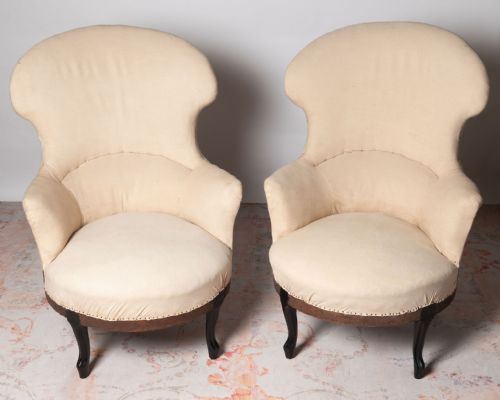
Vintage crapaud armchairs take their name from the French word for toad, reflecting their low-slung, squat posture and fully upholstered frames. These pieces belong predominantly to the nineteenth century, with French Napoleon III examples forming the core of what appears here alongside later twentieth-century boudoir versions.
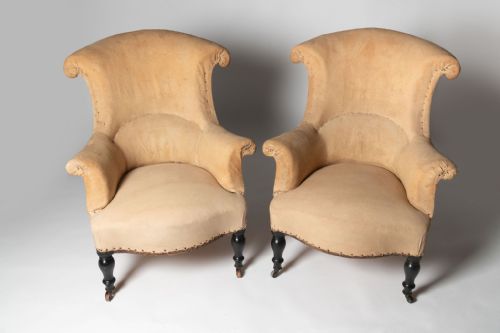
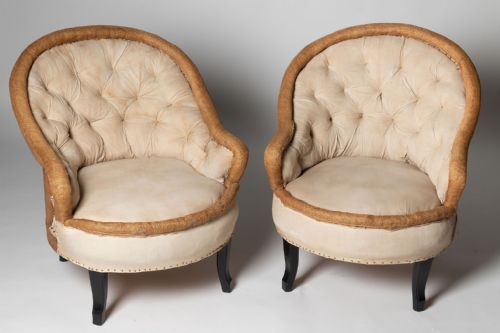
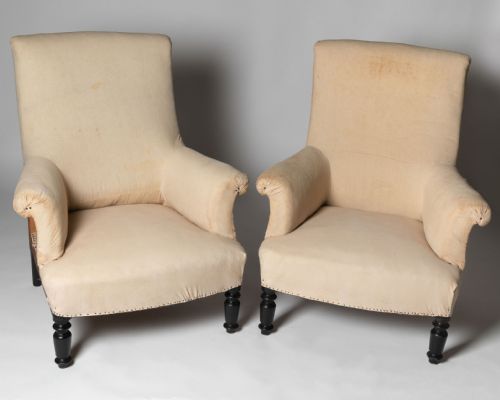
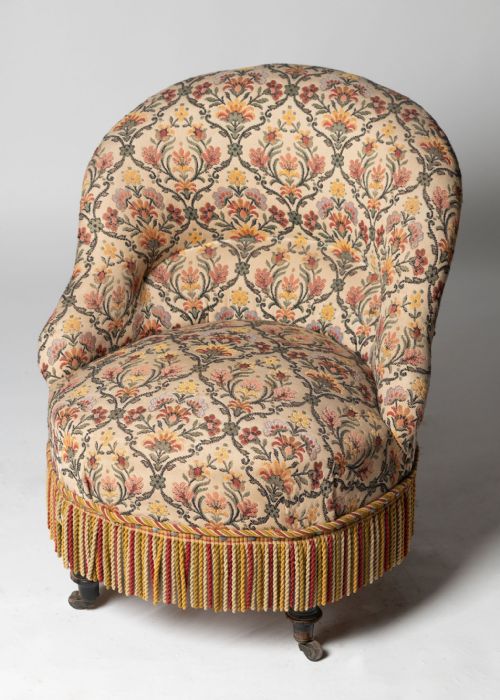
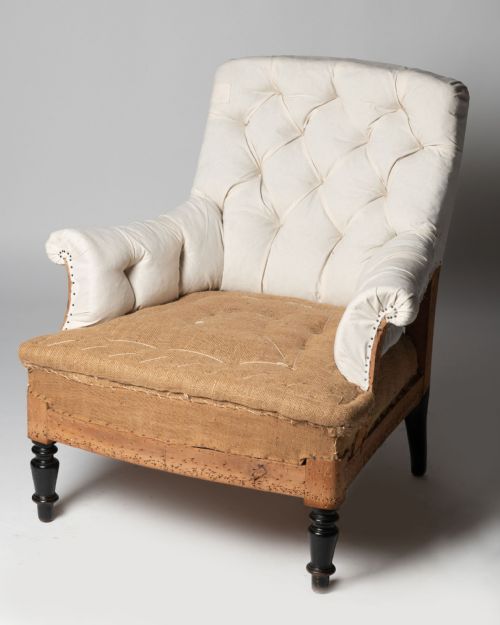
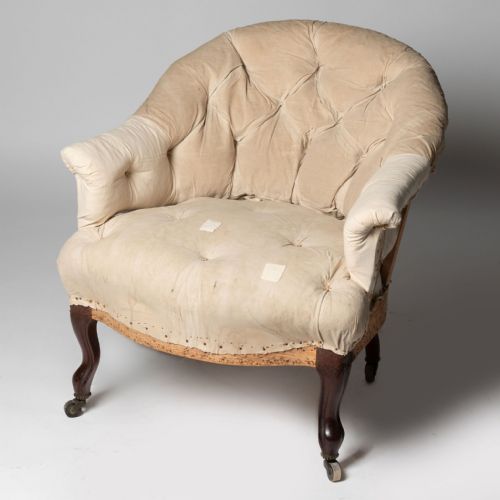
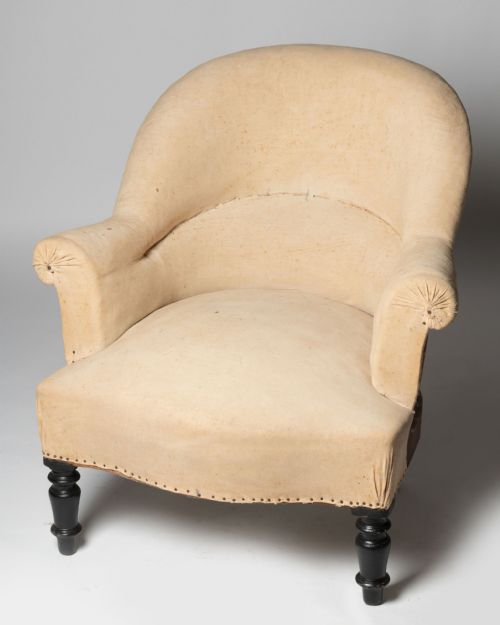
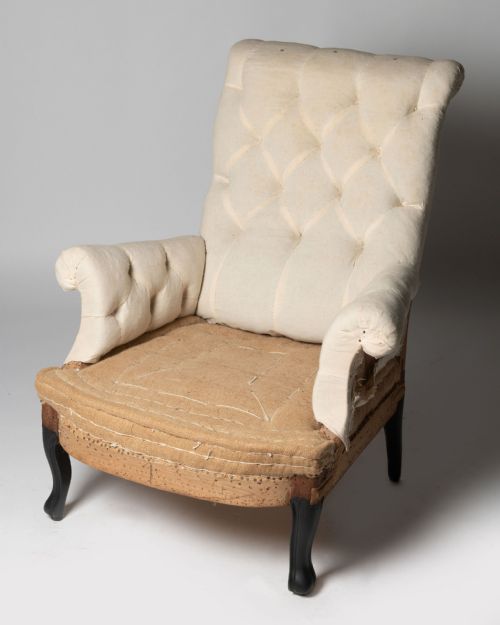
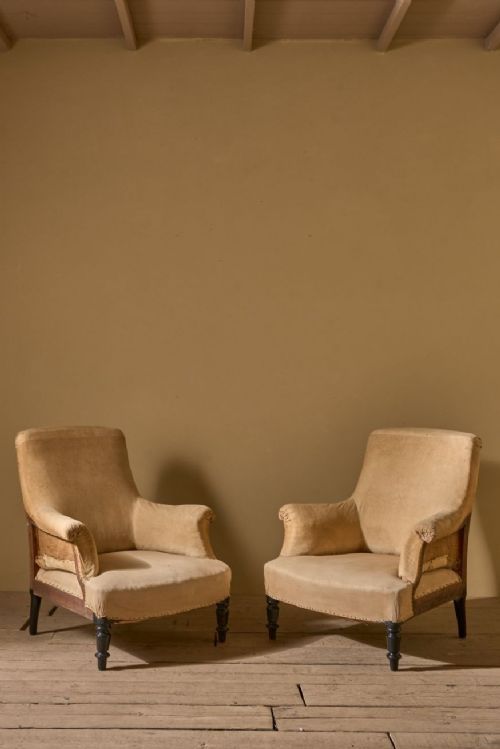
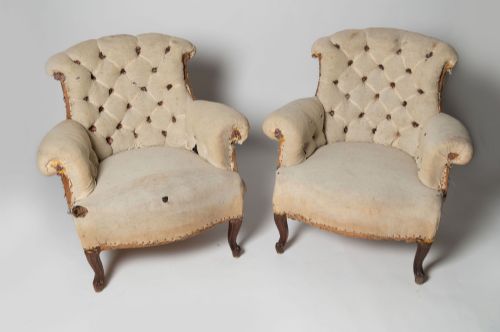
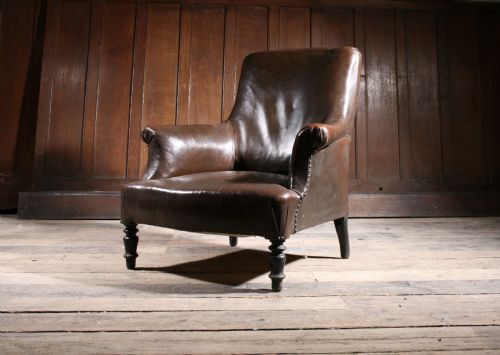
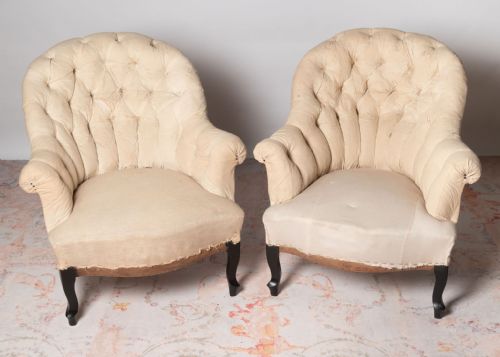
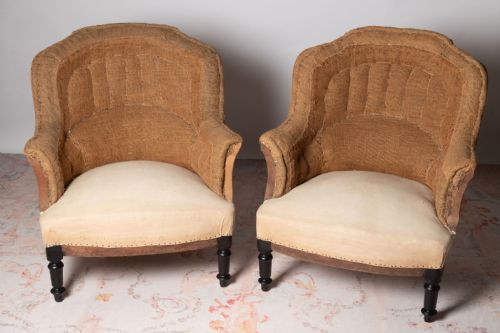
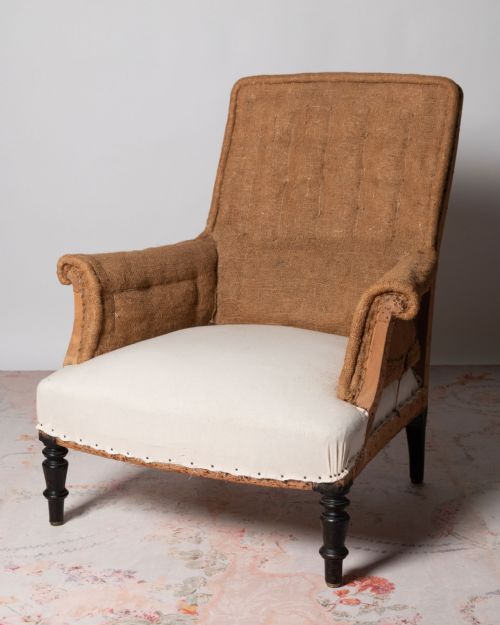
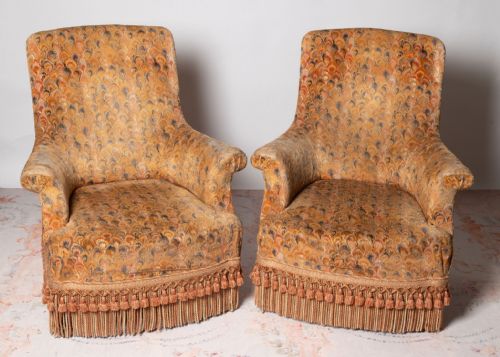
The form typically presents as a tub chair or square back armchair, often built with a low profile designed for sitting close to the hearth or dressing table. Many examples survive from the nineteenth century ready for re-upholstery, whilst others retain earlier covers in calico, linen, or velvet.
Pairs appear frequently across these listings, alongside single French armchairs spanning from the 1800s to nineteen-thirty. Buyers encounter both plain square backs and high buttoned curved backs, all carrying the characteristic French nineteenth-century aesthetic.
How they were made
Makers built these frames using timber such as beech and wood, shaping them into low tub or square back forms intended to be entirely hidden beneath stuffing and fabric. Traditional construction relies on robust internal wooden framing designed to support deep springing.
Upholstery defines the piece, utilising foundational layers of hessian and calico before applying top covers in velvet or linen. Brass detailing often appears around the trim, securing the fabric directly to the wooden framework.
Vintage Crapaud Armchairs Retail Price Guide 2026
Typical asking prices for vintage crapaud armchairs among the pieces listed under this phrase on Sellingantiques today, from the lower quarter to the upper quarter. They describe what is for sale here now, not the wider market.
Named after the French word for a toad, these squat little seats let you lounge low to the floor in nineteenth-century style.
What varies in quality
The integrity of the underlying wooden frame dictates the longevity of any low upholstered seat, separating solid construction from compromised timber. Original frames that retain their structural firmness without movement offer a superior foundation.
The sophistication of the original silhouette, whether a simple square back or a high buttoned curved back, influences the visual weight and elegance of the piece. Surviving period fabric versus frames offered bare for upholstery also shifts how a buyer approaches the work required.
The Vintage Crapaud Armchairs Glossary
- Crapaud
- A low-slung French armchair completely covered in upholstery, earning a toad-like moniker for its squat proportions. These nineteenth-century seats prioritize enclosed comfort over exposed wood.
- Napoleon III
- A nineteenth-century French design period spanning the mid to late eighteen-hundreds, known for revival styles and deep buttoning. Pieces from this era often form the basis of these low tub chairs.
- Calico
- A plain-woven cotton fabric employed as an interim layer over stuffing before the final decorative textile is applied. It provides a clean, neutral base for the outer upholstery.
- Tub chair
- An armchair featuring a rounded back that flows continuously into low arms, creating a protective enclosure. This form sits centrally in nineteenth-century French seating designs.
Vintage Crapaud Armchairs: Frequently Asked Questions
How were these chairs used originally?
These low seats served nineteenth-century interiors as intimate parlor or bedroom chairs positioned for warmth near fires.
Their short stature kept occupants close to the floor away from cold drafts.
Are these chairs sold ready for upholstery?
Many nineteenth-century examples appear on this page specifically designated for re-upholstery by the buyer.
Others retain period covers in velvet, linen, or calico depending on their survival state.
How do I identify a Napoleon III chair?
Napoleon III pieces date from the mid to late nineteenth century in France, displaying rounded forms and deep buttoning.
They rely on concealed timber frames covered entirely in traditional textiles.
Do these armchairs come in pairs?
Pairs appear regularly alongside single armchairs across nineteenth-century French listings on this site.
Matching sets of tub chairs or square back seats offer symmetry for drawing rooms.