







Vintage Cow Oil Painting
These vintage cow oil painting works capture pastoral life across Georgian, Victorian, and Edwardian periods.
Vintage Cow Oil Painting
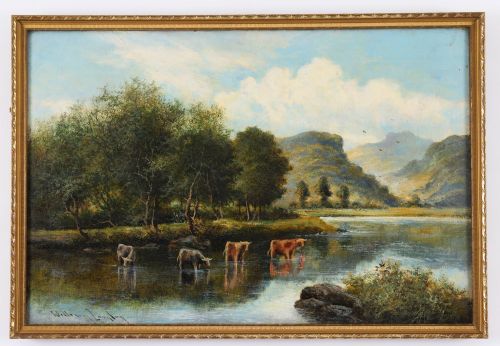
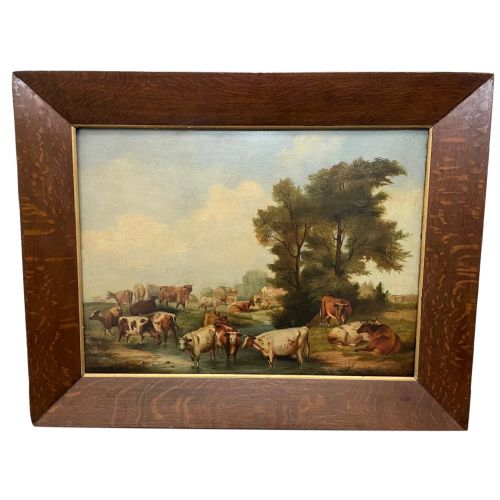
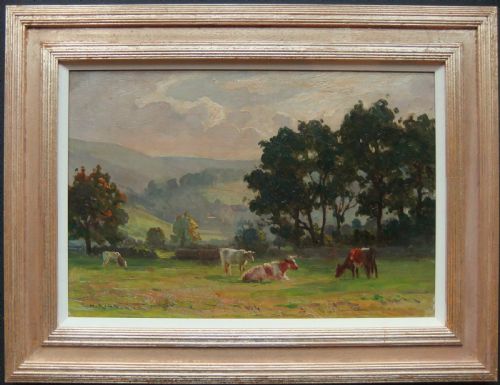
A vintage cow oil painting depicts cattle and pastoral scenes across centuries of British art. Buyers searching this phrase encounter canvases ranging from late Georgian and 18th century works to Victorian and Edwardian examples. The selection spans distinct movements including British Impressionism, Pastoral Realism, and the Victorian British School.
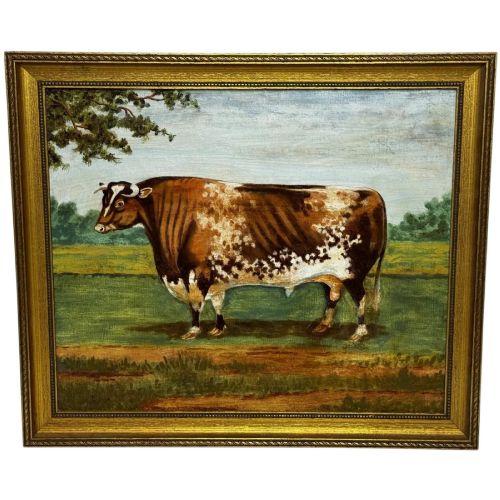
Most entries focus on cattle in landscapes, riversides, or lochs, rendered in oil paint on canvas and often housed in giltwood frames. Forms include prize shorthorns, highland cattle, and friesians painted by named artists and regional schools. These works document rural heritage through academic realism and looser impressionistic brushwork.
Materials and technique
Artists utilised oil paint on woven canvas stretched over wooden supports to build rich textures and deep colour tonalities. The mediums capture the play of light across pastoral landscapes and the physical presence of the animals.
Framing forms an integral part of the physical object, utilising giltwood and carved wood frames that reflect the aesthetic tastes of the Victorian, Edwardian, and Georgian periods in which the paintings were produced.
Vintage Cow Oil Painting Retail Price Guide 2026
Typical asking prices for vintage cow oil painting among the pieces listed under this phrase on Sellingantiques today, from the lower quarter to the upper quarter. They describe what is for sale here now, not the wider market.
Several canvases immortalise individual prize-winning shorthorn bulls with startling bovine dignity.
Quality and execution
Quality rests in the anatomical accuracy of the cattle and the atmospheric depth of the surrounding landscape. Masterful brushwork distinguishes works by accomplished hands from standard decorative production.
The integration of the animal within its natural environment determines the artistic success of the canvas. Provenance, attribution to recorded painters, and period framing elevate the standing of individual pieces.
A M Gauci·Henry Robinson Hall·George Turner·W A Clark·Frederick William Jackson·Ernest Higgins Rigg·George Smith RSA·Owen Bowen·Thomas E Francis
The Vintage Cow Oil Painting Glossary
- Canvas
- A heavy woven fabric used as a surface for oil painting. It is typically stretched tightly over a wooden frame before application of the ground and paint.
- Giltwood
- Wood that has been carved and coated with a thin layer of gold leaf or gilt. This finish is common on frames from the Georgian and Victorian eras.
- Pastoral Realism
- An artistic style focused on rural subjects and agricultural life depicted with naturalistic detail. It often highlights livestock and farming landscapes.
- British Impressionism
- A painting movement influenced by continental developments focusing on light, brushstroke, and everyday rural or coastal subjects. Works show looser application of oil paint.
- School
- A group of artists working in a similar style or region during a specific period. Listings frequently reference the British School or Scottish Impressionism.
Vintage Cow Oil Painting: Frequently Asked Questions
How old are these paintings?
The works span from the late 18th century and Georgian period through Victorian and Edwardian eras up to the 1920s.
Dates are established through stylistic evidence, artist signatures, and framing characteristics.
What subjects do they show?
The canvases depict cattle in various pastoral settings, including prize shorthorns, highland cattle in Scottish lochs, and friesians grazing by rivers.
Scenes range from detailed realist studies to impressionistic landscapes featuring figures and livestock.
Are the frames original?
Many pieces retain period giltwood frames that match the approximate age of the canvas. Frames often feature traditional moulding and gilt finishes appropriate to their century.
Checking the construction of the wooden frame helps determine its period relationship to the painting.
Who painted these works?
The selection includes pieces by identified artists such as Henry Robinson Hall, George Smith, and Owen Bowen. Other works originate from broader regional traditions like the Victorian British School.
Signatures and historical attribution records help trace the authorship of specific canvases.