



Vintage Countryside Watercolour Painting
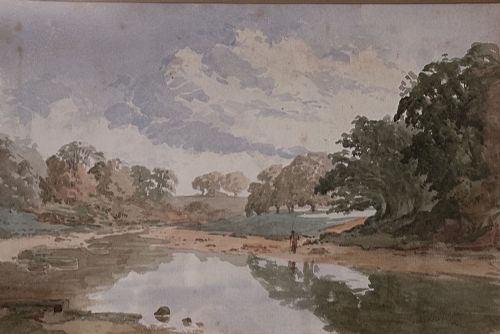
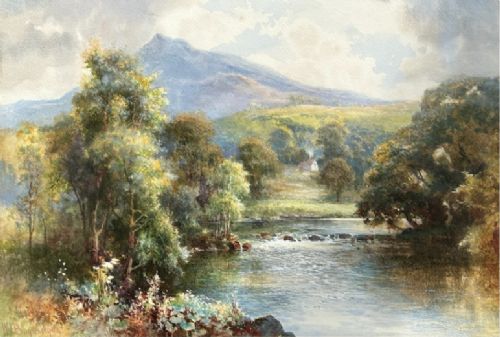
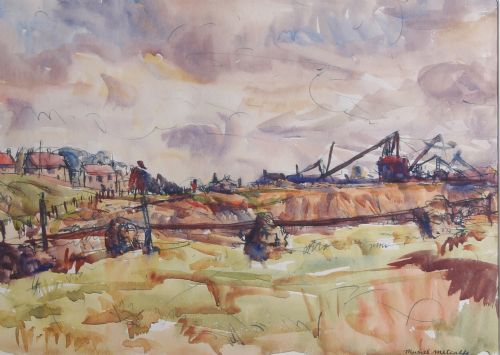
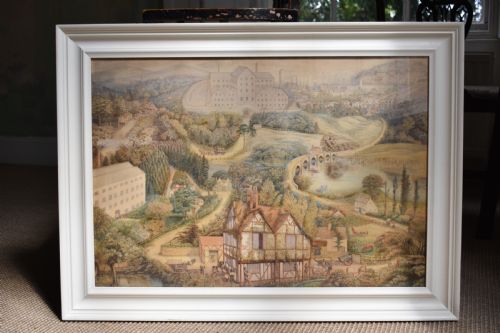
When you search for a vintage countryside watercolour painting, you are looking at original pastoral scenes captured on paper across several decades.
Vintage Countryside Watercolour Painting
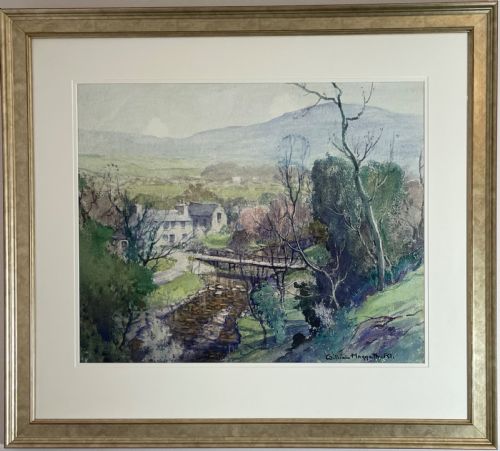
A vintage countryside watercolour painting captures rural life, rivers, cottages, and agricultural landscapes, primarily originating from the nineteenth and twentieth centuries. These original works span British Impressionism, Edwardian, and Victorian pastoral styles, reflecting regional views from Yorkshire, Wales, Dorset, and beyond.
The pieces on this page include framed topographical studies, river scenes, and harvest views rendered by named artists and regional painters alike. Most examples date from the 1900s through to the 1960s, showing consistent interest in traditional British and English school traditions.
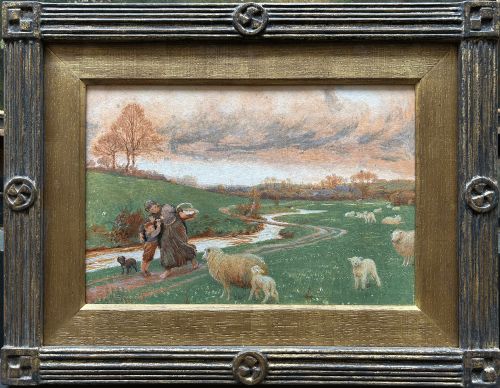
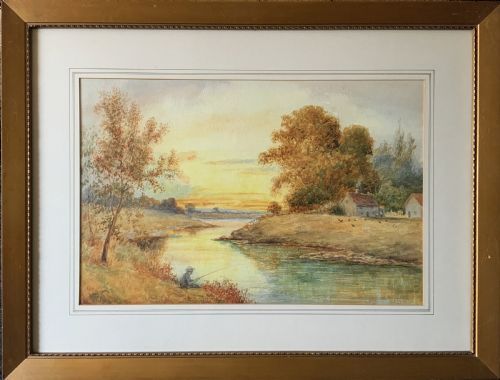
Buyers encounter subjects ranging from drovers and sheep on moorland to quiet thatched cottages by streams. The forms remain faithful to original paintings on paper, often preserved behind glass in period frames.
How They Were Made
Artists utilised watercolour pigment applied to paper surfaces, sometimes enhanced with additional media or framed with wood and glass to protect the delicate pigments. The technique relies on the transparency of the wash to capture natural light, skies, and water.
Support materials typically consist of heavyweight paper housed within traditional wooden frames, occasionally retaining original glazing from the Victorian or Edwardian eras. The interaction between pigment and paper dictates the textural depth visible in each landscape.
Several artists clearly painted through wartime restrictions, preserving peaceful Dorset lanes and Welsh hills while history unfolded around them.
What Varies in Quality
Quality rests in the handling of light, atmospheric perspective, and the confidence of the brushwork across the paper surface. Stronger examples demonstrate an assured control of washes that defines the topography and mood of the rural setting.
The preservation of the paper and pigment vibrancy also distinguishes the selection, alongside the harmony of the framing and the artist's ability to render spatial depth within a pastoral scene.
William Joseph Boyes·Muriel Metcalfe·Samuel Timmins·Henry Charles Fox·Cuthbert Crossley·George Graham·James William Booth·Frederick Septimus Lewis·William Hoggatt·Sidney James Beer·Harry Sylvester Stannard·John Hobson Nicholson·John D Walker·Rowland Henry Hill·Frederick William Jackson·John R K Duff·Charles James Adams·Arthur Claude Strachan·Samuel Towers·George Hamilton Constantine·Thomas Nicholson Tyndale·Claude Muncaster·Clarence Woodburn·Henry John Sylvester Stannard·Henry John Kinnaird
The Vintage Countryside Watercolour Painting Glossary
- Watercolour
- A paint consisting of a pigment suspended in a water-soluble vehicle. This medium allows for luminous washes and delicate colour blending on paper.
- Pastoral
- A genre of art depicting the rural countryside, farm life, and idealized natural landscapes. These scenes often feature shepherds, livestock, and cottages.
- Topographical
- Pertaining to the accurate representation of specific places and landmarks in art. Many period watercolours record identifiable towns, rivers, and counties.
- British Impressionism
- A late nineteenth and early twentieth century painting style focusing on light and everyday subjects. Practitioners applied loose brushwork to capture outdoor rural moments.
Vintage Countryside Watercolour Painting: Frequently Asked Questions
How should I frame and hang these watercolours?
Keep watercolours away from direct sunlight to prevent the pigments from fading over time. Utilising UV-protective glass and acid-free mounts helps preserve the paper and the integrity of the original painting.
Ensure they hang in rooms with stable humidity levels to protect both the antique paper and the original wooden frames.
How do I identify the date of a watercolour?
Look for handwritten signatures, dates on the front or verso, and stylistic clues that point to specific movements like Edwardian pastoral or British Impressionism. Framing materials and backings often provide secondary clues to the era of production.
Comparison with documented works by the same artist helps narrow down the decade in which the landscape was painted.
What subjects are most common in these paintings?
Rural views dominate the selection, including river landscapes, Welsh mountains, Yorkshire moors, and scenes of farming life. Cottages, harvest times, and livestock feature heavily across the Victorian and twentieth-century works.
Artists frequently recorded specific local scenery, making topographical accuracy a key characteristic of the genre.
Are these works original or reproductions?
Every piece listed is an original painting created by hand using watercolour pigment on paper. You can observe the actual brushstrokes and the texture of the paper under close inspection.
Prints and mass reproductions do not possess the unique hand-applied washes found in these historical artworks.