




Vintage Countryside Watercolour Artwork
These vintage countryside watercolour artwork selections capture pastoral scenes and rural life across Britain and beyond through delicate pigment and paper.
Vintage Countryside Watercolour Artwork
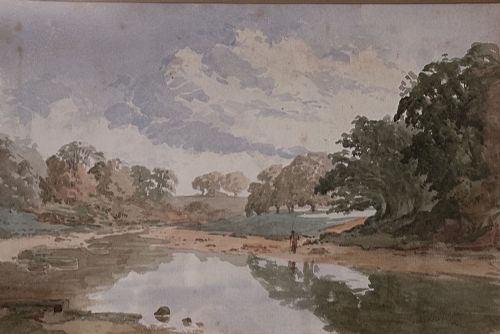
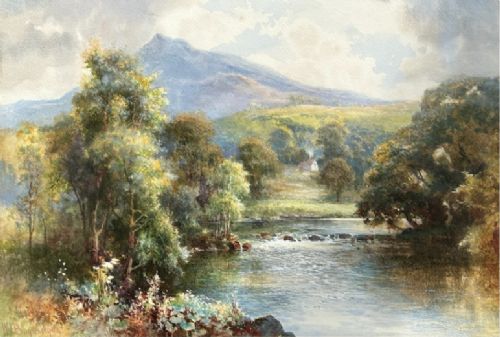
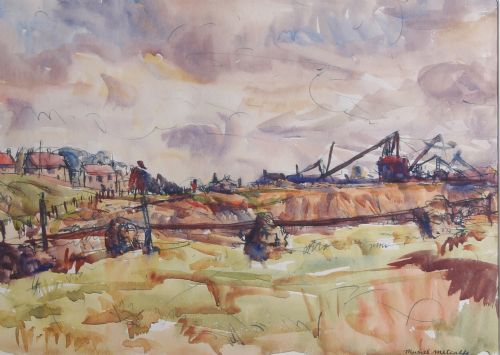
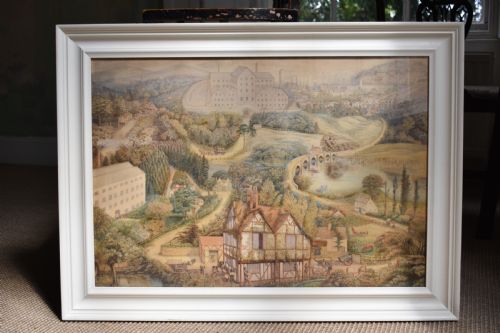
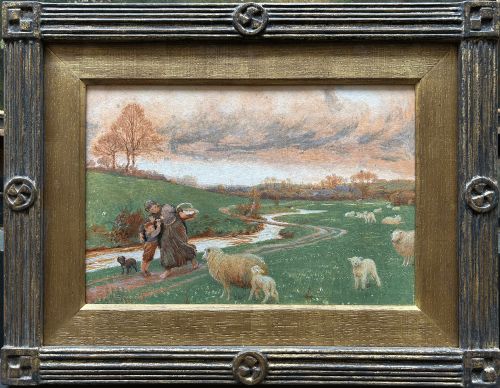
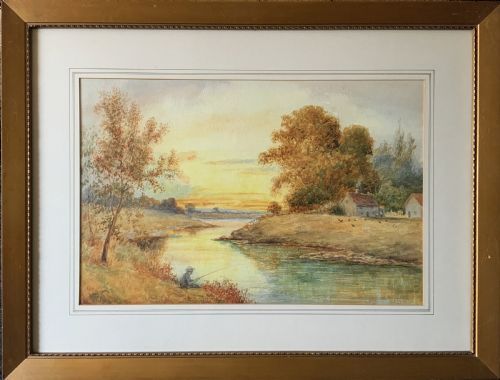
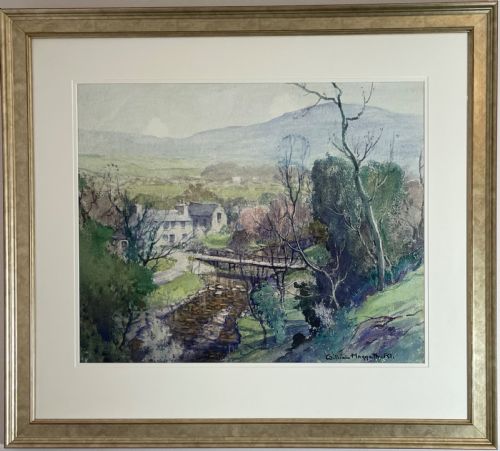
Vintage countryside watercolour artwork covers original painted scenes executed on paper, depicting rural views, rivers, cottages, and agricultural labour. These pieces span from the nineteenth century through the mid twentieth century, encompassing Victorian, Edwardian, and mid-century movements. Buyers will find works representing regional British topography alongside select continental European landscapes.
The dominant forms are original paintings presented as wall art, often retained in their original frames behind glass. Subjects frequently include pastoral landscapes, harvest scenes, and river valleys set in locations from Yorkshire and Wales to the Isle of Man. Most surviving examples date from the early twentieth century, reflecting a strong tradition of British landscape watercolour painting.
How They Were Made
Artists applied watercolour pigment directly onto prepared paper sheets, sometimes utilising bodycolour or white highlights to define light on water and buildings. The transparency of the washes relied on the reflective quality of the white paper beneath, allowing light to pass through the pigment layers. Gilt and gold leaf occasionally appear on frames, enhancing the presentation of these historic works.
Framing typically involved wood mouldings and protective glass, which shielded the delicate water-soluble pigments and paper from atmospheric moisture and handling. Many pieces retain their period frames, contributing to the historical integrity of the artwork.
Styles represented include Edwardian Pastoral, British Impressionism, Modern British, and Traditional British schools.
What Varies in Quality
Quality in these watercolours rests upon the artist's command of tone, brushwork precision, and the atmospheric depth achieved within the composition. Stronger works demonstrate confident handling of light and shadow, particularly in transient effects like sunset or river reflections, whereas lesser pieces rely on rigid formulas.
The preservation of the paper and pigment integrity also marks distinction, as works exposed to excessive sunlight suffer fading that flattens the tonal range. Furthermore, the presence of original period framing contributes to the overall integrity and visual harmony of the piece.
William Joseph Boyes·Muriel Metcalfe·Frederick Walker·Samuel Timmins·Henry Charles Fox·Cuthbert Crossley·James William Booth·Frederick Septimus Lewis·William Hoggatt·Sidney James Beer·Harry Sylvester Stannard·John Hobson Nicholson·John D. Walker·Rowland Henry Hill·Frederick William Jackson·John R. K. Duff·Charles James Adams·Samuel Towers·George Hamilton Constantine·Thomas Nicholson Tyndale·Claude Muncaster·Clarence Woodburn·Henry John Sylvester Stannard·Henry John Kinnaird·John J. Hamer
The Vintage Countryside Watercolour Artwork Glossary
- Watercolour pigment
- Finely ground colour particles mixed with a water-soluble binder, applied in translucent washes on paper.
- Bodycolour
- Watercolour paint mixed with Chinese white to render it opaque, allowing for highlights and solid passages.
- Edwardian Pastoral
- A style celebrating rural English life and idyllic countryside scenes during the reign of Edward VII.
- Topographical landscape
- A painting depicting a specific, identifiable real-world location with geographical accuracy.
- Gilt
- A thin layer of gold leaf or gold paint applied to wooden frames to provide a decorative metallic finish.
Vintage Countryside Watercolour Artwork: Frequently Asked Questions
How should I hang vintage watercolours?
Watercolours are sensitive to light and should be positioned away from direct sunlight to prevent the pigments from fading over time. Maintaining a stable indoor environment also protects the paper and original frame from humidity fluctuations.
Using proper picture wire and wall anchors ensures the framed artwork is securely supported. Professional framing with UV-protective glass provides an extra layer of conservation for paper-based art.
What is British Impressionism in watercolours?
British Impressionism refers to an approach where artists captured light, atmosphere, and transient weather conditions using loose brushwork rather than rigid detail. In watercolour, this involved spontaneous washes and expressive handling of pigment on paper.
This movement emerged in the late nineteenth and early twentieth centuries as painters moved outdoors to observe natural landscapes directly. The resulting works emphasise mood and immediacy over topographical exactness.
Are these watercolours original paintings?
Every piece listed in this category is an original, one-of-a-kind painting created by hand rather than a modern reproduction or print. Artists applied watercolour pigments directly to paper to produce unique works of fine art.
Signatures, dates, and inscriptions often appear on the front or reverse of the paper, providing direct links to the artist and location. These individual brush marks distinguish each piece as a singular historical artefact.
How do I identify the period of a landscape watercolour?
Period identification relies on stylistic clues, framing materials, and artist signatures or active dates recorded on the work. Victorian and Edwardian works often feature specific framing styles, palette choices, and subject matter reflecting rural life of the era.
Inscriptions left by the artist, such as location names and years like nineteen hundred or nineteen twenty, offer definitive dating evidence. Comparing the technique to established regional British schools also helps place the work in its historical context.