





Vintage Countryside Picture
These vintage countryside picture selections capture pastoral life, rivers, and woodland scenes through oil and watercolour.
Vintage Countryside Picture
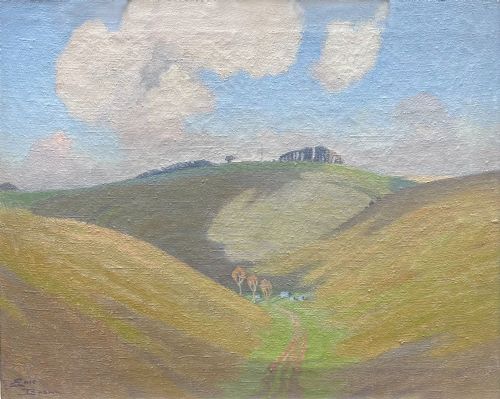
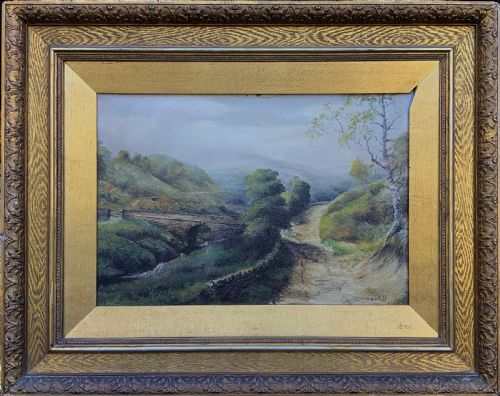
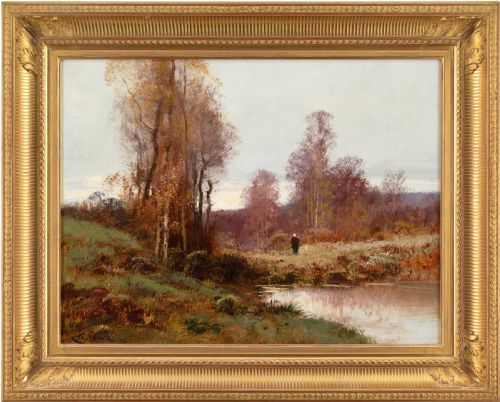
A vintage countryside picture transports the viewer to rural scenes, river valleys, and agricultural settings across Britain and Europe. When searching this phrase, collectors encounter framed oil paintings and watercolours depicting villages, livestock, and landscapes.
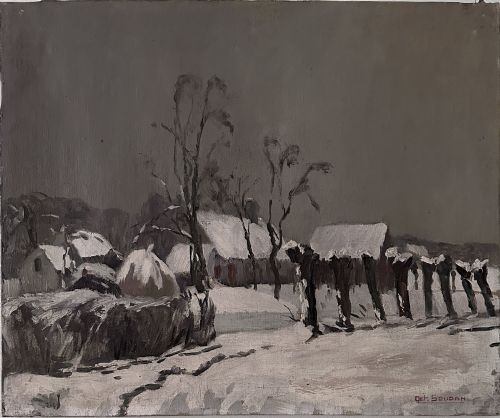
The pieces on this page originate from the Victorian era through the mid-twentieth century, spanning Edwardian pastoral works and British Impressionism. Subjects range from thatched cottages in winter to working shire horses and highland cattle in open fields.
Materials and Techniques
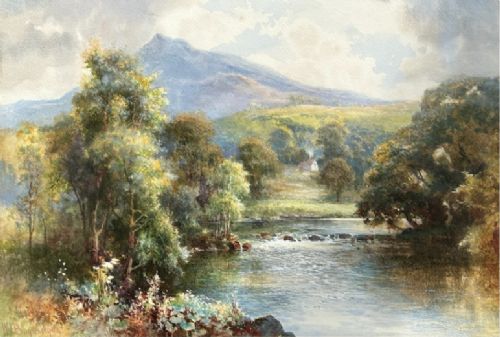
Artists painted these rural scenes using oil on canvas, oil paint applied to wood panels, and delicate watercolour on paper. Canvas supports provide rich texture for layered brushwork, whilst watercolour captures the translucent light of rivers and skies.
Frames made of wood enclose these works, preserving the paper and canvas surfaces. Signatures in ink or paint often appear in the corners, alongside artist inscriptions detailing locations in Wales, Yorkshire, and Devon.
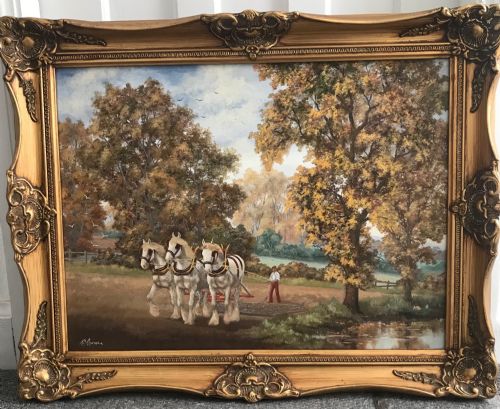
Several countryside scenes prominently feature hardworking shire horses and highland cattle pausing to supervise the artist.
Distinctions in Quality
Quality rests in the handling of light, atmospheric depth, and the confidence of the brushwork. Stronger compositions reveal careful observation of seasonal colour and natural movement in pastoral settings.
Condition of the original paper, canvas, and wooden panel determines the integrity of the piece. Works retaining their initial wooden frames and clear artist attribution stand out from anonymous school paintings.
William H Myers·William Joseph Boyes·Hubert Wellington·Charles Clair·Charles Walter Simpson·Samuel Timmins·Henry Charles Fox·Cuthbert Crossley·Frederick Septimus Lewis·Abraham Hulk Junior·George Turner·Claude Cardon·Rowland Henry Hill·Kershaw Schofield·Owen Bowen
The Vintage Countryside Picture Glossary
- Watercolour
- A painting method where fine pigment mixes with water-soluble binders on paper. This medium produces translucent washes suited to skies and rivers.
- Wood Panel
- A rigid wooden support used instead of canvas for oil paintings. Artists frequently utilised these panels for smaller landscape studies.
- British Impressionism
- An art movement focusing on natural light and outdoor scenes. Practitioners captured transient effects in rural British landscapes.
- Pastoral
- A style celebrating rural life and idealized country scenery. These subjects typically feature fields, cottages, and agricultural labour.
Vintage Countryside Picture: Frequently Asked Questions
What periods do these countryside pictures cover?
The selections span the Victorian era, the Edwardian period, and mid-twentieth century British art. Works date from the late nineteenth century through to the 1960s.
Most pieces reflect early twentieth-century traditions, including British Impressionism and regional landscape painting.
How do I identify a watercolour from an oil painting?
Watercolours utilise paper supports, transparent pigments, and require glass protection within the frame. Oil paintings feature textured paint layers on canvas or wood panels.
Oil surfaces appear heavier with visible brush strokes, whereas watercolours show smooth paper grain beneath fluid colour washes.
Where were most of these landscapes painted?
Artists painted these scenes across British countryside locations including Yorkshire, Wales, Devon, and Gloucestershire. Some works depict European rural views such as North Italian mountain landscapes.
Inscriptions on the reverse or corners often record specific rivers, villages, and counties.
How should I hang and light these artworks?
Hang paintings away from direct sunlight to protect watercolours and oil pigments from fading. Stable room temperatures prevent the wooden panels and canvases from warping.
Use gentle, dedicated picture lights to illuminate the surface without generating damaging heat.