
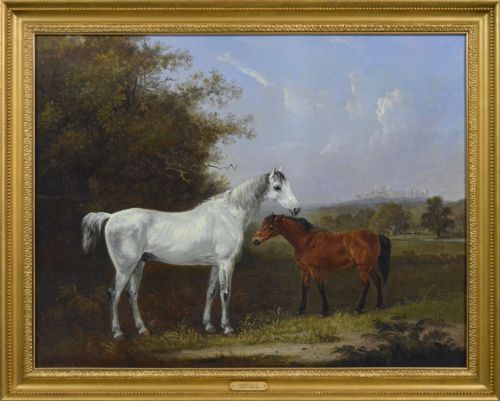
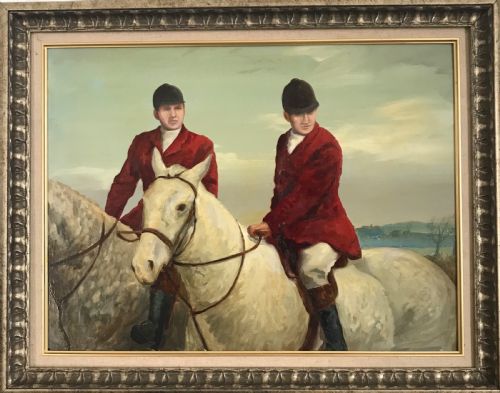
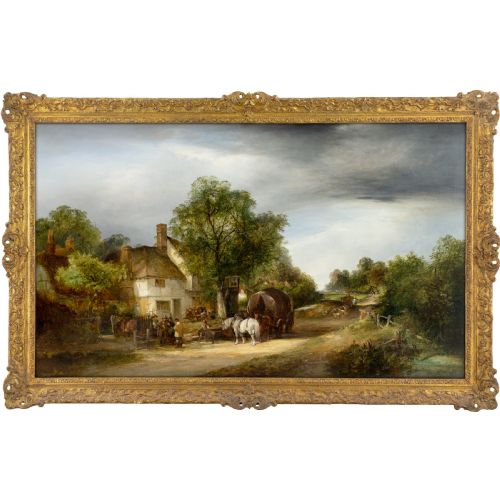
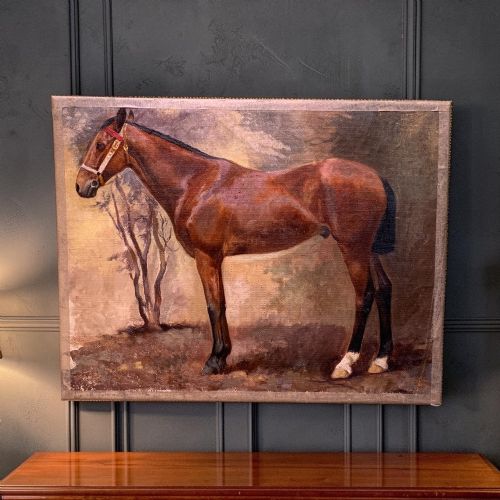
Vintage Country Oil Painting
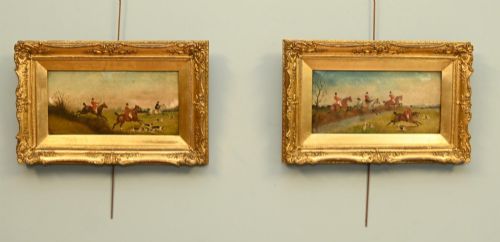
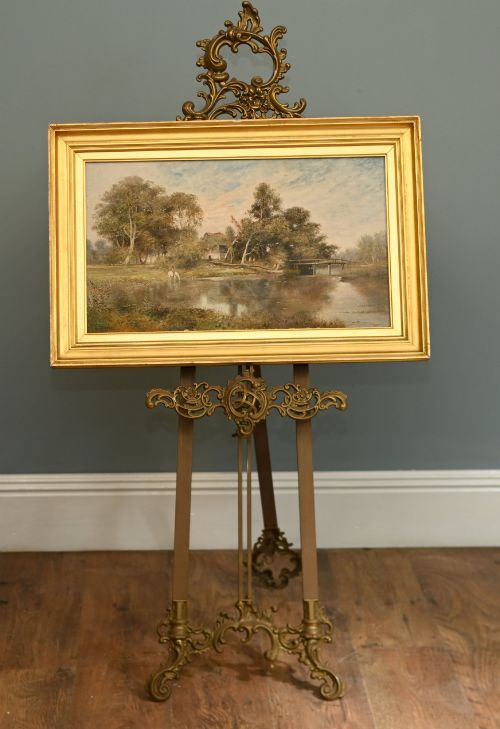
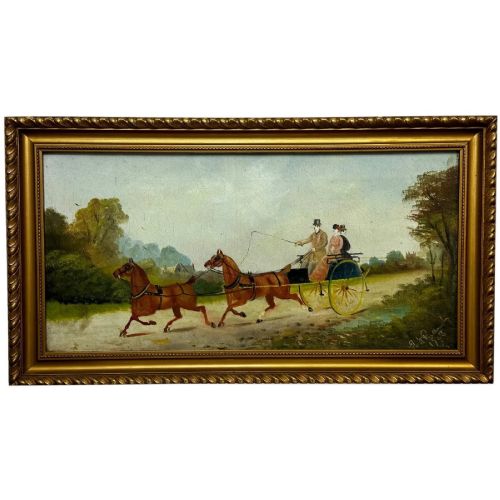
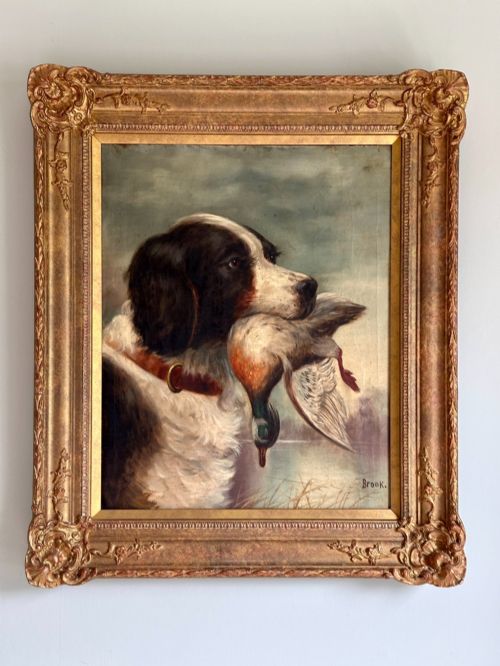
Vintage country oil painting captures rural life, landscapes and livestock across the nineteenth and twentieth centuries.
Vintage Country Oil Painting
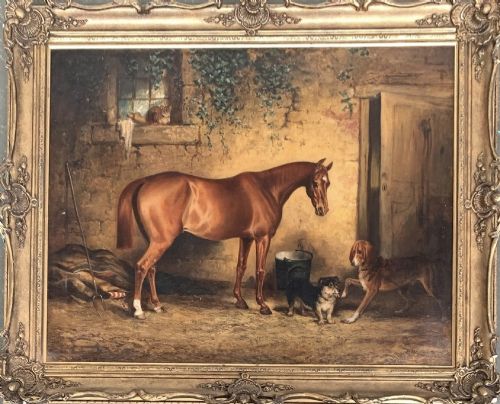
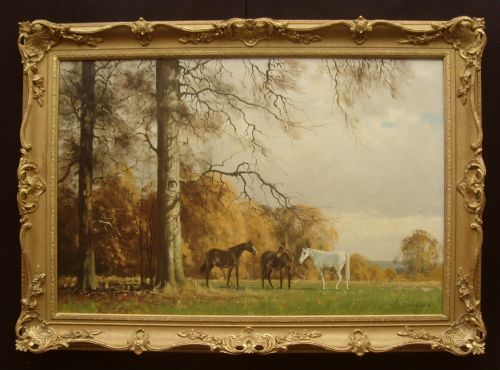
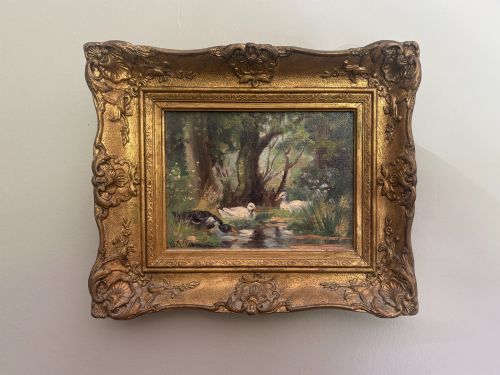
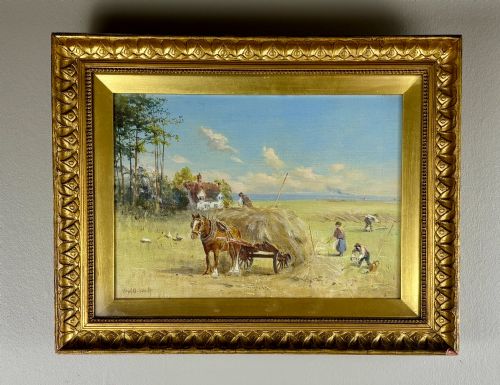
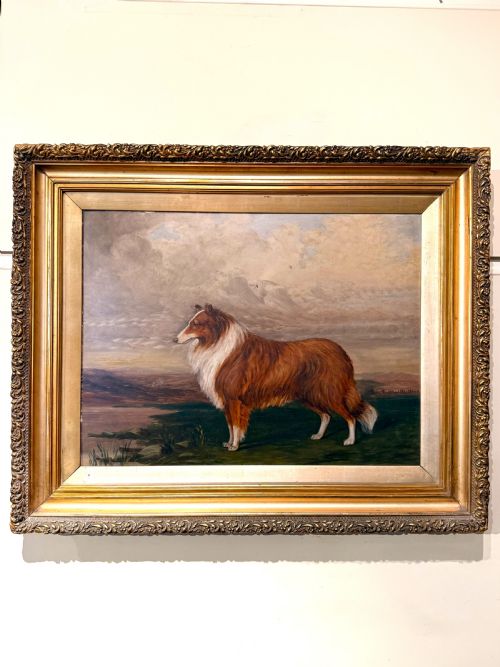
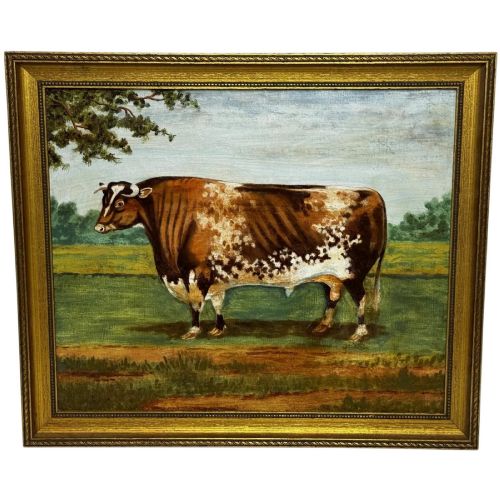
A vintage country oil painting represents rural life, agricultural scenes, domestic animals and provincial landscapes. These works record the changing character of the countryside through canvases, panels and boards from various historical periods.
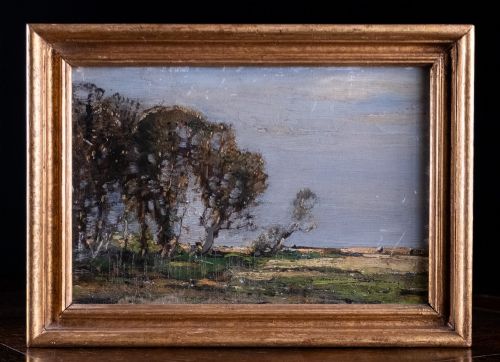
The selections available here range from Victorian depictions of livestock and sporting subjects to early twentieth-century village views and mid-century pastoral landscapes. Most examples arrive framed, often retaining their original gilt gesso mounts or wooden surrounds.
Buyers encounter British and French schools predominantly, with depictions spanning farmsteads, cottages, horse portraits and rural workers. Each piece offers a direct connection to provincial traditions and agricultural history.
How they were made
Artists applied oil paint using brushes and palette knives onto flexible woven canvas, rigid wooden panels or prepared boards. These traditional supports often received an initial ground layer or gesso priming to stabilise the surface before painting.
Frames frequently utilised carved wood finished with gold leaf or gesso ornamentation to complement the composition. The physical construction relies on period joinery techniques for stretchers and frames, reflecting the craftsmanship of the era.
Listings feature works spanning the nineteenth century through to the 1960s, utilising canvas, wood panels and oil paint.
What varies in quality
Quality depends upon the artist's ability to render anatomical precision, atmospheric depth and natural light within the composition. Works by recorded painters or recognised British and French school artists demonstrate superior handling of pigment and form.
The condition of the paint layer and the originality of the accompanying frame influence the integrity of the piece. Well-preserved surfaces retain their original varnish layers and brushwork texture without excessive restoration.
Kershaw Schofield·Arthur Gué·Robert John Hammond·George Augustus Holmes·Edgar Hunt·George Wright·William Albert Clarke·Herbert Royle·Rene Levrel·Henry Yeen King·C R Breytle·Thomas Walker Bretland·George Morland·Sydney Yates Johnson·A M Gauci·Hubert Wellington·Percy Hipkiss·Jack Cross·John Bowes·Hugh Berry Scott
The Vintage Country Oil Painting Glossary
- Canvas
- A heavy woven fabric stretched across a wooden frame to serve as a painting support. It provides a durable and slightly textured surface for oil pigments.
- Gesso
- A traditional paint mixture consisting of a binder mixed with chalk, gypsum or pigment. It prepares wooden panels and frames for gilding or painting.
- Trumeau
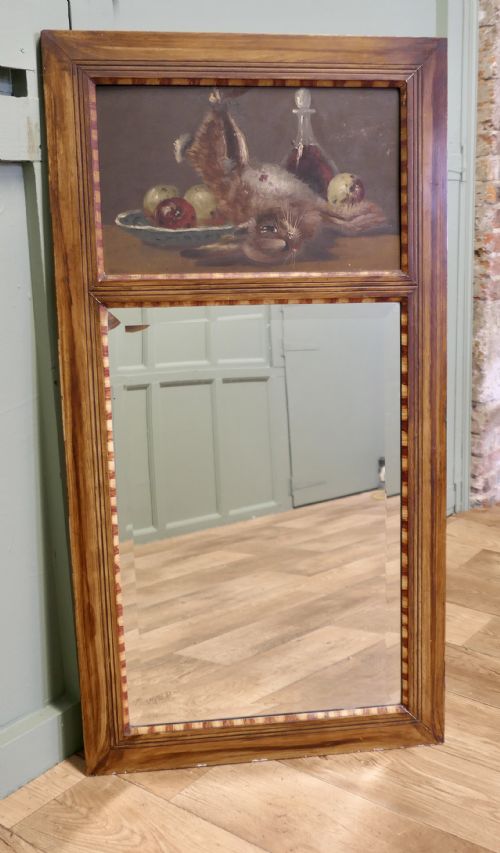
- An architectural wall mirror or panel featuring painted or carved decoration above the glass. These French country pieces combine mirrors with rural artwork.
- British School
- A designation for artists working within Britain whose styles share regional characteristics rather than a single academy. It groups together painters of landscapes and sporting subjects.
- Oil on Board
- A painting executed on a rigid wooden or cardboard support rather than stretched fabric. This method appears frequently in nineteenth and twentieth-century rural works.
Vintage Country Oil Painting: Frequently Asked Questions
How do I identify the period of a painting?
Examine the canvas preparation, stretcher construction, and framing materials alongside any signatures or labels on the reverse. Stylistic clues within the clothing, architecture, and agricultural equipment also indicate the era.
Reference historical records or artist signatures when available to confirm the date of execution. Comparing the support type against known period manufacturing standards provides further confirmation.
Where should I hang a landscape painting?
Select an interior wall away from direct sunlight, heating vents, and dampness to protect the oil pigments and canvas from deterioration. Proper placement ensures the artwork remains stable over time.
Position the centre of the painting at eye level for optimal viewing within your room. Consider the surrounding wall colour and lighting to complement the pastoral tones of the artwork.
How do I clean an oil painting safely?
Dust the surface gently with a soft, dry brush to remove loose particles without disturbing the paint layer. Avoid using water, household cleaners, or chemical solvents on vintage canvases.
Professional conservators should handle any deep cleaning or removal of discoloured varnish. Attempting to clean the pigment surface independently risks permanent damage to the artwork.
What is the difference between canvas and board?
Canvas consists of woven fabric stretched tightly over a wooden frame, offering slight flexibility and texture. Board provides a rigid, solid support made from wood panel or heavy card.
Paintings on board often date to specific regional traditions or smaller plein air studies. Both supports were widely used across nineteenth and twentieth-century rural art.