



Vintage Cottage Scene Painting
A vintage cottage scene painting captures rural domestic life through brushwork on canvas, paper, or wood from the nineteenth and twentieth centuries.
Vintage Cottage Scene Painting
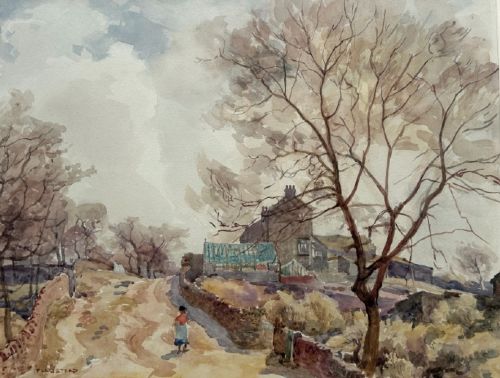
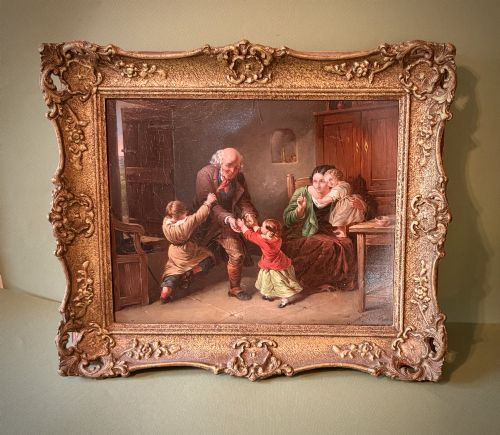
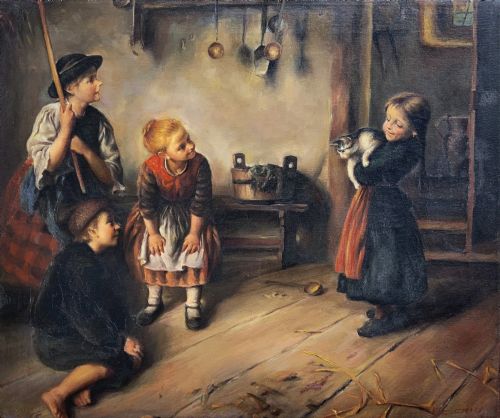
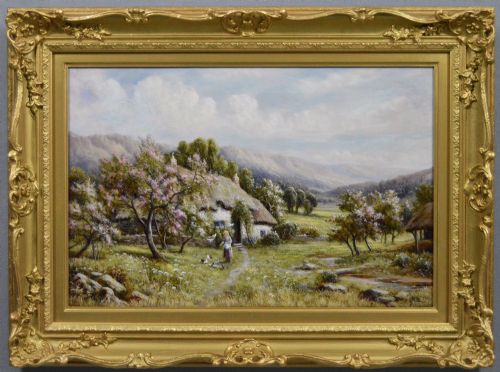
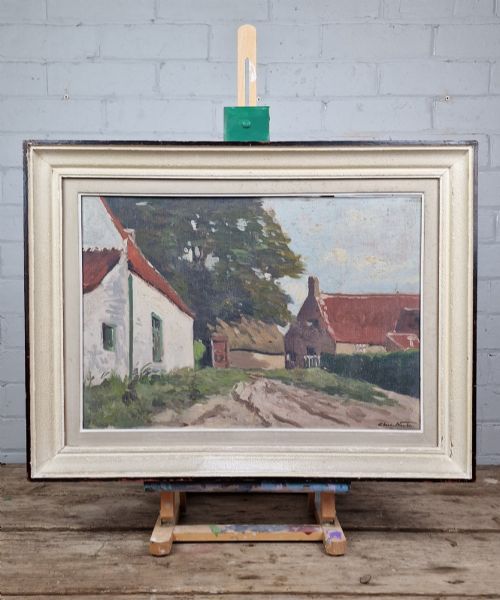
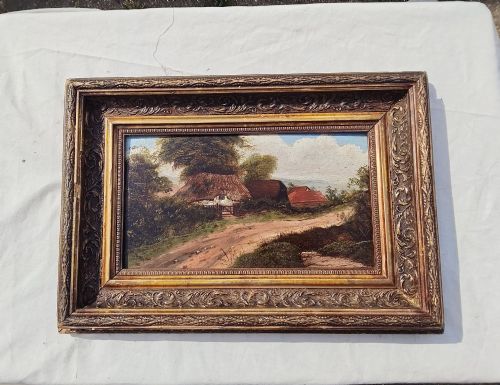
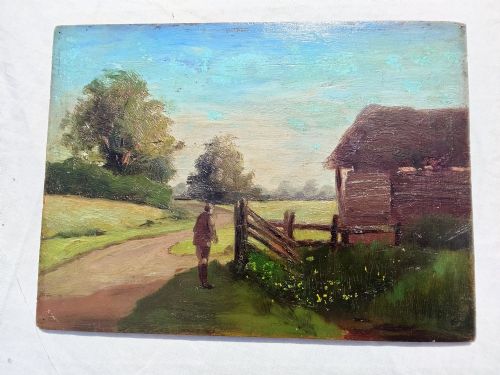
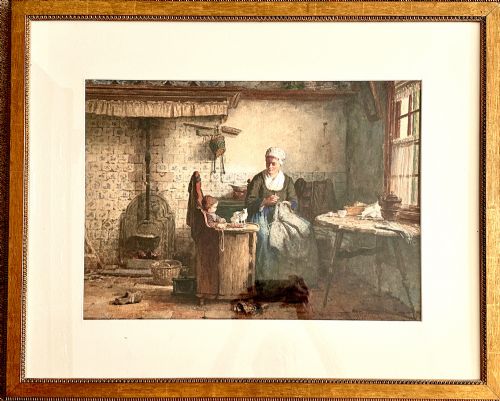
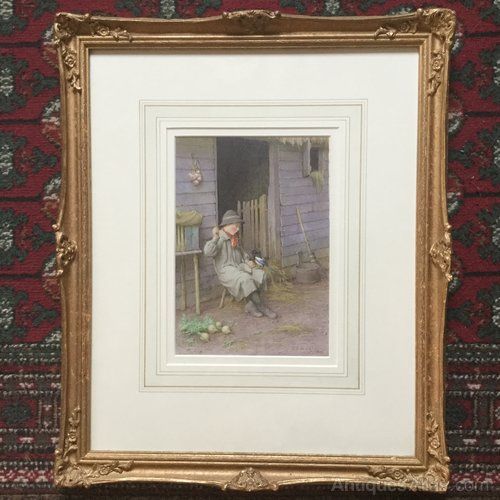
A vintage cottage scene painting portrays rural dwellings, farmyards, and country gardens through the lens of nineteenth and twentieth-century artistic movements. These works range from detailed Victorian watercolours to mid-century impressionist oils on canvas, card, or wooden board.
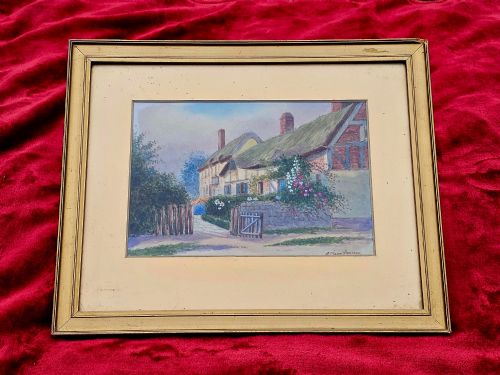
The version most commonly encountered on this page is the early twentieth-century watercolour or oil painting depicting a thatched cottage, often framed in gilt wood or simple timber. British and Scottish impressionist works feature prominently alongside Continental examples from the same eras.
Subjects frequently include figures outside country homes, farm animals, and quiet village lanes. The selection spans distinct periods including the Edwardian era, the 1930s, and the 1950s, reflecting changing tastes in pastoral representation.
Materials and techniques
Artists employed oil paint or watercolour applied to canvas, paper, card, wooden board, or mixed media grounds. Many works utilise traditional layering techniques to capture light and texture across rural subjects.
Support materials range from stretched canvas and heavy watercolour paper to oil on card and wooden panels. Frames typically consist of wood, often with gilt finishes that complement the warm tones of the painted scenes.
Several cottages appear to have very busy ducks.
Distinctions in quality
Quality depends upon the confidence of the brushwork and the clarity of the composition. Skilled artists handle light and shadow effectively to give depth to rural architecture and foliage.
The condition of the original pigment and its support surface influences the overall integrity of the piece. Works that retain their original colour balance without excessive fading or stabilisation demonstrate superior preservation.
A. Marie Parsons·Robert John Hammond·Charles Houben·Hendrik Valkenberg·Charles Edward Wilson·Alexander Rosell·Arthur Tucker·JAMES HARDY JUNIOR·Frederick James Knowles·William Greaves·Charles Vickers·Donald McIntyre·Helmut Reuter·LILIAN STANNARD·HARRY SYLVESTER STANNARD·Robert Gemmell Hutchinson·B. Kaufmann·DAVID WOODLOCK·Ernest Walbourn·HENRY SYLVESTER STANNARD·Ernest Cox·Herbert Royle·J.V.R.PARSONS·Ingrid Rydbeck-Zuhr
The Vintage Cottage Scene Painting Glossary
- Watercolour
- A painting method where fine pigment is suspended in water-based solution on paper. This technique yields translucent washes that create soft skies and pastoral lighting.
- Oil on Canvas
- Pigment bound in oil applied to stretched woven fabric. This combination allows for rich texture and deep colour saturation in landscape scenes.
- Impressionism
- An art style focused on accurate depiction of light and fleeting moments. Painters working in this manner use visible brush strokes rather than smooth blending.
- Gilt Wood
- Timber framing coated with a thin layer of gold leaf or metallic paint. It provides a decorative border designed to enhance the artwork within.
- Genre Painting
- Depiction of aspects of everyday life by subjects depicted in natural settings. These scenes often feature figures engaged in daily domestic tasks near rural cottages.
Vintage Cottage Scene Painting: Frequently Asked Questions
What periods do these paintings cover?
The selection spans from the nineteenth century through the Victorian and Edwardian periods into the mid-twentieth century, including works from the 1950s and 1960s.
Most pieces date from the early 1900s, reflecting popular British and European landscape traditions of that time.
How do I distinguish watercolours from oils?
Watercolours are painted on paper and typically displayed behind glass to protect the delicate pigments from moisture and handling.
Oils are executed on canvas, wood, or card, offering heavier paint texture and opaque colour application that often does not require glass.
Where were these pastoral scenes painted?
Many depict British and Scottish countryside locations, including Yorkshire, Nottinghamshire, and rural lanes near Whitby.
Others originate from continental European schools, reflecting Dutch and Flemish rural life during the same historical periods.
How should I display vintage artwork safely?
Keep framed paintings away from direct sunlight and areas prone to high humidity to protect paper, canvas, and wooden supports.
Ensure wall mounts are secure, particularly for heavier framed oil paintings on canvas or board.