


Vintage Condiment Stand
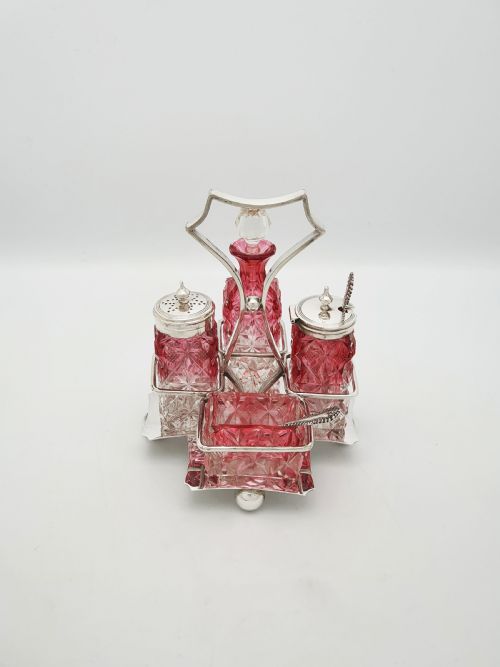
A vintage condiment stand brings period dining table organisation to life with cut glass and silver plate.

Vintage Condiment Stand
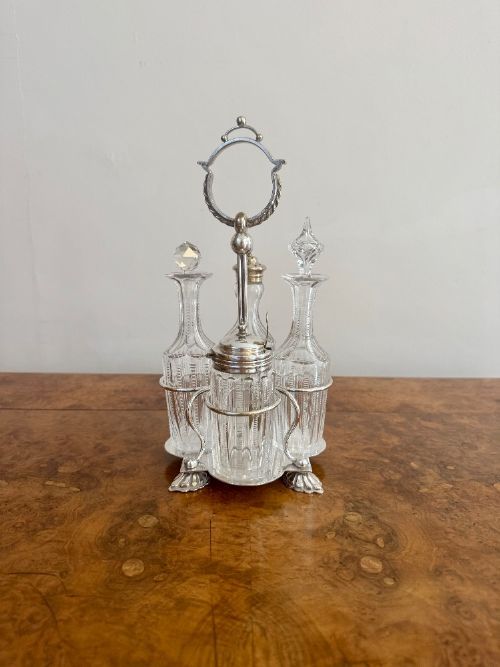
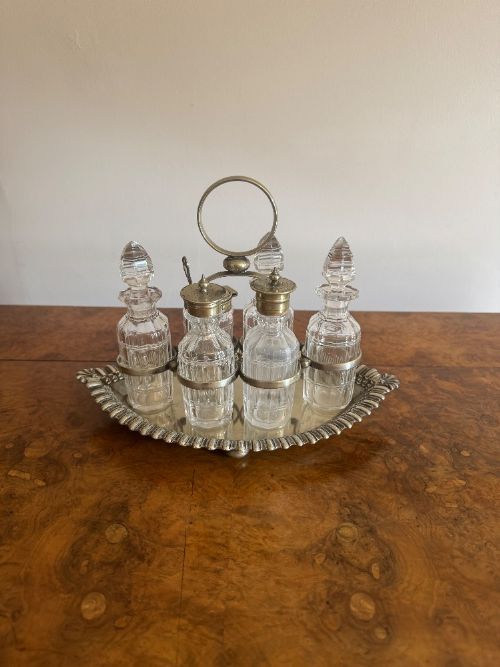
A vintage condiment stand organises tabletop seasonings, holding bottles, jars, and pots in a fitted frame.
Edwardian silver plated examples appear frequently on this page, alongside Georgian pieces and Art Deco designs.
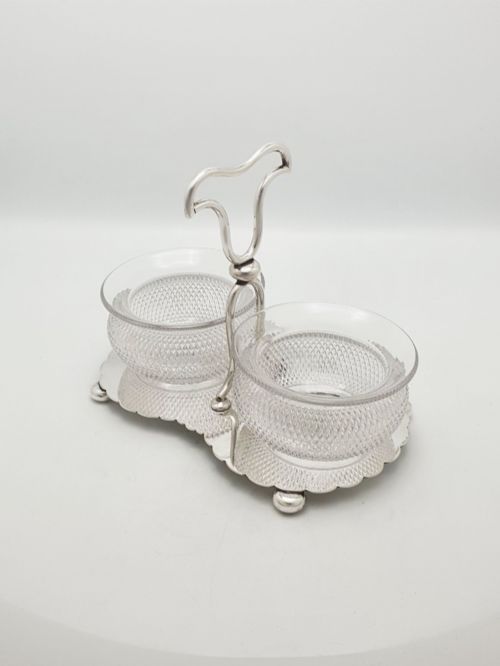
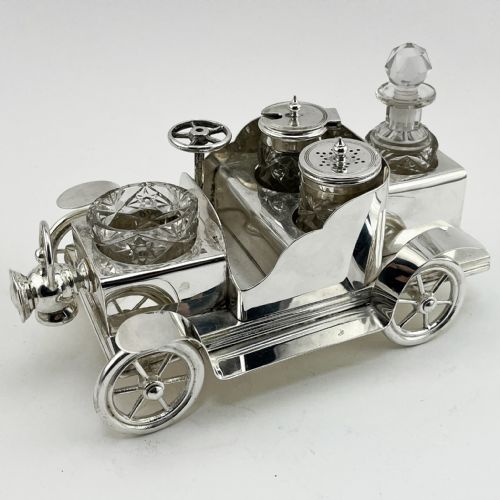
Forms range from multi-bottle cruet sets and preserve dishes to specialised car cruet sets and jam pots.
What varies in quality
The integrity of the metal plating and the weight of the silver or silver plate set the baseline for a piece.
Completeness dictates standing, as sets retaining their original matching bottles, casters, and stoppers command attention.
The clarity and depth of cut glass or cranberry glass bottles distinguish standard items from finer works.
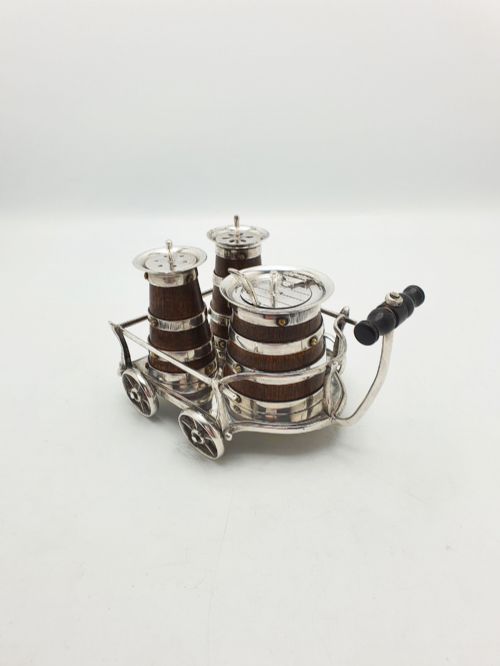
Victorian makers occasionally built condiment stands shaped like motor cars to amuse diners.
Walker and Hall·Wade Wingfield Wilkins·Mappin and Webb·Viners
The Vintage Condiment Stand Glossary
- Cruet set
- A fitted stand holding glass bottles or castors for vinegar, oil, mustard, and pepper at the dinner table.
- Silver plate
- A base metal coated with a thin layer of silver, widely utilised for domestic tableware from the nineteenth century onward.
- Cranberry glass
- A rich red glass coloured with gold chloride, popular in Edwardian preserve dishes and cruet inserts.
- Treen
- Small handmade wooden objects and household utensils turned on a lathe.
- Old Sheffield plate
- A composite material made by fusing a sheet of silver to a thicker copper base before shaping.
Vintage Condiment Stand: Frequently Asked Questions
What is a vintage condiment stand used for?
These stands held bottles and jars of sauces, oils, vinegars, and seasonings for the dining table.
They allowed hosts to pass condiments easily between guests during formal meals.
How do I date a silver plated cruet set?
Stylistic clues such as Edwardian floral mounts or geometric Art Deco lines help narrow the period.
Manufacturer marks stamped onto the metal base provide further chronological evidence.
Are all condiment bottles original to their stands?
Glass inserts and bottles frequently suffered breakage over decades of domestic use and replacement.
Checking that cut glass patterns and bottle neck sizes match the frame apertures indicates originality.
How do I care for silver plate and cut glass?
Clean silver plate gently with a soft cloth and dedicated polish to preserve the plating.
Wash glass bottles in warm soapy water without harsh abrasives to protect the crystal surface.