


Vintage Condiment Caddy Set
These vintage condiment caddy sets organise dining tables with fitted frames holding glass bottles and jars.
Vintage Condiment Caddy Set
A vintage condiment caddy set gathers multiple small vessels into a single carrying frame for the dining table. The selection on this page centres heavily on Edwardian silver plated cruet sets, alongside pieces from the Victorian era and the Art Deco period.
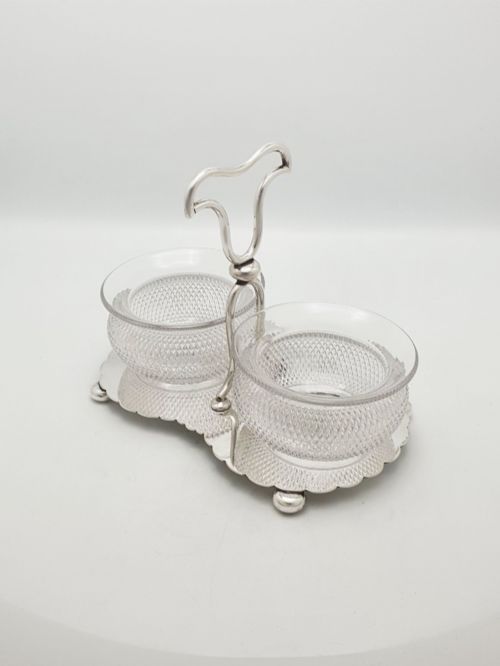
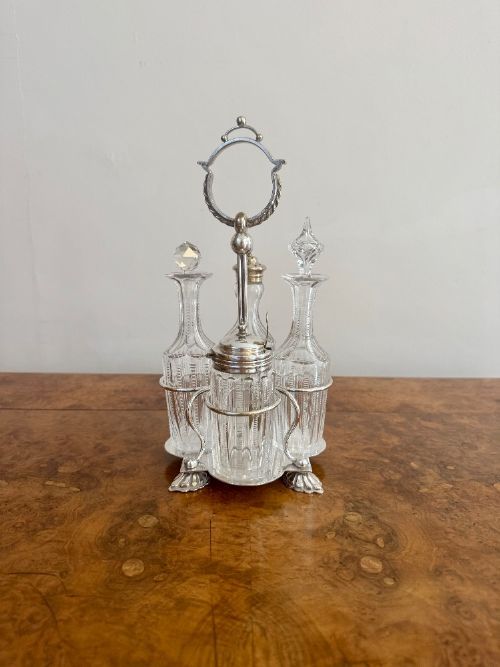
Most examples combine metal frames with glass bottles for mustard, oil, vinegar and sauces. Formats range from twin glass bowl stands to larger six-bottle frames and novelty carriage designs.
How they were made
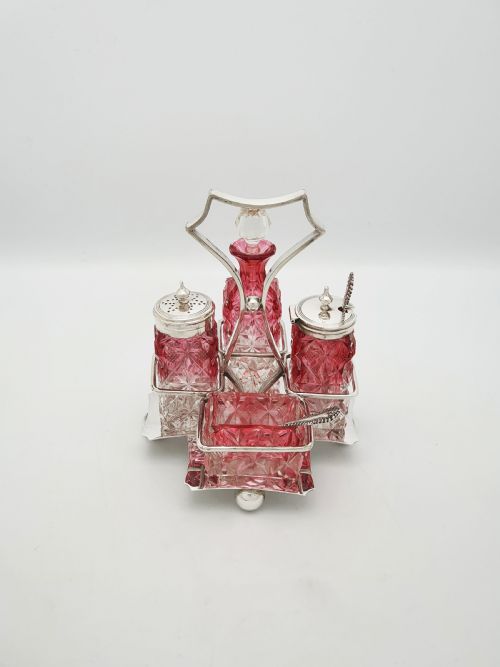
Silversmiths formed the supporting stands from sterling silver or silver plate over base metal, often adding decorative handles and feet. Makers shaped the condiment bottles from cut glass, crystal and cranberry flashed glass.
Some configurations incorporate specialist vessels with fitted spoons or ice compartments for caviar. Frames utilise cast and soldered metal components designed to secure removable glass containers safely.
Victorian makers produced novelty carriage cruet sets with working wheels so diners could roll the mustard across the table.
What varies in quality
Quality depends on the weight and thickness of the silver plating and the integrity of the metal framework. Substantial frames resist bending and maintain secure fittings for the bottles over decades of use.
Glass components show variation through the depth of cut glass facets and the clarity of the material. Matching original bottles elevate a set above examples fitted with replacement glassware.
Wade Wingfield Wilkins
The Vintage Condiment Caddy Set Glossary
- Cruet set
- A fitted stand holding glass bottles or jars for table condiments such as oil, vinegar, salt and mustard. These sets often include stoppers and pourers.
- Silver plate
- A layer of silver fused to a base metal core such as copper or brass. This technique allowed makers to produce substantial tableware at a lower cost than solid silver.
- Cranberry glass
- A rich red glass created by adding gold chloride to the molten batch. It appears frequently in decorative tablewares from the nineteenth and early twentieth centuries.
- Caster
- A small cylindrical container with a perforated lid used for sprinkling sugar or dry spices onto food. Casters form part of larger modular condiment sets.
Vintage Condiment Caddy Set: Frequently Asked Questions
What was a condiment caddy used for?
These sets held essential seasonings and sauces within easy reach of diners at the dining table. Servants or guests lifted the entire stand by its central handle to pass oils, vinegars and mustards around the company.
Larger versions accommodated six or eight separate bottles to cater for elaborate meals. Smaller twin bowl variants served simpler daily dining needs.
How do I date an Edwardian cruet set?
Edwardian pieces date from the reign of King Edward VII between 1901 and 1910. Design characteristics from this period include polished silver plate combined with bright cut glass vessels.
Maker marks stamped onto the metal frames often help pinpoint the exact workshop and decade. Stylistic details like pierced galleries also point towards the early twentieth century.
Are replacement bottles acceptable in these sets?
Original matching bottles contribute significantly to the completeness and character of a set. Finding replacement glass that fits the exact collar dimensions of an antique frame requires careful measurement.
Mismatched bottles remain common because individual glass components broke frequently during everyday use.
How should I clean silver plated condiment stands?
Cleaning requires a soft cloth and a mild silver polish formulated to protect plated surfaces from excessive abrasion. Removing glass bottles before polishing prevents cleaning agents from entering the cruet vessels.
Frequent gentle maintenance preserves the remaining silver layer better than harsh chemical dipping.