


Cut Glass Cruet Frame
A cut glass cruet frame holds condiment bottles securely at the dining table, combining sparkle with practical service.
Cut Glass Cruet Frame
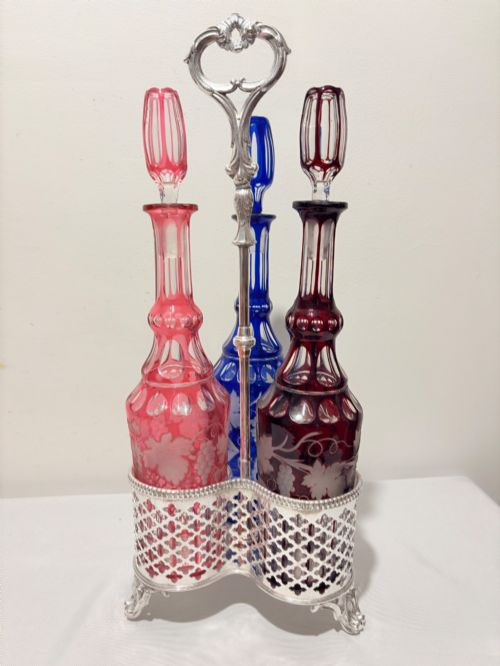
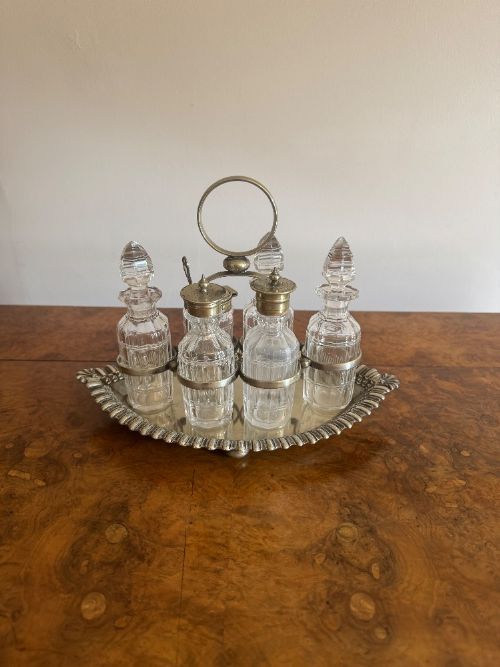
A cut glass cruet frame is a tabletop stand designed to hold multiple condiment bottles or decanters, typically featuring a central handle for serving at the table. These pieces range from compact three-bottle frames to large, multi-bottle Georgian and Victorian sets.
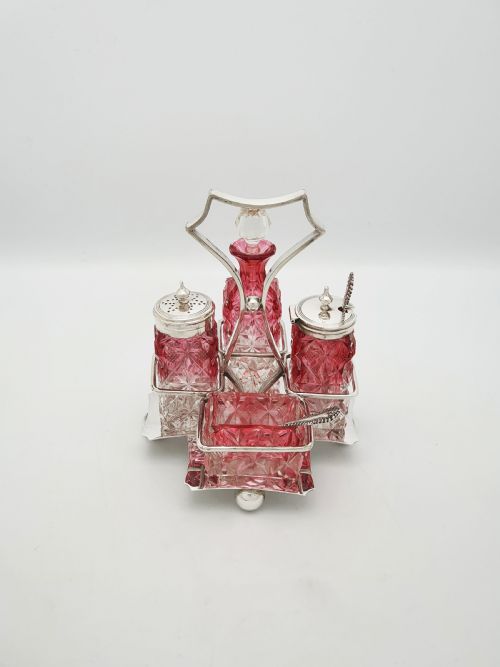
You are most likely to meet silver-plated and cut glass examples from the Victorian and Edwardian periods on this page, alongside earlier Georgian iterations in sterling silver or Old Sheffield Plate. The forms span simple decanter stands to ornate frames fitted with original cut glass bottles and casters.
How they were made
Frames were constructed from sterling silver, Old Sheffield Plate, or silver plate on a base metal, frequently shaped through casting, stamping, and soldering. Some frames incorporate mahogany timber bases or figural novelty designs.
The bottles and casters utilise heavy-lead glass shaped by deep wheel-cutting, fluting, or cranberry flashing to catch the light. Original matching glassware is ground to fit specific apertures within the metal frame.
Listings span from the 18th century through the Georgian, Victorian, and Edwardian eras, extending into the 1920s Art Deco period.
What varies in quality
Quality rests in the heaviness of the metalwork, the depth and precision of the glass cutting, and the retention of the complete, matching set of original bottles. Early Georgian and 18th-century examples display superior hand-craftsmanship in both the silver hallmarks and the faceted glass.
The sophistication of the frame design, from plain domestic silver plate to ornate Victorian and Gothic castings with figural elements, dictates the tier of the piece. Makers with prominent silversmith reputations also distinguish the finer items in the range.
Charles Thomas Fox·Elkington & Co·Hester Bateman·Mappin Brothers·William Hutton & Sons
The Cut Glass Cruet Frame Glossary
- Cruet set
- A matched collection of bottles for oil, vinegar, mustard, and other condiments held within a single stand. These sets formed an essential part of formal dining from the Georgian era onwards.
- Cranberry glass
- A rich red glass produced by adding gold chloride to the molten batch. It appears frequently in Edwardian cruet sets as a flashed or cased layer.
- Old Sheffield plate
- An early form of plated metal made by fusing a thin sheet of sterling silver to a thicker copper core. This technique predates modern electroplating.
- Warwick cruet
- A specific form of cruet frame holding three castors for dry seasonings and two or more glass bottles for liquids. George and Victorian iterations often follow this traditional configuration.
- Decanter stand
- A low frame, sometimes fitted with a handle, designed to hold wine decanters rather than condiment bottles. They protect the dining table from drips and allow easy circulation of wine.
Cut Glass Cruet Frame: Frequently Asked Questions
What is a cut glass cruet frame used for?
These frames served condiments at the dining table, keeping oil, vinegar, mustard, and sauces organised in matching glass bottles.
Servants or diners lifted the entire assembly by the central handle to pass seasonings around the table during meals.
How do I date a silver plated cruet frame?
Dating relies on the style of the metalwork, the shape of the handle, and any registration numbers or maker marks stamped on the base. Victorian and Edwardian frames often show heavier ornamentation and electroplated marks.
Earlier Georgian pieces feature simpler lines, hand-beaten or fused silver plate, and sometimes distinct sterling silver hallmarking that dates the exact year of manufacture.
Are the glass bottles usually original to the frame?
Many surviving frames retain their original cut glass bottles, which were individually ground to fit the exact apertures of the metal stand. Because glass breaks easily over centuries, replacement bottles do occur in older sets.
Matching cut patterns, identical wear on the bases, and a snug fit inside the frame rings indicate that the glassware belongs to the original piece.
How do I care for silver plate and cut glass?
Silver plate requires gentle cleaning with a specialised silver cloth to avoid wearing through the thin plating over the base metal. Harsh chemical dips should be avoided on antique plated items.
The cut glass can be washed in warm, soapy water using a soft brush to clear dust from the deep facets, then dried thoroughly to maintain its sparkle.